
|
 EgyptSearch Forums EgyptSearch Forums
 Ancient Egypt and Egyptology Ancient Egypt and Egyptology
 How to stop whitewash of Ancient Egypt and other myths? (Page 1) How to stop whitewash of Ancient Egypt and other myths? (Page 1)
|
 UBBFriend: Email This Page to Someone! UBBFriend: Email This Page to Someone! This topic is 5 pages long: 1 2 3 4 5 |
next newest topic | next oldest topic |
| Author | Topic: How to stop whitewash of Ancient Egypt and other myths? |
|
supercar Member Posts: 449 |
 posted 15 June 2004 09:35 PM
  
I have read several threads here and there, but I must say that it appears the race issue repeatedly presents itself whenever the opportunity arises. More often than not, the Ancient Egyptian civilization is approached from a 'phenotypic' view as opposed to a 'cultural' view. This must be insulting to people who don't want AE to go down like that. AE civilization must be recognized as an 'African' civilization, and not boiled down to 'black' or 'white' civilization. To remove 'African' from that ancient culture, is an attempt mostly to disassociate it from Sub-Saharan Africa which is normally viewed as being mainly of 'Negro' race. But African culture goes deeper than phenotype, because believe it or not, AE has traditions that can be found or are known to have taken place in other African cultures. As you can see, when you apply 'phenotype' to this culture, the question of what constitutes being 'black' becomes a drawn out discussion. Some will say that it is simply about 'skin color', and others will say that it is about 'features'. It is well known, even in Africa, that black people come with various facial features, and not simply the stereotypical features. So to even suggest that the someone with a so-called Caucasoid bone structure or facial feature automatically renders him/her 'white' is not only absurd but non-scientific. Equally absurd is the idea that because someone is dark in skin color makes him/her a 'Negro/black' by default, as seen in the case of the Australoid Aborigines. It reduces the world into 'black and white' superficially, and I think the world is much more complicated than that. Another issue is the view that ancient African societies were just a bunch of disconnected and completely scattered tribal groups. A good point that is missed often, is that human history shows continues movements of people. In the process, it is natural that different groups will at some point either interact or come into a conflict. In any case, the groups will influence one another in varying degrees. This would explain some continuity in the diverse cultures on the African continent. One cannot simply state without factual backing that AE was not influenced and was completely isolated from other African peoples. What is now considered Egypt, in terms of the racial makeup, has not always been the case. The same can be said for various African nations, example, west African countries and South Africa. Most people today have the tendency to imagine the ancient world in terms of current world situations. For example, one is deluding oneself by thinking for a minute, what is now called the United States has always been the case. The same can be said for Egypt. Boiling AE down to simply 'black' or 'white' civilization is diminishing the significance of it's 'African' culture. The question now, is what is to be done to stop this degradation and whitewash of a great 'African' civilization. IP: Logged |
|
ausar Moderator Posts: 2060 |
 posted 15 June 2004 09:58 PM
More reserch and archaeology in the area of African-centered people. Only through decisive mesures can such white washing be eliminated. Most modern scholars like Frank Joseph Yurco[rip] and others have done their part in correcting the flaws of previous scholars like Breasted,Grafton Smith or others. The only people who believe this myth are laymen or white supremist with an agenda. The general scholar community no longer holds onto 19th century notions about AE civlization. I don't doubt a few holdouts might be out there,but it's not the general consensus.
1. No such thing as Sub-Saharan since at one times most of the Sahara was once more wet than arid. Most of the population that lived in this region with the exception of the northern Sahara were negriod. Most Western African population desend from Central/Southern Saharan popylations. 2. The facial features of some African people including the Beja,Somali,or others is because of climatic conditions. People's nasal index tends to be narrower is hot-dry climates as opposed to more moist climates. Mixing between Western Asians and Africans does not explain such phenotypical traits.
IP: Logged |
|
supercar Member Posts: 449 |
 posted 18 June 2004 06:25 PM
quote:
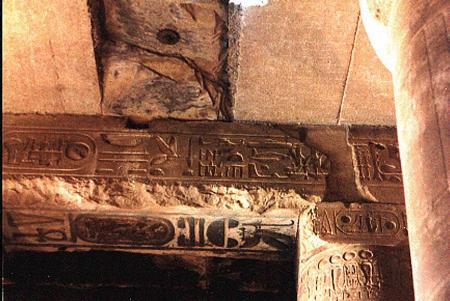
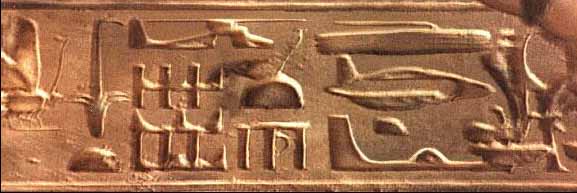
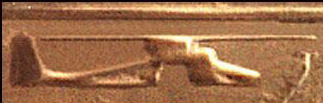
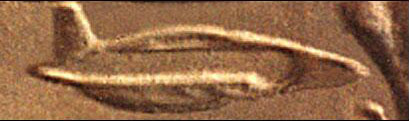
Flying Vehicles? Were the Ancient Egyptians that much advanced? [This message has been edited by supercar (edited 19 June 2004).] IP: Logged |
|
neo*geo Member Posts: 295 |
 posted 18 June 2004 06:57 PM
I would hope this forum can remain a place where people can express their views freely without fear of being disrespected or ridiculed. We can start by accepting that not everyone will agree on the the physical appearance of the ancient Egyptians. There is so much information to support both arguments that you can argue for weeks without changing someone's mind. Let's just keep things fair and allow different opinions. IP: Logged |
|
supercar Member Posts: 449 |
posted 18 June 2004 06:59 PM
I have notice that many theories are made about the AE statues of Pharaohs or Gods. For instance, I heard someone once say that the features of the AE statues are mainly symbolic and idealistic. The person goes on to say that the features on the faces of the statues may or may not ressemble that of the real ruler. He points out the 'Negro' features on one of the statues, and states that while this represents a ruler at a period when AE sculpturors began to represent rulers more realistically, it simply meant that, that particular ruler was a black person who was probably accepted in the Egyptian society and somehow worked his way to become a Pharaoh. The person also states that the 'Sphinx' of Giza, while some claim that it has 'Negro' features, it was built at a time when statues' features were not exact replicas of the real persons, but mainly idealistic. Therefore nobody can draw a conclusion of the race of the person the Sphinx was supposed to represent! Is this really the case? To me, it is like saying that the Greek statues of Gods and warriors, while they have the 'Caucasian' features, these features are mainly idealistic. Well, I don't rule out the idealistic nature of the statues, but I do think that the features on the statues are more than just idealism. So when Greeks make their statues, they are likely to incorporate features on statues they feel that represents them (Greeks as a people). This is how Greeks see themselves in general, regardless whether the statues directly ressemble the person(s) they are supposed to be paying tribute. This is the same reason, why we see 'Chinese' features on the the faces of the Chinese statues, and likewise 'Indo' features on Hindu statues. These statues may or may not be of real people, but one cannot simply ignore the significance of the features on the statues. While it is true that Ancient Egyptians at times accepted Foreigners, even as rulers, it doesn't mean that Egyptians in general weren't aware of their own identity! IP: Logged |
|
supercar Member Posts: 449 |
posted 18 June 2004 07:14 PM
quote: Your point is correct. Everyone has an opinion, and that is why we have Forums in the first place. However, if we are dealing with a forum like this, concerning an African civilization like AE, it is important that Africans try to point out what they consider as a mis-interpretation of their cultures. If Africans don't speak out on these issues, like one Egyptologist states, our history will forever be suspended in air. Westerners write our history for us, and draw up conclusions that are sometimes outrageous. If Africans don't make efforts to correct this, then who will? I am not suggesting that Westerners are going to change their ways for us, but it is important Africans keep their history intact for Africans, because it is part of our identity, i.e, where we came from, and how we came to be. One can only move forward, when one has a solid identity. IP: Logged |
|
Wally Member Posts: 244 |
posted 18 June 2004 07:26 PM
quote: This is the type of nonsense that drives me up the wall: "There is so much information to support both arguments..." Sure,if you leave the Egyptians themselves out of the equation. Enough already, it's now time to either put up or shut up! A) According to the Ancient Egyptians, which racial or ethnic group did they belong to? If you can answer these questions, then you can discuss the ethnic identity of the Ancient Egyptians, where their descendants are today, and how this relates to the broader history of Africa and it's peoples. If you cannot, then if nothing else, conceal your ignorance by remaining silent... [This message has been edited by Wally (edited 18 June 2004).] IP: Logged |
|
supercar Member Posts: 449 |
posted 18 June 2004 07:40 PM
Back to the AE art, we see flying objects that ressemble the aircrafts of today. This can only mean either the Egyptians were well ahead of their time, in terms of the technology, or they were making predictions of what was to come. Could there be any other symbolic meaning to those writings on walls? Another issue is Hieroglyphics? I know little about this language other than the symbols of animals, people and tools. I am sure some words from Hieroglyphics remain today, but for the most part it seems like an extinct language. How are people able to draw solid conclusions on the meanings of these scripts? I hear some people today say they are experts on the symbols and the language, but it can't be ignored that these same people weren't in AE. To me, it is more like a guess work, which can result to misleadings or outright errors in the meanings of the scripts. So, how these historians are able to construct names and detailed historical events from these pictorial writings, is a wonder! IP: Logged |
|
neo*geo Member Posts: 295 |
posted 18 June 2004 07:52 PM
quote: Wally, do you want to be part of the problem or the solution? I have my opinions but I accept that there are other theories out there. It's not fair to call someone ignorant because they disagree with your theory. If you wan to be somewhere where everyone agrees with you didn't you say you have a forum on your own website? Why don't you stay there? IP: Logged |
|
supercar Member Posts: 449 |
 posted 18 June 2004 08:12 PM
quote:
IP: Logged |
|
ausar Moderator Posts: 2060 |
posted 18 June 2004 08:46 PM
Supercar,the features of the AE will vary depending which part of Egypt the pharoah came from. Many 1,2,3rd dyansty rulers are very negriod in apperance;while later dyansties like 5,6,7,8,9,10 have somewhat mixted features that range. When I say symbolic I mean that in certain nomes pharoahs were much represented like the general population there. Like the Abu Simbel colossal looks like Nubians because it's in northern Sudan;while the bust of Queen Tiye in the Sinai looks like her representation. The only pharoah we have depicted from young to old is Senowrset III,and most of his features are very African. This is to be excepted since he originated in Aswan to Upper Egypt and Nubian families. Other dyansties like 16,17,18 originated in Luxor Egypt which was in southern Upper Egypt. What variation you see in modern day Egypt from the lightest northern[Lower Egyptian] to the darkest Egyptian in southern Upper Egypt is pretty much how things were like in antiquity.
IP: Logged |
|
ausar Moderator Posts: 2060 |
posted 18 June 2004 08:57 PM
The depiction of the so-called heliocopters,airplanes,and other glyphs need to be taken with some examination. What appears to be such objects are really just misinterpreted glyphs that somebody misread. Take for instance the supposed Dendera light which is really a snake with a lotus symbol somebody said was a light. I would be careful trying to interpret hieroglyphs to mean lightbulbs,cars,tanks,airplanes or any other objects. Ask yourself why have none of these things ever been found in ancient Egypt? The Mdu ntr[hieroglyphs] are idealograms which represented ideals in an abstract form. For instance the crocodile glyph might be associated with terror because it attacked the Egyptians while fishing in the lake. We can't be certain that these objects represent cars,planes,or any other objects we see in the modern world.
IP: Logged |
|
supercar Member Posts: 449 |
posted 18 June 2004 09:10 PM
quote: You've hit the bull's eye. Actually the person I was refering to in my earlier comment, was from something I read in a website. I should have given a reference, but unfortunately I don't have that info on top of my head. I was trying to portrait the myths the arise from AE art. I see the same thing coming from Hieroglyphics. People are literally making Bibles from these pictorial scripts, without proving beyond a doubt that they know the true meanings of each and every symbol. I feel that this language has for the most part died out, except for a few words here and there, perhaps mixed with popular languages. The reason for this extinction is no doubt the conquests throughout history, but it could also be because of it's practicality in modern times. It is obviously easier to read letters instead of pictorial symbols, and less time consuming. IP: Logged |
|
ausar Moderator Posts: 2060 |
posted 18 June 2004 09:22 PM
Read this website,supercar. My views tend to be the same as Frank Joseph Yurco who wrote about the ethnicity of the AE. I believe for the most part the rural Upper Egyptians past Asyut are pretty much the best representation we have of what AE looked like. The same is true of the north except the rural people in the north have more mixture than the southern Egyptians. We have discussed this many time on this board that it's begging to sound trite. http://www.geocities.com/Athens/Parthenon/9507/c-wh1-ane-yurco.htm IP: Logged |
|
supercar Member Posts: 449 |
posted 18 June 2004 09:26 PM
By the way, I've also noticed that many AE statues have their noses chipped off. Are these parts of the statues often built with such delicacy or what...what's up with that? [This message has been edited by supercar (edited 18 June 2004).] IP: Logged |
|
supercar Member Posts: 449 |
posted 18 June 2004 09:42 PM
quote: If you've noticed from many of my comments here, I pretty much agree with you Ausar, in your views of Egyptian ethnicity. Like I have stated in my opening comment, it is unfortunate that AE study is boiled down to just race, and like you stated, it is discussed here so repetitively, that it's begining "to sound trite". That is why I opened this thread; to set the records straight as much as possible, that it's not just the ethnicity that is often misrepresented, but also other aspects of AE including art, religion and science. I am trying to deal with myths in all of these aspects here. As much as I want to broaden the subject, which is really my goal here, the fact remains that race is and has always been a 'hot' debate when it comes to AE study. This doesn't just apply to this board, but it is also an issue among the science community, namely anthropologists or Egyptologists. [This message has been edited by supercar (edited 19 June 2004).] IP: Logged |
|
supercar Member Posts: 449 |
posted 18 June 2004 10:57 PM
Quote Frank J Yurko: "In their ability to ignore race and absorb foreigners, ancient Egyptians outshine our own achievements and should serve as our model. They also surpassed us in providing legal and social equality for women, guaranteed by "the Law of Pharaoh." How then can we be so presumptuous as to assign our primitive racial labels onto so wonderful a culture." Thank you for your reference Ausur. Frank makes a valid point in the above quote. I guess, the issue of race has mainly been fuelled by school book and Hollywood movie depictions of Ancient Egyptians as mostly 'white' people. This has no doubt created a resentment among blacks, who don't view most Africans as 'white' people. The other factors leading to these debates, is the U.S. racial identification system when applying for jobs, financial aid and so-forth. Normally, in these indentification systems, it would be stated that North Africans are of the 'white' race. Again, this is where resentment comes from, thereby lending a hand in raising debates about North Africa, where civilization started. Having said that, I must say that I disagree with a statement made by Frank Yurco suggesting that the AE racial makeup is pretty much like it is today. Mr. Yurco himself had stated that over time people of diverse races came to Egypt through wars and perhaps trade or business. This explains Egyptian ethnicity today, but doesn't hold true of the original AE ethnicity. The original ethnicity was primarily of 'black' race of various shades, as can be seen from artifacts, statues and pictorial scripts. Yurco, however correctly stated that the AE related more to other Africans such as the Nubians and to some extent Libyan Berbers. Nevertheless, it doesn't mean that things have changed that much, in terms of lighter-skined (yet not white) Egyptians being in lower Egypt and Darker-colored being in upper Egypt. So, overall I agree with your accessment of AE ethnicity. But once again, I hope this thread will end up in the discussion of myths regarding all facets of the AE culture, not just the ethnicity aspect. IP: Logged |
|
ausar Moderator Posts: 2060 |
posted 18 June 2004 11:13 PM
Supercar,the first pharoahs came from southern Upper Egypt and Yurco admits this in his various postings. I tend to believe that perhaps influx of foreginers might have lightened Lower Egyptians,however,I tend to believe that most were generally lighter than Upper Egyptians. We see Western Asian elements within Lower Egyptian and even some negriod elements from the south. We can clearly state that probabaly overtime two elements merged amung the royalty which unied the two lands. Most rural Upper Egyptians have mixed very little with Arabs,Turks,or Europeans. Some Greeks probabaly mixed with some people in Middle Egypt which is probabaly why you might see lighter people in areas like Minya or Assuit. Both these regions are in Middle Egypt,but even in these areas you see dark brown people with course hair texture. I have seen such features also amungst lighter Delta Egyptians. AE culture and people came from the pre-dyanstic cultures of Merimede,Badarian,Naqada I,II,III,and Omari. Merimede was the main culture in Lower Egypt;while Naqada and Badari existed in Upper Egypt. We also have Saharan elements that were absrobed along with this general population.
IP: Logged |
|
ausar Moderator Posts: 2060 |
posted 18 June 2004 11:20 PM
IP: Logged |
|
supercar Member Posts: 449 |
posted 19 June 2004 12:00 AM
quote: No doubt. Foreign religion may have spread throughout Egypt by way of conquests, but it won't change much of the traditional values. This explains the popular languages now found in Egypt. For instance, the muslim groups, are more likely to speak Arabic, because that is the language they needed to learn in order to understand the Kuran, which obviously spells out Islamic values. Nevertheless, I still want to know the extent to which Egyptians speak Arabic. Is it the same dialect as Arabs in the Gulf? I would imagine that there is some Kemetian words mixed with it. Also, is there any group in Egypt, which currently speaks the original language used in AE? From what I know so far, that isn't likely the case. Nevertheless, Egypt is not that much different from other African nations that have been colonized in the past, in that, the conquerors have attempted to eliminate traditional values but met with very little success. In one of your dicussions on this board, I noticed the back and forth disagreements regarding Egyptians as Arabs. The person from Dubai was insisting that Egyptians were Arabs, and others were disagreeing. Once again, another widely held myth not just in the Arab world but elsewhere. Just because most people speak Arabic as a common language in Egypt, doesn't mean that they are Arabs, any more than me being considered British because I speak English. [This message has been edited by supercar (edited 19 June 2004).] IP: Logged |
|
Keino Member Posts: 262 |
posted 19 June 2004 01:30 PM
Interesting! I totally agree with Wally on the "race" and cultural issues behind AE. I too was ignorant about the different phenotypes in Africa until I started meeting Africans (Kenyans, Ethiopians ect). They call their features Caucasian when in fact those features existed in Africa for eons before any "white" people arrived. Like Wally said the parent don't resemble the children, the children resemble the parents. I have seen numerous Africans with these facial features with dark brown skin and very KINKY hair. Most Africans are a mixture of all of theses features, "Negroid", "mongoloid" and " Caucasoid". But there are some whom looks more towards either end. In my inspection of their facial features, I have noticed that some of their noses are smaller and more narrow than any white person that I have ever seen. Their features are very distinct in my opinion. Looking at these people I can see how some of them can fit right into those AE murals that people today call Caucasian! Lets follow race from the evolutionary stand point that we are supposed to be and there will be no confusion. On the issue of culture I can identify with Ausar as well as Wally. How can one dare take a people and strip them of their identity and them call them that which they are not. If the AE said that they were African then they are African, if they said they were black then they were black. The most despicable aspect of "western-wash" is that fact that they ignore who the Ancient Egyptians say they were! This is the epitome of not just ignorance, but arrogance! I would be infuriated if any people try to define my Bahamian culture and who we are as a people or try to separate it from the Caribbean/West Indies. I can only imagine how you feel Ausar!
quote: ------------------ IP: Logged |
|
Wally Member Posts: 244 |
posted 19 June 2004 02:18 PM
quote: I see that you can't answer my questions. And you keep insisting, like those who wish to think that there's a debate here, that I am presenting MY theory. It is the Ancient Egyptians who are speaking here! If you want a debate then debate the accuracy of my presentation of their ideology! I seriously doubt that that will be forthcoming.
quote: Boomerangs are probably the only heavier-than-air flying machine that existed in Ancient Egypt (eta; omomti; ga; thenea). Tutankhamen's tomb contained a collection of boomerangs of both the straight flying (hunting) and returning variety. These questionable glyphs you show are probably misread hieroglyphs or "a little prestidigitation." We surely would have found the remnants of a bunch of them by now, don't you think?
quote: It isn't historians, per se, who retrieve ancient languages, it is philologists and linguists. They have a scientific methodology which does include guess work, but it's theory-test-conclude. The Ancient Egyptian language is not an extinct language, rather more like a colonized one. The latest stage of this language is the Coptic language and it also has many relatives in non-Coptic Egyptian words, and in several other African languages. Here's an simplified example of a method: The "cartouche" hieroglyph was known to have contained the name or title of a king. Linguists knew that the Coptic word for "name" is "ran" (it is also "ran" in Yoruba). They then theorize that this cartouche represented the word "ran", and so on (test-conclude)...
quote: Come on now man, you KNOW what's up. And you do come up with some interesting topics. Maybe instead of continuing on from your original topic, you should post these as new topics. Just a suggestion... Also regarding your conundrum about colors used at Egyptian funerals - here's the Ancient Egyptian ideology regarding this. [This message has been edited by Wally (edited 19 June 2004).] IP: Logged |
|
ausar Moderator Posts: 2060 |
posted 19 June 2004 03:14 PM
Throw-sticks seen in the depictions are actually Nubian in origin,and so is the long-bow which replaced the primitive weapondary of the Egyptian bow around the Old Kingdom. Just thought I might throw that in there.
IP: Logged |
|
supercar Member Posts: 449 |
 posted 19 June 2004 11:54 PM
quote by Wally: And you do come up with some interesting topics. Maybe instead of continuing on from your original topic, you should post these as new topics. Just a suggestion... Thank you for the advice, but I believe most of the subjects I bring to this thread, have in some form or the other been victims of mis-interpretation and even outright distortion. IP: Logged |
|
supercar Member Posts: 449 |
posted 20 June 2004 12:24 AM
quote: What you said is right on, but I don't believe they are aircrafts myself. I've noticed many theories about these images, and I just wanted to get a feel for theories that members of this board have about these images. Any person with an average intelligence, should realize that some archeological evidence of these objects would have been found, had they existed. Having said that, you suggested that it could be a boomerang, and it may well be the case, but don't you think that these boomerangs look weird! Particularly, the image with the helicopter shape, what kind of a boomerang on this green earth, is that supposed to be? Rather odd for a boomerang...
quote: I have always thought there was a lot of guess work involved in the translations of these pictorials. It is no wonder there are a lot of distortions when it comes to AE study. Some so-called experts are able to manipulate AE history with their own translations of these images, mainly to satisfy their own political views. I have spelt out an example of this in my earlier comment when I talked about statues such as the Sphinx! IP: Logged |
|
supercar Member Posts: 449 |
posted 20 June 2004 12:40 AM
quote: Please check out my reply to Wally regarding the boomerang theory!
quote: That is right. It makes perfect sense! We've seen such actions in Afghanistan, where the Taliban rulers destroyed those historical statues of Buddha. I think this is big injustice for future generations who want to learn about the past. [This message has been edited by supercar (edited 20 June 2004).] IP: Logged |
|
supercar Member Posts: 449 |
posted 20 June 2004 03:05 AM
quote:
quote: Thank you Wally for providing me with the link of your website. I just thought it was interesting, that you mentioned something like the quote I provided above, because it is similar to Frank Yurco's observation (his quote is the second one). Although, As I pointed out to Ausur earlier, I don't agree with Frank Yurco's observation all the way, it corroborates what is mentioned on your website. I disagree with Yurco, in that he states that AE racial composition is similar to what it is today. This is inconsistent with history, because the AE didn't intermingle that much with foreigners in the beginning of the dynasty, or throughout much of the empire for that matter, even as they accepted foreigners . His claim that captives and foreign slaves were later on integrated into Egyptian society and intermingled with Egyptians, while reasonable, overlooks the logic that these slaves weren't significant enough to change the general racial makeup of Egyptian population. He also misses out on the fact that the Arabs mostly intermingled after their conquest of the Egyptians. Even then, like someone on this board had once pointed out, the Arabs didn't intermingle much with the upper Egyptians, because of their conservative nature and how they viewed the Egyptians as simply peasants who weren't sophisticated. How Yurco could then conclude that Egyptian racial mix today is pretty much like how it was in the pre-dynastic or even dynastic times, is just erroneous to say the least! The people in the upper Egypt and perhaps the lower Egypt have been conservative for the most part, and therefore the racial composition has pretty much stayed the same. When one goes to bigger cities like Cairo, that's where a heterogeneous population prevails. Wally, what you mentioned about the 'Saddat' movie in terms of the reaction it caused in Egypt, is particularly interesting, because some white Fellow also mentioned it on a website (can't remember the address) as a defence that Egyptians saw themselves as 'white'. Immediately, I knew that the white guy had to be taking about the elite Arab-Egyptian ruling class. It doesn't sound like something an ordinary Egyptian will make an issue of! IP: Logged |
|
neo*geo Member Posts: 295 |
posted 20 June 2004 03:17 AM
Who here has actually visited Egypt? IP: Logged |
|
supercar Member Posts: 449 |
posted 20 June 2004 03:51 AM
quote: Neo*geo, there are Egyptians on this board, whom while maybe stationed overseas, have been born and brought up in Egypt. Myself, I have been to Cairo for a week and my Father had been there too; this is where he learnt his fluent Arabic! Plus, one doesn't have to necessarily be in a place to acquire significant knowledge on a subject. People have friends, co-workers and so forth, who come from Egypt. Like I said earlier, we have Egyptians who have websites and participate in Forums such as this one, to educate those who want to know about them. However, Neo*geo, if someone was to ask you about your culture and ethnicity, shouldn't they expect you to know something about it! Who is to say that you are uninformed about where you came from. IP: Logged |
|
ausar Moderator Posts: 2060 |
posted 20 June 2004 09:30 AM
quote:
quote: What happened in some regions of Upper Egypt was some leaders in the Ummayyad attempted to settled Qayis Arabs[Syrian bedouins] amung the Fellahin to Arabized them;however the later was refused and the Arab tribes were kicked into Libya. In later times the Bani Hilal and Bani Sulaim were also settled and kicked out. The only pressence you find Arabs in Upper Egypt is Suhaj,Assuit,Minya,and Nag Hammadi. Many of the villages in this region have Arabic names. Most of these arab tribes bitterly hate the Fellahin and will not mix with them even though many are Muslims. The blood freuds between Fellahin and Arabs has been going on since the 14th century. Many people might note much of these regions are the same areas where tar[revenge killings] are quite common within Egypt. These people live in little confinds called nags seperate from the indigenous Fellahin in Middle and Upper Egypt.
In later periods during the Byzhatine era it was common for foregin mercenaries from Syria to have land given to them by the Byzhatines as gifts. Going as far back as the Ptolomeic times it was still a common pratice for this. Many Greeks also probabaly became assimilated into the general Fellahin population in Middle Egypt.
quote:
IP: Logged |
|
supercar Member Posts: 449 |
posted 20 June 2004 10:03 AM
quote: Yeah, but I doubt assimilation through these practices was enough to change the overall or general ethnic makeup of the population! IP: Logged |
|
supercar Member Posts: 449 |
posted 20 June 2004 10:19 AM
quote: What to make of this...Anyone? IP: Logged |
|
ausar Moderator Posts: 2060 |
posted 20 June 2004 10:49 AM
Actually,the argument that the Colchis were black is not just pointed out by Herodotus but by Pindar who was a Greco-Roman poet. Not to mention in the modern day region of the black sea there are still black populations in that region.
Herodotus wasn't the only one in antiquity to mention the presence
Here's some additional information:
quote:
Previous to Herodotus the word melachrones[very dark skin] and olritches[wooly,really curly hair] was used by Homer in the Illid describing a black patron of Homer as such. The term melachrones and olriches was never used by Greeks or Romans to describe Syrians,Phonecians,or Yemanis who were much darker than themselves. Which meant that Egyptians were substantilly darker in complexion,but lighter than the the darkest people being Aethiopies. IP: Logged |
|
Obenga Member Posts: 299 |
posted 20 June 2004 10:49 AM
Supercar, Whoever wrote that is playing with words. Egyptians never looked like "Sub-Saharan" africans. The writer left out the cultural traits this group also shared with Egyptians. There was talk that an Egyptian Army passed through that area some of them remaining there and settling down. Also I think the correct translation called them Black not dark skinned. the real point here is that many who want to discredit the Afrocentric movement pick and Choose who, where, and what they will try to Refute. There are many Scholars out there called Afrocentric who the critics will not face in a public forum because they end up looking bad and uninformed like the author of the Quote indicating that Egyptians and Sub-Saharans should look the same to be considered black, a good scholar would climb all over that point in a minute [This message has been edited by Obenga (edited 20 June 2004).] IP: Logged |
|
Thought2 Member Posts: 265 |
posted 20 June 2004 12:38 PM
It was long ago established that the AE population was consistant until the end of the Middle Kingdom, when there was a large infiltration of populations from Eurasia (Hyksos, etc.). Please read: Genetical Change in Ancient Egypt IP: Logged |
|
supercar Member Posts: 449 |
posted 20 June 2004 12:45 PM
quote: It's interesting that you mentioned the army of Egyptian Emperor Sesotris, because Herodotus mentions this in his quote. But the confusing part of Herodotus' observation is when he states that " they have black skins and kinky hair (to tell the truth this proves nothing for other peoples have them too) and secondly, and more reliably for the reason that alone among mankind the Egyptians and the Ethiopians have practiced circumcision since time immemorial. " It is confusing, because who is he referring to when he says "other peoples have them too"? I imagine that he was trying to verify his opinion that the Cholchians decended from the Egyptians. But in the process of doing so, he was trying to say that skin color or hair nature alone could not prove that assertion. This prompts him point to further evidence by speaking of the origins circumcision rituals among the Egyptians and Ethiopians. quote: Another interesting point you made. The guy I quoted earlier also suggested that Herodotus was speaking in comparative terms when he was describing Egyptians as 'black with kinky hair'. According to him, Herodotus must have obviously seen the Egyptians as darker than the Greeks, and that their hair was comparatively curlier than that of the Greeks, prompting him to describe Egyptians as he did. He adds that, that doesn't necessarily mean the Egyptians were 'Negro'. They may well have looked like the North Indians but with curlier hair, as described by some Greco-Roman historians (according to the guy I quoted). By the way, Obenga, you make a good point. Most of these people fail to see that Ancient Egyptians came in different shades, particularly when one moves from Lower Egypt, to middle Egypt, and then to upper Egypt. There tends be a shift from light-brown to very dark-brown. Similarly, features vary too. [This message has been edited by supercar (edited 20 June 2004).] IP: Logged |
|
ausar Moderator Posts: 2060 |
posted 20 June 2004 01:05 PM
When Greco-Roman writers say the Egyptians looked like northern Indians and the southern Indians looked more like Aethiopies they just mean that Egyptians are lighter than the Aethiopies. Still for an Egyptian to be darker than a Greek has to be farily dark copnsidering Greeks and Romans were darker than your average whites. Arab writers from Iraq during the Middle Ages described the Upper Egyptian people are being dark skinned which meant litterly almost black in comparison to Arabs. I pointed out earlier that a black person in the Illid was also called melachrones[dark skinned] and olirches[wooly or curly haired]. Why play around with semantics when we have modern Egyptians with kinky type hair. Even lighter Egyptians from the north. It's doubtful that the Greeks ever went to southern India and probabaly most went as far as Punjab. Not all northern Indians are fair skinned with many around Bangladesh that are darker than Africans.
IP: Logged |
|
supercar Member Posts: 449 |
posted 20 June 2004 01:34 PM
Well, I think I'll shift gears here a little bit. Another thing I want to set straight is the language. How much of the original Egyptian language survives to this day in Egypt? As I've repetitively said, I understand some words are likely to be found here and there, not only in Egyptian but in certain African languages. I just want to know the extent to which it is used today, because I hear conflicting stories regarding this. IP: Logged |
|
ausar Moderator Posts: 2060 |
posted 20 June 2004 02:26 PM
Supercar,understand I am no linguist nor profess to be. I understand that some people in Egypt have stated the modern colloquial Arabic of Egyptians today is really the Late Phase of the AE language. The AE language went from Old,Middle,New Kingdom to the last phase being Coptic. Regional dialects of Coptic ranged from Sahidic in Upper Egypt to Boharic around the Delta. People insist that when the Arab invasion the language of the Egyptians shifted from Coptic to Arabic. Truth is that most rural Egyptians in Upper Egypt continued speaking such language untill the late 19th century. The southern dialect of Coptic most like the AE language is Sahidic.
See the following:
http://www.coptic.org/language/georgy/common.htm IP: Logged |
|
Wally Member Posts: 244 |
posted 20 June 2004 04:03 PM
One must be constantly vigilant and therefore wary of such people as Frank Yurco, Martin Bernal, and Molefi Asante: a) Yurco and Bernal, at first glance, seem to be challenging the status quo on things Ancient Egyptian. In fact, they really aren't, they are not revolutionizing anything, they are merely reformers, and reform is the primary method used to maintain a status quo. As for Bernal, an example of his intellectual weakness was in later expressing regrets that he didn't name his work 'African Athena' rather that 'Black Athena.' - this is intellectual cowardice. Read these guys, absolutely, but don't trust them completely! b) Mr. Asante should not be completely trusted either, if for nothing more than coining the idiotic term "afrocentrism." It was coined, I suspect, to encourage a movement against "eurocentrism", or replace White racism with Black racism. 1) The destruction and distortion of African culture was caused by colonialism and slavery. White racism was the ideological effect of this phenomenon. Intelligent people treat the cause rather than the effect. The creation of this term, like 'Black Studies' serves no other purpose than to create a new curriculum, and therefore new jobs for these guys. 2) The accurate, scientific presentation of ancient Africa's history and its contribution to humanity should be, especially in a diverse country as America, a part of the standard curricula. It should be a requirement and not an elective. [This message has been edited by Wally (edited 20 June 2004).] IP: Logged |
|
supercar Member Posts: 449 |
posted 20 June 2004 10:28 PM
quote: True; This applies to not just AE study, but necessary for anyone who seeks the truth, and wants to live in reality!
quote: Again I agree, in that, the term has become synonymous with 'agenda' rather than setting the 'facts' straight. The term 'Afro' together with 'centrism', has inevitably cultivated the idea of 'seperatistism' among non-blacks (predominantly white men). This has undoubtedly brought about debates between these people and blacks, and caused white supremacists with an agenda to come on board. But I think the word was meant to be a well meaning one, the goal being the upliftment of black people by setting the truth straight about their accomplishments. As it is by now generally known, blacks have historically been underrepresented and their accomplishments to society understated. The broader aim of these so-called Afro centrists was to ensure that these facts, once acknowledged, should be assimilated in the overall educational system. This would no doubt enable people in general to realize the contributions of blacks, not take them for granted in society and thereby eliminate the alienation of blacks. To make this happen, professors like Diop and other well meaning blacks, have had to diligently re-surface these facts, back them with scientific findings and real evidence, and make them irrefutable. The destruction and distortion of African culture was caused by colonialism and slavery. White racism was the ideological effect of this phenomenon. Intelligent people treat the cause rather than the effect. This goes back to the comment I just made about under representation.
quote: It is unfortunate that the original Coptic language has somewhat disappeared. This would explain your awkward situation in explaining its existence today, Ausur. This has been the result of not just conquests of Egypt, but constant calculated and systematic methods used by the ruling Egyptian elite to Arabize a reluctant population. It is a classic way of suppressing the true cultural identity of people, because more often than not, members of the ruling elite have some Arab blood. So the way to make the general population falsely identify with them, would be to suppress their distinct culture, and make them feel that they are being represented at the national level. It really is a symptom of colonization. Everywhere imperialists go and settle, they’ve attempted to consolidate their rule by subduing any unifying sentiment of populations that outnumber them. To this extent, the ruling elite has been for the most part successful in Egypt. Perhaps, the question you have to ask yourself, is whether it is a coincidence that AE study is not as diligently taught as it should be in Egypt. [This message has been edited by supercar (edited 21 June 2004).] IP: Logged |
|
homeylu Member Posts: 333 |
posted 24 June 2004 01:06 AM
Originally posted by Wally Professor Diop was NOT an 'Afrocentrist', he was an Egyptologist and historian (period) Sorry to have to disagree with you. But C.A. Diop was very much an "Afrocentrist" scholar. And unlike many of you, he didn't shy away from the label. He embraced it. He was part of the movement of the likes of W.E.B Duboise, and Marcus Garvey, who helped revolutionize the thought. As Afrocentrist is nothing but a Noun/title derivitive of the adjective afrocentric which can be described as "Centered or focused on Africa or African peoples, especially in relation to historical or cultural influence" And if C.A. Diop wasn't an African-centered Scholar, then there is no label to fit him. He was not simply a historian or Egyptologist, he embraced several disciplines including, humanities(philosophy, liguistics), social science(history), physical science(anthropology,archaeology, physics, and chemistry) and also an "activist" against French Colonialism. He didn't limit his research to Egypt, he has published several works that has to do with other parts of Africa. He used Egypt/Ethiopia as the basis of African history, in the same sense the "Eurocentric" scholars would use "Greece/Rome" as the basis for their history. As Director of a Radiocarbon Laboratory, he pioneered the "melanin dosage" test used by Forensic Scientist on burned victims. So I believe if Diop were to self-describe himself, it would be an "Afrocentric Scholar". As the study of Africa was truly the "center" of his lifes work. May his soul rest in peace. IP: Logged |
|
supercar Member Posts: 449 |
posted 24 June 2004 02:26 AM
[QUOTE]Originally posted by homeylu: Originally posted by Wally [b]Professor Diop was NOT an 'Afrocentrist', he was an Egyptologist and historian (period) Sorry to have to disagree with you. But C.A. Diop was very much an "Afrocentrist" scholar. And unlike many of you, he didn't shy away from the label. He embraced it. He was part of the movement of the likes of W.E.B Duboise, and Marcus Garvey, who helped revolutionize the thought. As [b]Afrocentrist is nothing but a Noun/title derivitive of the adjective afrocentric which can be described as "Centered or focused on Africa or African peoples, especially in relation to historical or cultural influence" And if C.A. Diop wasn't an African-centered Scholar, then there is no label to fit him. He was not simply a historian or Egyptologist, he embraced several disciplines including, humanities(philosophy, liguistics), social science(history), physical science(anthropology,archaeology, physics, and chemistry) and also an "activist" against French Colonialism. He didn't limit his research to Egypt, he has published several works that has to do with other parts of Africa. He used Egypt/Ethiopia as the basis of African history, in the same sense the "Eurocentric" scholars would use "Greece/Rome" as the basis for their history. As Director of a Radiocarbon Laboratory, he pioneered the "melanin dosage" test used by Forensic Scientist on burned victims. So I believe if Diop were to self-describe himself, it would be an "Afrocentric Scholar". As the study of Africa was truly the "center" of his lifes work. May his soul rest in peace. [/b] You make a good point about C.A. Diop. If you carefully read the exchange between Wally and I, you'll see how I defined what I percieve to be Afrocentrism. I told him that other people have come to associate the name with individuals whom they percieve to exaggerate 'black' accomplishments in order to create a false sense of security among black generations. I have in a way told Wally that this is not the meaning of 'Afrocentrism'; this word was actually coined in a well-meaning way to uplift black communities by resurfacing facts that have long been suppressed in the mainstream world, among other things. I added that white folks, particularly supremacists with an agenda, try to cash in on the 'Afrocentric' term by associating it with racist agenda, so that when they apply it to black scholars or scientist like C.A. Diop, they can try to discredit them. We've seen people like Lefkowitz repeatedly use 'Afrocentrism' as being responsible for feeding black generations with falsified history, particularly when it comes to the achievements of AE civilization and it's racial composition. She wrote a passionate book attacking both lettered and unletter Black Scholars regarding this. [This message has been edited by supercar (edited 24 June 2004).] IP: Logged |
|
homeylu Member Posts: 333 |
posted 24 June 2004 06:06 AM
Originally posted by Supercar We've seen people like Lefkowitz repeatedly use 'Afrocentrism' as being responsible for feeding black generations with falsified history We can not abandon a movement based on the likes of Mary Lefkowitz. This is a typical Jewish person who loves to yell "anti-semetism" in one breath and yelling abandon "afrocentrism" in another breath. She wants an entire movement based on scientific evidence abondoned based on something as trivial as did "Aristotle steal his philosophy from Egypt, because some library was not built" and the Black Masons is based on some "Egyptian mythology" Now mind you she makes no mention of the fact that our very first president George Washington was himself a "mason" and define a lot of American democracies-but the Black Masons "are idiotic." And she makes no reference whatsoever to the fact that Herodotus, a Greek Historian himself, and proudly coined "The Father of History" by western scholars, could very well be labeled the first "Afrocentrist" after refererring to the Egyptians on several accounts as "black-skinned, wooly haired" that the "Greeks borrowed their gods from". "gods" being religion, "religion" forming the basis for what was to become Greek Philosophy. Most of her book is based on pure passion and exaggeration in itself, when labeling Afrocentrism as "mythology". She is barely able to discredit C. A. Diops extensive work, which is based on significant scientific evidence, with a few "minor" flaws. She is nothing but a Greek Philosophy professor, and has not done any in depth studies in African History nor AE history to make some of the claims she has made. If we found errors (and there are many) in the several anthroplogical theories that abound, would she suggest the science of anthropology be "abandoned" I doubt it. Especially since "afrocenrism" is only taught under the heading of "African Studies" at her university, which is more than appropiate. She has been sued by the African Studies professor Dr. Martin for defamation of character for spreading outright lies in mass media. No one should take of woman of her character seriously. We are only giving people like her ammunition when we avoid rather than embrace the Afrocentric line of thought. Its American Jews like her, that have long denied the African "Lemba" and India's "Bene Israel" jews the true heritage before the advent of DNA studies. Let her tell it, everyone should take pride in Ancient Egyptian studies "except" African Americans. And even worst is the underlying message behind her works in that we should leave current Egyptian History "unchallenged". I have a few choice words for Mary, but this is not the appropiate place to unleash them. (wink) IP: Logged |
|
supercar Member Posts: 449 |
posted 24 June 2004 11:40 AM
I agree with the stuff you said about Mary Lefkowitz, but it must be clarified that I in no way agree with her views. I am simply stating that there is a campagne by the likes of her, to discredit "Afrocentrism". Because of people like her, the white supremacists under the guise of 'Eurocentrists' are compagning against "Afrocentrists", in order to create the false impression that "Afrocentrism" is also an ideology. It is part of a calculated effort to discredit "Afrocentrism". In reality "Afrocentrism" cannot be equated to "Eurocentrism" for many obvious reasons, but more importantly that it is not an "ideology", but an institution to bring to light the truth and encourage blacks. With that said, there are a very few black individuals who go over the board a little bit and call themselves Afrocentrists. These few individuals are not helping Afrocentrism as a legitimate Scholarship institution, because Eurocentrists use them as an example to discredit all Afrocentrists. Not that this should matter to Afrocentrists, but that is the reality! This is off the topic, but I hope this assessment is satisfactory to you. IP: Logged |
|
supercar Member Posts: 449 |
posted 24 June 2004 11:56 AM
I agree with your views on Mary Lefkowitz, and it must be clarified that I am in no way endorsing her. I was simply stating that Lefkowitz and the likes of her, have been campagning to discredit "Afrocentrism". People like her, have enabled the white supremacists under the guise of "Eurocentrists" to continue compagning against Afrocentrists, in order to creat the false impression that Afrocentrism is an ideology. It is all part of a calculated effort to discredit Afrocentrists. However, in reality Afrocentrism can't be compared to Eurocentrism for many obvious reasons, but most importantly that it is an institution to bring to light the truth and to encourage blacks. It is not an ideology! With that said, there are a very few black individuals who go over the board a little bit, and call themselves Afrocentrists. These few individuals aren't helpful to Afrocentrism as a legitimate institution of scholarship, because Eurocentric minded people tend to use them to discredit all Afrocentrists. Not that this matters to Afrocentrists, but it is the reality! This is off the topic, but I hope that my assessment is satisfactory to you. I apologize for the repetition due to technical problem. [This message has been edited by supercar (edited 24 June 2004).] IP: Logged |
|
neo*geo Member Posts: 295 |
 posted 24 June 2004 11:59 AM
The problem I have with Afrocentrics is that they often inadvertently look at history from Eurocentric world views. Instead of trying to prove the Egyptians colonized Greece and blacks founded western civilization, we should promote more study of Nubia, East African Kingdoms, and West African Kingdoms. We have just scratched the surface on the history of Nubia and the ancient Ethiopian Kingdom of Axum. Much more needs to be done. While we bicker over what shade of brown the ancient Egyptians were there are historians trying to prove that the ancient Kingdoms in Mali and Zimbabwe were founded by Arab and Jewish people. Egypt is a major part of the study of African history but for too many black Americans, it's the only part they know. IP: Logged |
|
supercar Member Posts: 449 |
posted 24 June 2004 12:14 PM
quote: I agree with you. The issue here is that Ancient Egypt being a cradle for civilization, makes it a centre of debate. This unfortunately explains why other African History is overlooked by many black Americans. This has been largely contributed by the national standard curricula, and in a big way by more Hollywood movies concerning Ancient Egypt rather than other ancient African cultures. I whole-heartedly agree with you when it comes to this. There are other important historical events of Africa, that black Americans should take the initiative of studying, and not just focus on Ancient Egypt! By the way, I have noticed that most black Americans tend see history of slavery in a distorted way. Most have this view that Africans were just "passive" individuals who helplessly stood by and allowed their fellow Africans to be kidnapped and taken away to the Americas and Europe for slave labour. In reality there were many significant struggles of resistance before those Westerners got a hold of the African captives as slaves. If one digs deep enough in history, one would realize this. It brings me back to the reason, why black Americans should diligently study other African History! [This message has been edited by supercar (edited 24 June 2004).] IP: Logged |
|
ausar Moderator Posts: 2060 |
posted 24 June 2004 01:29 PM
quote: The premise that AE is the cradle of civlization is simply wrong. Many areas across the world developed independent civlizations without assiatance from other people. Much older cultures exist in Syria,India,and Mesopotamia that are much older than AE civlization. People tend to forget this,but I have heard arguments wrongly that the AE civlization goes back 15,000 years which is not probable. Recently,scientist have found a much older civlization in Iran that precedes Sumer and Indus Valley in India. I understand that white supremist from the 19/20th century have wrongly snubbed Africans without a civlization. Most of it is due to gross negliance of African histography .
quote:
quote:
quote:
quote:
IP: Logged |
|
supercar Member Posts: 449 |
posted 24 June 2004 02:14 PM
quote: Good break down of an explanation for why black Americans shouldn't just stop at Ancient Egypt, and explore beyond. One thing though: while parents should encourage further study in history, in the end, it really boils down to the individual to make a decision on how far to commit to further study in historical events that he/she can relate to. Like you said, you've decided to venture further into your cultural history, and nobody pushed you to do so...and nobody should have to tell you to do so! In general, I doubt anyone looks at historical events to determine the success of their future, but it plays a role in building a sense of identity that could in some ways help one to seek progressive ways to move forward. I am glad that you've pointed out myths in the general view of Ancient Egyptian Civilization as one of the oldest civilizations and how other important events that have popped up independantly elsewhere are overlooked. But you should go back and read my comment. You'll notice how I said "a" Cradle for civilization, because I realize new discoveries are being made! IP: Logged |
This topic is 5 pages long: 1 2 3 4 5 All times are GMT (+2) | next newest topic | next oldest topic |
  |
|
Contact Us | EgyptSearch!
(c) 2003 EgyptSearch.com
Powered by Infopop www.infopop.com © 2000
Ultimate Bulletin Board 5.45c