The Cro-Magnon type has tacitly been invoked as the most likely forebearer of contemporary Europeans—where human paleontological record of Europe is concerned—within "Western" academic media circles, the so-called remains having been branded as being that belonging to modern anatomically modern human phylogen. Recently, the Oase 2 cranium finding in Romanian Pes¸tera cu Oase cave setting has culminated into efforts to present another viable alternative to the Cro-Magnon type, as potential forebearers of contemporary Europeans, given that cranio-morphic assessment renders it relatively more modern than the rather incomplete item of the Oase I mandible. However, the Oase 2 is determined to have its own set of peculiarities that distinguish it from modern human examples, whether it happens to be those of the Middle Paleolithic, Early Upper Paleolithic, Middle Upper Paleolithic or from thereon [see: H. Rougler et al. (2007)]. This allows the Cro-Magnon to retain its relative privileged place in human paleontological record of Europe, as likely ancestors of contemporary Europeans. However, while Cro-Magnon ties have been insinuated in northern Africa [re: Mechta-Afalou and Mechtoids], few references to human paleontological, if any, have actually been made that directly tie the so-called "Middle East" and possibly even the Central Asia—the two main alternatives generally referenced within "Western" academia, with regards to the corridor for the peopling of Europe with anatomically modern humans—to the Cro-Magnon remains of Europe...or has there been considerable publication otherwise?
Posted by Clyde Winters (Member # 10129) on :
Cro-Magnon could not have entered Eurasia from the Levant since it was occupied by Neanderthals until after 28kya. The entered Eurasia from Africa through Spain and made their way Westward (Grimaldi).
As a result, the Cro-Magnon people were San people. I explain this in detail in an upcoming paper. When it is published, hopefully, later this year I will direct you to it.
.
Posted by Mike111 (Member # 9361) on :
Damnit Clyde, you have to make up your mind, either Cro-magnon was a primitive humanoid or a full-fledged human - he can't be both.
In either case he couldn't have anything to do with San or Grimaldi, as they were unquestionably full-fledged modern humans.
Not only that, the genus homo-sapien-sapien (modern humans) is at least four (4) times OLDER than Cro-magnon.
So if cro-magnon was even in the genetic line of modern humans, how would you explain the "throw-back" nature of cro-magnon?
I mean, since when does the younger, more modern creature, represent an inferior breed with less capabilities? (excluding White people).
Posted by Mike111 (Member # 9361) on :
For those scratching their heads and wondering "So then, where did Cro-magnon come from?"
Cro-magnon was born in the middle-east. His parents were some horny Modern-men and some Neanderthal females who happened to be available and receptive.
Cro-magnon entered Europe at about 30,000 B.C.
Modern-man Grimaldi (the San) entered Europe much earlier at about 45,000 B.C.
Posted by The Explorer (Member # 14778) on :
quote:Originally posted by Clyde Winters:
Cro-Magnon could not have entered Eurasia from the Levant since it was occupied by Neanderthals until after 28kya. The entered Eurasia from Africa through Spain and made their way Westward (Grimaldi).
I guess that is ONE way of looking at it; can you share with us some of the reasons [in the form of evidence, preferrably bio-anthropological] why you think that route was taken, besides the one presented above.
Posted by Clyde Winters (Member # 10129) on :
quote:Originally posted by Mike111: Damnit Clyde, you have to make up your mind, either Cro-magnon was a primitive humanoid or a full-fledged human - he can't be both.
In either case he couldn't have anything to do with San or Grimaldi, as they were unquestionably full-fledged modern humans.
Not only that, the genus homo-sapien-sapien (modern humans) is at least four (4) times OLDER than Cro-magnon.
So if cro-magnon was even in the genetic line of modern humans, how would you explain the "throw-back" nature of cro-magnon?
I mean, since when does the younger, more modern creature, represent an inferior breed with less capabilities? (excluding White people).
The Cro-Magnon people were San. I have always made this claim.
Furthermore, they originated in Africa.
The Europeans have tried to make these people their ancestors but as you may know we have no evidence, according to Diop of any European skeletons until 2000BC.
.
Posted by The Explorer (Member # 14778) on :
Question: Clyde, are you basing your Gibraltar Strait(?) route case merely on the account that the Cro-Magnon remains belong to that of Khoisan individuals. If so, how come you've managed to make that connection, while researchers who studied these remains haven't?
Posted by MindoverMatter718 (Member # 15400) on :
quote:Originally posted by The Explorer: Question: Clyde, are you basing your Gibraltar Strait(?) route case merely on the account that the Cro-Magnon remains belong to that of Khoisan individuals. If so, how come you've managed to make that connection, while researchers who studied these remains haven't?
Lol, I've mentioned this to Clyde many times before, but he simply doesn't get it.
But in regards to your opening question it is warranted as you note the Mechta specimens who are described as being similar to the specimens found in the cave in France dubbed Cro-Magnon (noted as resembling modern tropical peoples more than modern Europeans), while there are no specific ties noted amongst the recent studies to link them with the supposed origin for Europeans (I.e., southwest or central Asia), which is suggested supposedly according to the genetic data.
So indeed this needs to be further investigated.
Posted by Clyde Winters (Member # 10129) on :
quote:Originally posted by The Explorer: Question: Clyde, are you basing your Gibraltar Strait(?) route case merely on the account that the Cro-Magnon remains belong to that of Khoisan individuals. If so, how come you've managed to make that connection, while researchers who studied these remains haven't?
This connection was made over 60 years ago when they compared this civilization to South African civilizations.
They assume a Levant entry because they have failed to review the archaeology.
.
Posted by Clyde Winters (Member # 10129) on :
quote:Originally posted by The Explorer: Question: Clyde, are you basing your Gibraltar Strait(?) route case merely on the account that the Cro-Magnon remains belong to that of Khoisan individuals. If so, how come you've managed to make that connection, while researchers who studied these remains haven't?
The archaeological evidence also makes it clear that the Aurignacian culture moved from west to east. The archaeological evidence makes it clear that ‘classic Aurignacian’ began in Iberia and expanded eastward across Europe. It dates back to 40,000 years before the present (ybp). Many researchers believe that the Aurignacian culture entered Europe from the Levant. Although this view has been accepted without challenge, the archaeological evidence indicates that AMH replaced Neanderthal during the Aurignacian period in Europe around 32-35kya . It is also evident that archaic humans were replaced in much of the Levant by the Levantine Aurignacian culture bearers by a local variant of the technology at Ksar Akil Xlll-Vll 32kya , not 60-50kya.
.
Posted by The Explorer (Member # 14778) on :
Here is what Richards et al. (2000) had to say, from mtDNA standpoint, to recap:
mtDNA in the Near East
Table 1 shows frequencies and age estimates of the main mtDNA haplogroups that occur in the Near East and Europe. These clusters are restricted primarily to Europe and the Near East (western Eurasia). Western-Eurasian lineages are found at moderate frequencies as far east as central Asia (Comas et al. 1998) and are found at low frequencies in both India (Kivisild et al. 1999a) and Siberia (Torroni et al. 1998), but, in these cases, only restricted subsets of the western-Eurasian haplogroups have been found, suggesting that they are most probably the result of secondary expansions from the core Near Eastern/European zone. - Richards et al., Tracing European Founder Lineages in the Near Eastern mtDNA Pool, 2000.
The "moderate frequencies" of Western-Eurasian markers that do appear in central Asia, are proposed here to be largely the product of gene flow from "core Near Eastern/European Zone". Essentially, the case being made here, is that the "Near Eastern" corridor is the more likely player of the two aforementioned peopling corridors.
However, as I have noted: Publications in "western" media have sought to make links between north African specimens and the European Cro-Magnon type [suspiciously -- usually with underlying motives to make north African groups as essentially extensions of Europeans]; I have yet to see the same links being invoked in human fossil record in the so-called "Near East" and Central Asia, where the Cro-Magnon is concerned. Have I overlooked data? I mean, the general observation about certain "tropical" physical trends in Upper Paleolithic Eurasian specimens aside, little in way of cranio-morphometric link has been made between Cro-Magnons and human fossil records of the said regions, as far as any comes to immediate attention.
It should be noted that in crural and brachial indices, and limb-trunk proportions, Cro-Magnons have been implicated in specimens who approach the recent sub-Saharan mean before they do the recent European mean. The likes of the Cro-Magnon have retain "tropical" trend indices, although some in situ adaptation did take place as well.
Posted by Clyde Winters (Member # 10129) on :
quote:Originally posted by The Explorer: Question: Clyde, are you basing your Gibraltar Strait(?) route case merely on the account that the Cro-Magnon remains belong to that of Khoisan individuals. If so, how come you've managed to make that connection, while researchers who studied these remains haven't?
This is a bushman or San.
Hottentot
As I mentioned earlier the Bushman created much of the early civilization of Eurasia. They left us numerous figurines showing their type.
Venus Figurines
The Bushman continue to carry this ancient form.
The Aurignacian civilization was founded by the Cro-Magnon people who originated in Africa. They took this culture to Western Europe across the Straits of Gibraltar. The Cro-Magnon people were probably Bushman/Khoi.
There have been numerous "Negroid skeletons" found in Europe. Marcellin Boule and Henri Vallois, in Fossil Man, provide an entire chapter on the Africans/Negroes of Europe Anta Diop also discussed the Negroes of Europe in Civilization or Barbarism, pp.25-68. Also W.E. B. DuBois, discussed these Negroes in the The World and Africa, pp.86-89. DuBois noted that "There was once a an "uninterrupted belt' of Negro culture from Central Europe to South Africa" (p.88).
Boule and Vallois, note that "To sum up, in the most ancient skeletons from the Grotte des Enfants we have a human type which is readily comparable to modern types and especially to the Negritic or Negroid type" (p.289). They continue, "Two Neolithic individuals from Chamblandes in Switzerland are Negroid not only as regards their skulls but also in the proportions of their limbs. Several Ligurian and Lombard tombs of the Metal Ages have also yielded evidences of a Negroid element.
Since the publication of Verneau's memoir, discoveries of other Negroid skeletons in Neolithic levels in Illyria and the Balkans have been announced. The prehistoric statues, dating from the Copper Age, from Sultan Selo in Bulgaria are also thought to protray Negroids.
In 1928 Rene Bailly found in one of the caverns of Moniat, near Dinant in Belgium, a human skeleton of whose age it is difficult to be certain, but seems definitely prehistoric. It is remarkable for its Negroid characters, which give it a reseblance to the skeletons from both Grimaldi and Asselar (p.291).
Boule and Vallois, note that "We know now that the ethnography of South African tribes presents many striking similarities with the ethnography of our populations of the Reindeer Age. Not to speak of their stone implements which, as we shall see later , exhibit great similarities, Peringuey has told us that in certain burials on the South African coast 'associated with the Aurignacian or Solutrean type industry...."(p.318-319). They add, that in relation to Bushman art " This almost uninterrupted series leads us to regard the African continent as a centre of important migrations which at certain times may have played a great part in the stocking of Southern Europe. Finally, we must not forget that the Grimaldi Negroid skeletons sho many points of resemblance with the Bushman skeletons". They bear no less a resemblance to that of the fossil Man discovered at Asslar in mid-Sahara, whose characters led us to class him with the Hottentot-Bushman group.
Posted by MindoverMatter718 (Member # 15400) on :
quote:Originally posted by The Explorer:
However, as I have noted: Publications in "western" media have sought to make links between north African specimens and the European Cro-Magnon type [suspiciously -- usually with underlying motives to make north African groups as essentially extensions of Europeans]; [/QB]
Ahha indeed, this is the underlying idea that the Euro-centric's want to prevail, in essence to claim northern Africa, but how would one beat around the evidence that both populations resembled tropical Africans?
Posted by The Explorer (Member # 14778) on :
quote:Originally posted by Clyde Winters:
The archaeological evidence also makes it clear that the Aurignacian culture moved from west to east. The archaeological evidence makes it clear that ‘classic Aurignacian’ began in Iberia and expanded eastward across Europe. It dates back to 40,000 years before the present (ybp).
Many researchers believe that the Aurignacian culture entered Europe from the Levant. Although this view has been accepted without challenge, the archaeological evidence indicates that AMH replaced Neanderthal during the Aurignacian period in Europe around 32-35kya . It is also evident that archaic humans were replaced in much of the Levant by the Levantine Aurignacian culture bearers by a local variant of the technology at Ksar Akil Xlll-Vll 32kya , not 60-50kya.
Okay, I suppose there's nothing unreasonable in what you point out here. The question is, how do we know the Aurignacian culture is specifically tied to Cro-Magnon types; as far as I can tell, this is made by way of "by correlation" deductive reasoning, in that it falls within an era contemporaneous with Cro-Magnon fossil record, more than anything else.
As for steatopygia, in all seriousness, surely you are not saying that this is why you assume the Cro-Magnons must have been the Kalahari Bushmen type, are you? If Cro-Magnon likes can have body indices that approach recent sub-Saharans, then is it not possible--if the pieces of art relics posted indicate anything real at all about the associated society--that steatopygia was something known amongst them as well...something rarely encountered amongst recent Europeans?
Posted by The Explorer (Member # 14778) on :
quote:Originally posted by MindoverMatter718:
Ahha indeed, this is the underlying idea that the Euro-centric's want to prevail, in essence to claim northern Africa, but how would one beat around the evidence that both populations resembled tropical Africans?
With all attempted linkage made between EpiPaleolithic and early Holocene northern African crania and European Cro-Magnon types, it is made in vain, since the African examples still sported enough variations to be considered phylogenetic entities in their own right. One might try to argue some kind of genetic exchange with Cro-Magnons, but nothing in the trends noted in published data make this apparent.
Posted by The Explorer (Member # 14778) on :
quote:Originally posted by Clyde Winters:
Boule and Vallois, note that "We know now that the ethnography of South African tribes presents many striking similarities with the ethnography of our populations of the Reindeer Age. Not to speak of their stone implements which, as we shall see later , exhibit great similarities, Peringuey has told us that in certain burials on the South African coast 'associated with the Aurignacian or Solutrean type industry...."(p.318-319). They add, that in relation to Bushman art " This almost uninterrupted series leads us to regard the African continent as a centre of important migrations which at certain times may have played a great part in the stocking of Southern Europe.
Interesting. What specific southern African "stone implements" is being referenced above? The same question applies to the burial sites in question; elaboration on these would be welcome.
Any parallels between the Europe-based Aurignacian art and Bushman art?
quote: Finally, we must not forget that the Grimaldi Negroid skeletons sho many points of resemblance with the Bushman skeletons". They bear no less a resemblance to that of the fossil Man discovered at Asslar in mid-Sahara, whose characters led us to class him with the Hottentot-Bushman group.
Elaboration is due on these cranio-morphometric specifics, don't you agree?
Posted by MindoverMatter718 (Member # 15400) on :
quote:Originally posted by The Explorer:
However, as I have noted: Publications in "western" media have sought to make links between north African specimens and the European Cro-Magnon type [suspiciously -- usually with underlying motives to make north African groups as essentially extensions of Europeans]; [/QB]
Ahha indeed, this is the underlying idea that the Euro-centric's want to prevail, in essence to claim northern Africa, but how would one beat around the evidence that both populations resembled tropical Africans?
Posted by The Explorer (Member # 14778) on :
MindoverMatter, were you trying to add something to that; I believe it was already posted above?
Posted by MindoverMatter718 (Member # 15400) on :
That? What is "that"?
Posted by The Explorer (Member # 14778) on :
"That" refers to the above post that you last posted. It was already posted several posts ago.
Posted by MindoverMatter718 (Member # 15400) on :
Well then in that case the "aha indeed" was a confirmation that I understood what you were saying, and as I noted above in reply to your initial post question. Correct, there doesn't seem to be any recent studies that provide any specific cranio-morphic ties to anatomically modern humans in the near east or central Asia rather supposed Cro-magnon specimens tie to north African sample Mechta.
So basically the answer to your OP is no, you're not missing anything, and as Ive agreed it needs to be further investigated.
Posted by The Explorer (Member # 14778) on :
I understand. I was referring to the *entire* post. It is a *duplicate* of another one already posted. I wasn't sure what your intentions were -- re:the double post, and hence, my question.
Posted by MindoverMatter718 (Member # 15400) on :
Oh, now that I looked back you're correct I made a double post accidentally. Pardon.
Posted by The Explorer (Member # 14778) on :
No harm done. Just curious, wan't trying to pass premature judgment of any sort. But your point is taken.
Posted by MindoverMatter718 (Member # 15400) on :
Yea noticed your reply now as well...
quote:Originally posted by The Explorer:
quote:Originally posted by MindoverMatter718:
Ahha indeed, this is the underlying idea that the Euro-centric's want to prevail, in essence to claim northern Africa, but how would one beat around the evidence that both populations resembled tropical Africans?
With all attempted linkage made between EpiPaleolithic and early Holocene northern African crania and European Cro-Magnon types, it is made in vain, since the African examples still sported enough variations to be considered phylogenetic entities in their own right. One might try to argue some kind of genetic exchange with Cro-Magnons, but nothing in the trends noted in published data make this apparent.
It is in vain, and as you note one has to take into consideration the connection and emphasis that "western academia" puts inbetween Mechta and Cro-magnon, but can this also note anything about the underived R1* located in Africa, of which its derivatives appear to be concentrated in Europe?
Posted by The Explorer (Member # 14778) on :
The paraphyletic Hg R chromosomes in Africa vs. none in Europe certainly presents an interesting situation. Some have been implicated in the Dead Sea area, which itself has been implicated in gene flow from sub-Saharan Africa, but these -- as some would reckon -- could be a matter of fine-tuning resolution of DNA sequencing [as Cruciani obviously attempted to do recently, but only with African chromosomes]. Of course, this would have to ultimately implicate the R1a siblings of R1b carriers. While some paraphyletic Hg R chromosomes have been implicated in the Indian sub-continent, R1b is rather rare, if not absent, in that region. Why is that a big deal? Well, R1b is considered to be the older of the two, between R1a and R1b. It remains to be seen if Cro-Magnon can be tied to Hg R genetically, but given the current Y-DNA landscape of Europe, the correlation between the two isn't unreasonable.
BTW, as far as paraphyletic Hg R chromosomes go, none has been implicated in Central Asian populations. But, if brought to my attention otherwise, it is something I'll definitely examine closely.
Posted by Clyde Winters (Member # 10129) on :
quote:Originally posted by The Explorer:
quote:Originally posted by Clyde Winters:
Boule and Vallois, note that "We know now that the ethnography of South African tribes presents many striking similarities with the ethnography of our populations of the Reindeer Age. Not to speak of their stone implements which, as we shall see later , exhibit great similarities, Peringuey has told us that in certain burials on the South African coast 'associated with the Aurignacian or Solutrean type industry...."(p.318-319). They add, that in relation to Bushman art " This almost uninterrupted series leads us to regard the African continent as a centre of important migrations which at certain times may have played a great part in the stocking of Southern Europe.
Interesting. What specific southern African "stone implements" is being referenced above? The same question applies to the burial sites in question; elaboration on these would be welcome.
Any parallels between the Europe-based Aurignacian art and Bushman art?
quote: Finally, we must not forget that the Grimaldi Negroid skeletons sho many points of resemblance with the Bushman skeletons". They bear no less a resemblance to that of the fossil Man discovered at Asslar in mid-Sahara, whose characters led us to class him with the Hottentot-Bushman group.
Elaboration is due on these cranio-morphometric specifics, don't you agree?
Not really. To find out more you need to read the book I am sure you live near a large library you will find the book there.
Years ago I made copies of the book but I can't find them at the moment.
.
.
Posted by Clyde Winters (Member # 10129) on :
Cro-Magnon people carried haplogroup N:
quote:
Specific mtDNA sites outside HVRI were also analyzed (by amplification, cloning, and sequencing of the surrounding region) to classify more precisely the ancient sequences within the phylogenetic network of present-time mtDNAs (35, 36). Paglicci-25 has the following motifs: +7,025 AluI, 00073A, 11719G, and 12308A. Therefore, this sequence belongs to either haplogroups HV or pre-HV, two haplogroups rare in general but with a comparatively high frequencies among today's Near-Easterners (35). Paglicci-12 shows the motifs 00073G, 10873C, 10238T, and AACC between nucleotide positions 10397 and 10400, which allows the classification of this sequence into the macrohaplogroupN,containing haplogroups W, X, I, N1a, N1b, N1c, and N*. Following the definition given in ref. 36, the presence of a single mutation in 16,223 within HRVI suggests a classification of Paglicci-12 into the haplogroup N*, which is observed today in several samples from the Near East and, at lower frequencies, in the Caucasus (35). It is difficult to say whether the apparent evolutionary relationship between Paglicci-25 and Paglicci-12 and those populations is more than a coincidence. Indeed, the haplogroups to which the Cro-Magnon type sequences appear to belong are rare among modern samples, and therefore their frequencies are poorly estimated. However, genetic affinities between the first anatomically modern Europeans and current populations of the Near East make sense in the light of the likely routes of Upper Paleolithic human expansions in Europe, as documented in the archaeological record (37).
This suggest that haplogroup N was taken to Western Eurasia by the San people=Cro-Magnon.
This makes it clear, to me, that hg N in Africa is not the result of a back mjration.
.
.
Posted by MindoverMatter718 (Member # 15400) on :
quote:Originally posted by Clyde Winters: Cro-Magnon people carried haplogroup N:
quote:
Specific mtDNA sites outside HVRI were also analyzed (by amplification, cloning, and sequencing of the surrounding region) to classify more precisely the ancient sequences within the phylogenetic network of present-time mtDNAs (35, 36). Paglicci-25 has the following motifs: +7,025 AluI, 00073A, 11719G, and 12308A. Therefore, this sequence belongs to either haplogroups HV or pre-HV, two haplogroups rare in general but with a comparatively high frequencies among today's Near-Easterners (35). Paglicci-12 shows the motifs 00073G, 10873C, 10238T, and AACC between nucleotide positions 10397 and 10400, which allows the classification of this sequence into the macrohaplogroupN,containing haplogroups W, X, I, N1a, N1b, N1c, and N*. Following the definition given in ref. 36, the presence of a single mutation in 16,223 within HRVI suggests a classification of Paglicci-12 into the haplogroup N*, which is observed today in several samples from the Near East and, at lower frequencies, in the Caucasus (35). It is difficult to say whether the apparent evolutionary relationship between Paglicci-25 and Paglicci-12 and those populations is more than a coincidence. Indeed, the haplogroups to which the Cro-Magnon type sequences appear to belong are rare among modern samples, and therefore their frequencies are poorly estimated. However, genetic affinities between the first anatomically modern Europeans and current populations of the Near East make sense in the light of the likely routes of Upper Paleolithic human expansions in Europe, as documented in the archaeological record (37).
This suggest that haplogroup N was taken to Western Eurasia by the San people=Cro-Magnon.
This makes it clear, to me, that hg N in Africa is not the result of a back mjration.
.
.
Clyde since when did the San carry hg N?
Posted by argyle104 (Member # 14634) on :
Explorer,
Do you have a degree
or are you simply
a non-degreed keyboard scholar?
Posted by Mike111 (Member # 9361) on :
^The White man put up a straw man in Cro-magnon, and you idiots have been chasing him without thought.
Clyde, for the last time, the San are Modern humans NOT Cro-magnons!
1) This is easily proven by the fact that Cro-magnon is an extinct species, and the San are very much alive.
2) Has anyone bothered to wonder why the White man would ONLY speak of Cro-magnon as the first advanced humanoid in Europe, and attribute all the advanced cultures in Europe to this less-than-human species;
all the while, knowing full well that the full-fledged modern human Grimaldi was in Europe 10,000 years previous. And by then would have had a far more numerous population in Europe. Thus by Human capability and sheer numbers, would have been the likely creator of the cultures and artifacts attributed to Cro-magnon.
ARE YOU PEOPLE SO DENSE THAT ALL OF THAT DOESN'T SEEM STRANGE TO YOU?
Practice with this:
1 + 1 = 2 2 + 2 = 4
Posted by Mike111 (Member # 9361) on :
^I see that nobody has figured it out, so here it is:
The White man worked a two-pronged attack against Black people.
First, After defining Cro-magnon, he then seeded the scientific community and the rest of the world with this depiction of Cro-Magnon;
After everyone was used to thinking of Cro-magnon as looking like this; In about 2006, the White scientific community "UPGRADED" Cro-Magnon from a humanoid to a Homo-sapien;
Since Homo-sapiens were modern people like us, WE also had to be "UPGRADED" to Homo-sapien-sapien.
Thus with Cro-Magnon "UPGRADED" to a human status, they could then go ahead and attribute the first modern cultures in Europe to Cro-Magnon.
Cro-Magnon first entered Europe at about 30 - 35,000 B.C.
Simple, the alternative was to acknowledge this Nigger as the first European, and the creator of all the wonders of ancient Europe.
(Grimaldi first entered Europe, through the straits of Gibraltar at about 45,000 B.C.)
Posted by Recovering Afrocentrist (Member # 17311) on :
You are the bomb Mike! You are so creative at making up your history. You off the chain!
Posted by Mike111 (Member # 9361) on :
^Pick the part for me to prove.
Posted by The Explorer (Member # 14778) on :
quote:Originally posted by Clyde Winters:
quote:Originally posted by The Explorer:
quote:Originally posted by Clyde Winters:
Boule and Vallois, note that "We know now that the ethnography of South African tribes presents many striking similarities with the ethnography of our populations of the Reindeer Age. Not to speak of their stone implements which, as we shall see later , exhibit great similarities, Peringuey has told us that in certain burials on the South African coast 'associated with the Aurignacian or Solutrean type industry...."(p.318-319). They add, that in relation to Bushman art " This almost uninterrupted series leads us to regard the African continent as a centre of important migrations which at certain times may have played a great part in the stocking of Southern Europe.
Interesting. What specific southern African "stone implements" is being referenced above? The same question applies to the burial sites in question; elaboration on these would be welcome.
Any parallels between the Europe-based Aurignacian art and Bushman art?
quote: Finally, we must not forget that the Grimaldi Negroid skeletons sho many points of resemblance with the Bushman skeletons". They bear no less a resemblance to that of the fossil Man discovered at Asslar in mid-Sahara, whose characters led us to class him with the Hottentot-Bushman group.
Elaboration is due on these cranio-morphometric specifics, don't you agree?
Not really. To find out more you need to read the book I am sure you live near a large library you will find the book there.
Years ago I made copies of the book but I can't find them at the moment.
Wait a minute here; are you saying that you are incapable of supporting something that you brought up, and that it is my job to seek answers? Why do you even bother to post on a discussion board at all, if that's your attitude...that we can all just go to the library, and try & figure out if what someone says at any given time has any objective merit to it. Is it possible that you just took *references* to these authors for granted, but did not actually investigate the substance of their claims? And by extension, is it possible that you cite them because their claim appears to lend support to your position?
Posted by The Explorer (Member # 14778) on :
quote:Originally posted by argyle104:
Explorer,
Do you have a degree
or are you simply
a non-degreed keyboard scholar?
aGay104, better questions:
Do you have a degree
Do you have a life,
or are you simply a lucked-out queer who cannot resist The Explorer?
It is obvious that your sole purpose of trailing me all over the board has to do with trying to get "lucky" with me, because for sure, it never has anything to do with EVER addressing what I actually say.
Your time will be better spent trailing the tail of yo redneck masta, Hammered. It is clear to anyone here that Hammered and his ilk have your snout in a tight leash, since they have you trailing people you never seem to have a shot at ever refuting, but just being a queer pest, who will must definitely be exposed to some serious wacking [and I don't mean the queer way that will send you off drooling] if ever confronted in person.
Posted by The Explorer (Member # 14778) on :
quote:Originally posted by MindoverMatter718:
Clyde since when did the San carry hg N?
That question raises another point. First, reflecting back on Caramelli et al.'s findings:
Even the most stringent available criteria for validating ancient human DNA sequences DO NOT ALLOW ONE TO PROVE that the sequences determined are AUTHENTIC.
Only if a sequence is radically different from modern ones, as is the case for Neandertals, can one be relatively sure that no contamination has affected the results. Therefore, a certain degree of prudence is necessary before drawing any conclusions from this study. Still, none of the biochemical tests we carried out suggests that different sequences (namely the endogenous one plus some contaminating sequences) were amplified from the 23,000- and 25,000-year-old specimens that we used. In addition, the amino acid racemization test strongly suggests that reasonably well preserved DNA should be present in those specimens. Because DNA from all four Cro-Magnon type bone fragments could be amplified and sequenced only by using primers specific for modern humans, and not for Neandertals, there is little doubt that the mtDNAs of early a.m.h. and of cronologically close Neandertals were, at least, very different.
Indeed, DNA do contaminate or deteriorate over a certain amount of time, as has been pointed out here time and again, and provide false impression of sequences. The author alerts potential readers of such, or at least make the reader take such matter into consideration. More over, from that same link:
Paglicci-12 shows the motifs 00073G, 10873C, 10238T, and AACC between nucleotide positions 10397 and 10400, which allows the classification of this sequence into the macrohaplogroupN, containing haplogroups W, X, I, N1a, N1b, N1c, and N*.
The presence of such nucleotide motifs [we are not told here, is whether these are just detections of known motifs found in N haplogroups which are known to occupy specific designated positions across the entire N macrohaplogroup/ N sub-haplogroups…or whether they actually both resemble known motifs and actually occupy the same positions as those known motifs] in between the said motif ‘positions’ [as designated in the Cambridge reference sequence], is what the author(s) are basing their conclusions off; what they don’t say and perhaps cannot say, is into which specific N mtDNA sub-haplogroup, do the said ancient mtDNA fall. For this to be determined, similarities of sequences at specific loci between designated mtDNA haplotypes within the N sub-haplogroup have to be shown. The author doesn’t do this; rather gives the impression of “suspicion” that the said ancient DNA belong to the N haplogroup, for the reason just stated.
More from the study:
Following the definition given in ref. 36, the presence of a single mutation in 16,223 within HRVI suggests a classification of Paglicci-12 into the haplogroup N*, which is observed today in several samples from the Near East and, at lower frequencies, in the Caucasus (35).
Thus here, the author(s) is basing the generalization of the ancient specimen mtDNA into the N paragroup, via extrapolation from a single mutation in the nucleotide position designated by the nucleotide sequence ‘16233’ by the Cambridge reference sequence. The author(s) makes the said extrapolation from this referenced study, as the author(s) make note of:
“As before, we denote sequence types in terms of the positions at which they differ from the CRS, so that an HVS-I sequence type differing by a transition at nucleotide position 16311 is denoted “16311,” and a type differing by transitions at nucleotide positions 16145 and 16223 and a C→G transversion at nucleotide position 16176 is denoted “16145-16176G-16223.” The term “founder type” denotes a sequence type that has been carried from a source population to a derived population. “Founder cluster” refers to the cluster that has evolved from the founder type in the derived population.” - Richards. et al.
And then the author(s) note:
It is difficult to say whether the apparent evolutionary relationship between Paglicci-25 and Paglicci-12 and those populations is more than a coincidence. Indeed, the haplogroups to which the Cro-Magnon type sequences appear to belong are RARE among modern samples, and therefore their frequencies are poorly estimated.
Thus, if some one is to put any faith in these ancient mtDNA data, and ‘cautiously’ at that, the least that can be said is that, this simply says that those mtDNA of the so-called “Cro-Magnon” type remains analyzed here, were not much different from those in modern/contemporary groups, and perhaps, exemplifies a common source of the lineages, which would be L3. Otherwise, I suspect the author(s) would have at least informed us about which specific N sub-haplogroups, the ancient mtDNA samples fall into. Instead again, we are told:
“Indeed, the haplogroups to which the Cro-Magnon type sequences appear to belong are rare among modern samples, and therefore their frequencies are poorly estimated.”
We need to delineate what the author(s) is referring to, which is:
What is dubbed "Paglicci-25" sample, and what is dubbed "Paglicci-12" sample.
The former, i.e. Paglicci-25 sample, is claimed to have motifis which suggest affiliation with the either Pre-HV or HV haplogroup (which split to give rise to haplogroups H and V), which are all part of the N macro-haplogroup. This is perhaps an indication of the kind of ambiguity the authors are dealing with. They see relationships between the ancient mtDNA extracts and the N macro-haplogroup.
Paglicci-25 has the following motifs: +7,025 AluI, 00073A, 11719G, and 12308A. Therefore, this sequence belongs to either haplogroups HV or pre-HV, two haplogroups rare in general but with a comparatively high frequencies among today's Near-Easterners (35).
The latter, i.e. Paglicci-12 sample, show affiliation with any of the mentioned N sub-haplogroups, which were:
Paglicci-12 shows the motifs 00073G, 10873C, 10238T, and AACC between nucleotide positions 10397 and 10400, which allows the classification of this sequence into the macrohaplogroup N, containing haplogroups W, X, I, N1a, N1b, N1c, and N*.
That said, if the said lineages are definitely long drifted-out rare Hg N markers, and if they indeed belong to what is dubbed as "Cro-Magnon", then it may well serve the purpose of placing the Cro-Magnon type as likely ancestors of contemporary European groups [as noted in the intro]. The presence of Hg N markers in the so-called "Near East" would lend support to the use of the "Near Eastern" corridor in the peopling of the European subcontinent. A case can be made however, such prospect can open up the possibility that the Cro-Magnon types miscegenated with groups in the migration route through such a corridor. Clearly there are some maternal DNA evolutionary gaps between the Paglicci-25 specimen and that of Paglicci-12 specimen [the latter involving the relatively older evolutionary time frame], if one is to go by Caramelli et al.'s findings. Yet, they are supposed to belong to the same general era (Gravettian).
Posted by prmiddleeastern (Member # 14038) on :
quote:Originally posted by Clyde Winters: As a result, the Cro-Magnon people were San people. I explain this in detail in an upcoming paper. When it is published, hopefully, later this year I will direct you to it.
Not San, they were paleolithic people, they are distantly related to Sanids, but they aren't Sanids.
Posted by xyyman (Member # 13597) on :
Mike. Aside from the "Whites are expelled African Albinos" nonsense you make so much more sense.
According to the modern accepted knowledge anatomical modern man is 200kyo. AMM entered Europe 45kya. So what is cro-magnon more than a dead end? As you said more straw from Euros. Slight of Hands.
And we fvckers fall for it. Come on guys. . . .THIIINK!!! If cro-magnon is not equivalent to AMM(africans included) then it(cro-magnon) is irrelevant.
quote:Originally posted by Mike111: ^The White man put up a straw man in Cro-magnon, and you idiots have been chasing him without thought.
Clyde, for the last time, the San are Modern humans NOT Cro-magnons!
1) This is easily proven by the fact that Cro-magnon is an extinct species, and the San are very much alive.
2) Has anyone bothered to wonder why the White man would ONLY speak of Cro-magnon as the first advanced humanoid in Europe, and attribute all the advanced cultures in Europe to this less-than-human species;
all the while, knowing full well that the full-fledged modern human Grimaldi was in Europe 10,000 years previous. And by then would have had a far more numerous population in Europe. Thus by Human capability and sheer numbers, would have been the likely creator of the cultures and artifacts attributed to Cro-magnon.
ARE YOU PEOPLE SO DENSE THAT ALL OF THAT DOESN'T SEEM STRANGE TO YOU?
Practice with this:
1 + 1 = 2 2 + 2 = 4
Posted by xyyman (Member # 13597) on :
from Wiki. . .so not sure about it's authenticity. . .but. . . ____ Cro-Magnon were anatomically modern, only differing from their modern day descendants in Europe by their more robust physiology and slightly larger cranial capacity.[13] Of modern nationalities, Finns are closest to Cro-Magnons in terms of anthropological measurements.[14]
and ___
Qafzeh humans seem to have coexisted with Neanderthals for up to 60,000 years in the Levant[16] although Qafzeh are logical representatives of sub-Saharan Africans but not of Cro-Magnon and subsequent Europeans
so . . .Qafzeh=levantines=natufian-true negro=neolithic farmers=sub-saharan
but cro-magnon is not the "true negro".
question is - who got held up in the refuge.. . you know the refugium theory. Were they cro-magnons?
Posted by Mike111 (Member # 9361) on :
xyyman - When you call a theory with good evidence as a foundation nonsense, good manners requires you to provide a "COUNTER THEORY" with even BETTER evidence. You are obviously a person of very poor manners/knowledge.
Posted by xyyman (Member # 13597) on :
so which is it. . .is Cro-magnon AMM or a dead end? See bold. This reads like cro-magnon were Africans and they were replaced by modern Europeans. Sounds familiar! Check the time frame.
Our ancestor, the Cro Magnon Man is the earliest known modern man, Homo sapiens sapiens, and they lived from about 45,000 to 10,000 years ago in the Upper Paleolithic period of the Pleistocene epoch Posted by xyyman (Member # 13597) on :
Mike. Don't want to have to re-hash that discussion but the bottom line. They are two different genes.
BTW. What is address of your website. You haven't quoted it in awhile.
www.worldhistory something. . .Do you have any of those pics posted there.
Posted by Mike111 (Member # 9361) on :
quote:Originally posted by xyyman: so which is it. . .is Cro-magnon AMM or a dead end? See bold. This reads like cro-magnon were Africans and they were replaced by modern Europeans. Sounds familiar! Check the time frame.
Our ancestor, the Cro Magnon Man is the earliest known modern man, Homo sapiens sapiens, and they lived from about 45,000 to 10,000 years ago in the Upper Paleolithic period of the Pleistocene epoch
Even Wiki wouldn't have trash like this. Did you get it from stormfront?
Posted by Mike111 (Member # 9361) on :
quote:Originally posted by Mike111: xyyman - When you call a theory with good evidence as a foundation nonsense, good manners requires you to provide a "COUNTER THEORY" with even BETTER evidence. You are obviously a person of very poor manners/knowledge.
This was in reference to your comment about Albinism.
Posted by xyyman (Member # 13597) on :
Don't visit intellectual bankrupt sites. eg SF And I have limited discussions with such people. They are not my equal.
Point is Mike, got it off some dumb article, but I am trying to understand what the Euros are saying about Cro-magnon. In one breath they talk like CM is AMM and in another he is a different species and he went extinct.
Irregardless - which ever it is they agree he is not modern Europeans. So they question is who is he?
Africans living in Southern Europe up to 10kya and if so what happened to them. And are they really the ancestors of modern Europeans. Is 10kya enough time for the morph?
Posted by Mike111 (Member # 9361) on :
Those nonsense theories of a morph have been long ago debunked - try to keep up.
But more to the point, there has never been anything stopping you from investigating it yourself. Why do you need other people to tell you what is real and what is not?
Case in point; there is all kinds of histories, available to all, of White people moving into Europe from the East. All of the modern European people and tribes can be seen coming into Europe.
I don't see where it takes a great deal of intelligence or anything to understand that if these people turned White in Europe, then how could these same people be seen coming into Europe at around 1,500 B.C.
Common sense says that you can't be there, and come there, at the same time.
Posted by MindoverMatter718 (Member # 15400) on :
quote:Originally posted by xyyman: In one breath they talk like CM is AMM and in another he is a different species and he went extinct.
Can you cite a reference that states the skeletal remains found in Cro-Magnon cave, France, was another species separate from AMH?
Question #2 is how would the AMH dubbed Cro-Magnon be of a different species when its noted by numerous anthropologists to resemble modern Australians and Africans like all other early humans in Europe?
Question #3 do you know of the ties Cro-Magnon shares with Mechta-Afalou and Mechtoids from north Africa?
Posted by The Explorer (Member # 14778) on :
quote:Originally posted by xyyman:
so which is it. . .is Cro-magnon AMM or a dead end?
Not necessarily, if you go by Caramelli et al.'s insinuations, from the DNA findings - presented above. And if you went by your own cited piece--whatever that may be--"our ancestor, the Cro Magnon Man..." should be a dead give away to your question.
Limb and limb-trunk proportion indices of late Paleolithic and Mesolithic European specimens suggest an evolutionary pattern in comparative analysis to recent European specimens, from a trend of "tropical" body indices of Paleolithic specimens to a trend of "cold-adapted" indices in recent specimens. Now, whether this means that the so-called Cro-Magnon is the only candidate of likely forebearers of contemporary European groups amongst what could have involved other variants of anatomically modern groups, remains to be ascertained.
...but cro-magnon is not the "true negro".
Don't know if they conform to what a "true negro" is supposed to be, but this is what Stringer et al. had to say:
"Nor does the picture get any clearer when we move on to the Cro-Magnons, the presumed ancestors of Modern Europeans. Some were more like present-day Australians or Africans, judged by objective anatomical categorizations, as is the case with some early modern skulls from the Upper Cave at Zhoukoudian in China
quote: question is - who got held up in the refuge.. . you know the refugium theory. Were they cro-magnons?
Interesting question, since after all, if the Cro-Magnon are to be considered ancestors of contemporary European groups and Europeans groups by way of molecular genetics, does not appear to have existed as "whites" [in the sense as they are known today] further back, beyond European Neolithic, then one would have to assume that the folks "who got held up" in the Glacial Maximum Refugia must have been Cro-Magnon-like. I use the term "like" here, to mean retention of certain traits yet to be determined, because in between the time frame of c. 20,000 and 10,000 years ago, due to environmental pressure brought about by increased cold conditions of the glacial period, some level of micro-evolution or another would have likely taken place...like say, gradual changes in patterns of limb proportions.
Holliday for one seems to imply this:
brachial and crural indices do not appear to be a good measure of overall limb length, and thus, while the Late Upper Paleolithic and Mesolithic humans have significantly higher (i.e., tropically-adapted) brachial and crural indices than do recent Europeans, they also have shorter (i.e., cold-adapted) limbs. The somewhat paradoxical retention of "tropical" indices in the context of more "cold-adapted" limb length is best explained as evidence for Replacement in the European Late Pleistocene, followed by gradual cold adaptation in glacial Europe. - TW Holliday, Brachial and crural indices of European late Upper Paleolithic and Mesolithic humans, 1999.
Holliday seems to be of the mindset that "short limb" lengths--mind you not crural or brachial indices--is indicative of some sort of cold-adaptation, while the high crural and brachial indices are reflective of the retention of "tropically-adapted" body plan.
Posted by Mike111 (Member # 9361) on :
I'm not busy right now, I will explain the obvious.
Holliday seems to be of the mindset that "short limb" lengths--mind you not crural or brachial indices--is indicative of some sort of cold-adaptation - Neanderthal is the ONLY Humanoid creature that was "COLD ADAPTED."
while the high crural and brachial indices are reflective of the retention of "tropically-adapted" body plan - ALL full Humans are "TROPICALLY ADAPTED."
1 + 1 = Cro-magnon?
Yes!
1 horny Negro Human in the middle east.
+
1 horny Neanderthal Woman in the middle east.
= 1 mixed breed Cro-magnon.
Just like the birds and the bees.
Posted by xyyman (Member # 13597) on :
so Mike. You saying the black man has been fvcking outside hsi race since pre-history. LOL.
He must have been an NFL player!
Couldn't resist. LOL
Posted by Clyde Winters (Member # 10129) on :
quote:Originally posted by MindoverMatter718:
quote:Originally posted by Clyde Winters: Cro-Magnon people carried haplogroup N:
quote:
Specific mtDNA sites outside HVRI were also analyzed (by amplification, cloning, and sequencing of the surrounding region) to classify more precisely the ancient sequences within the phylogenetic network of present-time mtDNAs (35, 36). Paglicci-25 has the following motifs: +7,025 AluI, 00073A, 11719G, and 12308A. Therefore, this sequence belongs to either haplogroups HV or pre-HV, two haplogroups rare in general but with a comparatively high frequencies among today's Near-Easterners (35). Paglicci-12 shows the motifs 00073G, 10873C, 10238T, and AACC between nucleotide positions 10397 and 10400, which allows the classification of this sequence into the macrohaplogroupN,containing haplogroups W, X, I, N1a, N1b, N1c, and N*. Following the definition given in ref. 36, the presence of a single mutation in 16,223 within HRVI suggests a classification of Paglicci-12 into the haplogroup N*, which is observed today in several samples from the Near East and, at lower frequencies, in the Caucasus (35). It is difficult to say whether the apparent evolutionary relationship between Paglicci-25 and Paglicci-12 and those populations is more than a coincidence. Indeed, the haplogroups to which the Cro-Magnon type sequences appear to belong are rare among modern samples, and therefore their frequencies are poorly estimated. However, genetic affinities between the first anatomically modern Europeans and current populations of the Near East make sense in the light of the likely routes of Upper Paleolithic human expansions in Europe, as documented in the archaeological record (37).
This suggest that haplogroup N was taken to Western Eurasia by the San people=Cro-Magnon.
This makes it clear, to me, that hg N in Africa is not the result of a back mjration.
.
.
Clyde since when did the San carry hg N?
The HadzaII carry hg N see Fig.3:
Tishkoff S A , M. K. Gonder, B. M. Henn, H. Mortensen, A. Knight, C. Gignoux, N. Fernandopulle, G. Lema, T. B. Nyambo, U. Ramakrishnan, et al.(2007).History of Click-Speaking Populations of Africa Inferred from mtDNA and Y Chromosome Genetic Variation. Mol. Biol. Evol., 24(10): 2180 - 2195. [Abstract] [Full Text] [PDF]
This Khoisan group probably represented the Grimaldi who settled Europe as the Cro-Magnon population.
.
Posted by xyyman (Member # 13597) on :
wow!! That is stunning . . . if true. San carrying mtDNA hg-N.
Not sure how the sampling is done but Nigerians carry 3-times the amount of hg-N than the Hadza II
BTW 1 outof 79 doesn't say much. I assume the checked this HAdza make varify the parentage.
This great news. Most publications I read do not really discuss this matter.
What nigerians carry hg N?
Is there a publication I can read on the topic?
Posted by xyyman (Member # 13597) on :
Clyde - Table on pg 4 of 16.
That is what it looks like to me. I just downloaded and saved the PDF from the link I posted.
Posted by MindoverMatter718 (Member # 15400) on :
quote:Originally posted by Clyde Winters:
quote:Originally posted by MindoverMatter718:
quote:Originally posted by Clyde Winters: Cro-Magnon people carried haplogroup N:
quote:
Specific mtDNA sites outside HVRI were also analyzed (by amplification, cloning, and sequencing of the surrounding region) to classify more precisely the ancient sequences within the phylogenetic network of present-time mtDNAs (35, 36). Paglicci-25 has the following motifs: +7,025 AluI, 00073A, 11719G, and 12308A. Therefore, this sequence belongs to either haplogroups HV or pre-HV, two haplogroups rare in general but with a comparatively high frequencies among today's Near-Easterners (35). Paglicci-12 shows the motifs 00073G, 10873C, 10238T, and AACC between nucleotide positions 10397 and 10400, which allows the classification of this sequence into the macrohaplogroupN,containing haplogroups W, X, I, N1a, N1b, N1c, and N*. Following the definition given in ref. 36, the presence of a single mutation in 16,223 within HRVI suggests a classification of Paglicci-12 into the haplogroup N*, which is observed today in several samples from the Near East and, at lower frequencies, in the Caucasus (35). It is difficult to say whether the apparent evolutionary relationship between Paglicci-25 and Paglicci-12 and those populations is more than a coincidence. Indeed, the haplogroups to which the Cro-Magnon type sequences appear to belong are rare among modern samples, and therefore their frequencies are poorly estimated. However, genetic affinities between the first anatomically modern Europeans and current populations of the Near East make sense in the light of the likely routes of Upper Paleolithic human expansions in Europe, as documented in the archaeological record (37).
This suggest that haplogroup N was taken to Western Eurasia by the San people=Cro-Magnon.
This makes it clear, to me, that hg N in Africa is not the result of a back mjration.
.
.
Clyde since when did the San carry hg N?
The HadzaII carry hg N see Fig.3:
Tishkoff S A , M. K. Gonder, B. M. Henn, H. Mortensen, A. Knight, C. Gignoux, N. Fernandopulle, G. Lema, T. B. Nyambo, U. Ramakrishnan, et al.(2007).History of Click-Speaking Populations of Africa Inferred from mtDNA and Y Chromosome Genetic Variation. Mol. Biol. Evol., 24(10): 2180 - 2195. [Abstract] [Full Text] [PDF]
This Khoisan group probably represented the Grimaldi who settled Europe as the Cro-Magnon population.
.
Clyde the Hazda of Tanzania are not related to Khoisan other than the similarity in click languages that they speak.
Hadza are predominately haplgroup B which links them to Pygmies whereas the Khoisan are hg A and the Mtdna doesn't link them to the Khoisan either, the Hadza carry L4 and L2 while the Khoisan carry L0d/L0k Mtdna hg.
So again Clyde, since when did the San carry Hg N to bring into Europe?
Posted by xyyman (Member # 13597) on :
Here is something interesting. . .
only 13% of us have European ancestry. [i]
Research Articles The Genetic Structure and History of Africans and African Americans Sarah A. Tishkoff,1,2,* Floyd A. Reed,1,, Françoise R. Friedlaender,3, Christopher Ehret,4 Alessia Ranciaro,1,2,5, Alain Froment,6, Jibril B. Hirbo,1,2 Agnes A. Awomoyi,1,|| Jean-Marie Bodo,7 Ogobara Doumbo,8 Muntaser Ibrahim,9 Abdalla T. Juma,9 Maritha J. Kotze,10 Godfrey Lema,11 Jason H. Moore,12 Holly Mortensen,1,¶ Thomas B. Nyambo,11 Sabah A. Omar,13 Kweli Powell,1,# Gideon S. Pretorius,14 Michael W. Smith,15 Mahamadou A. Thera,8 Charles Wambebe,16 James L. Weber,17 Scott M. Williams18
Africa is the source of all modern humans, but characterization of genetic variation and of relationships among populations across the continent has been enigmatic. We studied 121 African populations, four African American populations, and 60 non-African populations for patterns of variation at 1327 nuclear microsatellite and insertion/deletion markers. We identified 14 ancestral population clusters in Africa that correlate with self-described ethnicity and shared cultural and/or linguistic properties. We observed high levels of mixed ancestry in most populations, reflecting historical migration events across the continent. Our data also provide evidence for shared ancestry among geographically diverse hunter-gatherer populations (Khoesan speakers and Pygmies). The ancestry of African Americans is predominantly from Niger-Kordofanian (~71%), European (~13%), and other African (~8%) populations, although admixture levels varied considerably among individuals. This study helps tease apart the complex evolutionary history of Africans and African Americans, aiding both anthropological and genetic epidemiologic studies.[/1]
Posted by astenb (Member # 14524) on :
quote:Originally posted by Clyde Winters:
quote:Originally posted by MindoverMatter718:
quote:Originally posted by Clyde Winters: Cro-Magnon people carried haplogroup N:
quote:
Specific mtDNA sites outside HVRI were also analyzed (by amplification, cloning, and sequencing of the surrounding region) to classify more precisely the ancient sequences within the phylogenetic network of present-time mtDNAs (35, 36). Paglicci-25 has the following motifs: +7,025 AluI, 00073A, 11719G, and 12308A. Therefore, this sequence belongs to either haplogroups HV or pre-HV, two haplogroups rare in general but with a comparatively high frequencies among today's Near-Easterners (35). Paglicci-12 shows the motifs 00073G, 10873C, 10238T, and AACC between nucleotide positions 10397 and 10400, which allows the classification of this sequence into the macrohaplogroupN,containing haplogroups W, X, I, N1a, N1b, N1c, and N*. Following the definition given in ref. 36, the presence of a single mutation in 16,223 within HRVI suggests a classification of Paglicci-12 into the haplogroup N*, which is observed today in several samples from the Near East and, at lower frequencies, in the Caucasus (35). It is difficult to say whether the apparent evolutionary relationship between Paglicci-25 and Paglicci-12 and those populations is more than a coincidence. Indeed, the haplogroups to which the Cro-Magnon type sequences appear to belong are rare among modern samples, and therefore their frequencies are poorly estimated. However, genetic affinities between the first anatomically modern Europeans and current populations of the Near East make sense in the light of the likely routes of Upper Paleolithic human expansions in Europe, as documented in the archaeological record (37).
This suggest that haplogroup N was taken to Western Eurasia by the San people=Cro-Magnon.
This makes it clear, to me, that hg N in Africa is not the result of a back mjration.
.
.
Clyde since when did the San carry hg N?
The HadzaII carry hg N see Fig.3:
Tishkoff S A , M. K. Gonder, B. M. Henn, H. Mortensen, A. Knight, C. Gignoux, N. Fernandopulle, G. Lema, T. B. Nyambo, U. Ramakrishnan, et al.(2007).History of Click-Speaking Populations of Africa Inferred from mtDNA and Y Chromosome Genetic Variation. Mol. Biol. Evol., 24(10): 2180 - 2195. [Abstract] [Full Text] [PDF]
This Khoisan group probably represented the Grimaldi who settled Europe as the Cro-Magnon population.
.
quote:Originally posted by Clyde Winters:
quote:Originally posted by MindoverMatter718:
quote:Originally posted by Clyde Winters: Cro-Magnon people carried haplogroup N:
quote:
Specific mtDNA sites outside HVRI were also analyzed (by amplification, cloning, and sequencing of the surrounding region) to classify more precisely the ancient sequences within the phylogenetic network of present-time mtDNAs (35, 36). Paglicci-25 has the following motifs: +7,025 AluI, 00073A, 11719G, and 12308A. Therefore, this sequence belongs to either haplogroups HV or pre-HV, two haplogroups rare in general but with a comparatively high frequencies among today's Near-Easterners (35). Paglicci-12 shows the motifs 00073G, 10873C, 10238T, and AACC between nucleotide positions 10397 and 10400, which allows the classification of this sequence into the macrohaplogroupN,containing haplogroups W, X, I, N1a, N1b, N1c, and N*. Following the definition given in ref. 36, the presence of a single mutation in 16,223 within HRVI suggests a classification of Paglicci-12 into the haplogroup N*, which is observed today in several samples from the Near East and, at lower frequencies, in the Caucasus (35). It is difficult to say whether the apparent evolutionary relationship between Paglicci-25 and Paglicci-12 and those populations is more than a coincidence. Indeed, the haplogroups to which the Cro-Magnon type sequences appear to belong are rare among modern samples, and therefore their frequencies are poorly estimated. However, genetic affinities between the first anatomically modern Europeans and current populations of the Near East make sense in the light of the likely routes of Upper Paleolithic human expansions in Europe, as documented in the archaeological record (37).
This suggest that haplogroup N was taken to Western Eurasia by the San people=Cro-Magnon.
This makes it clear, to me, that hg N in Africa is not the result of a back mjration.
.
.
Clyde since when did the San carry hg N?
The HadzaII carry hg N see Fig.3:
Tishkoff S A , M. K. Gonder, B. M. Henn, H. Mortensen, A. Knight, C. Gignoux, N. Fernandopulle, G. Lema, T. B. Nyambo, U. Ramakrishnan, et al.(2007).History of Click-Speaking Populations of Africa Inferred from mtDNA and Y Chromosome Genetic Variation. Mol. Biol. Evol., 24(10): 2180 - 2195. [Abstract] [Full Text] [PDF]
This Khoisan group probably represented the Grimaldi who settled Europe as the Cro-Magnon population.
.
In reference to the study. Some of the Mtdna sequences noted above not only show high frequency in the Near East but they are also show moderate distribution in East Africa. HV and Pre-HV is basically gathered around the red sea. And many of the "non-African" lineages in Ethiopia dont show matches elsewhere representing deep ancestry. Fimiliar Ethiopian / Yemen gate of Tears study.
(Disregard the bullshit in the Introduction)
quote: Median joining network of Ethiopian and Yemeni mtDNA haplotypes. Node sizes are proportional to haplotype frequencies, indicated within nodes for n>1. Haplotypes observed in Ethiopian and Yemeni samples are distinguished by pink and green, respectively. Variable positions (tables A1–A6 [online only]) are indicated along links that connect haplotypes. Nucleotide changes are specified only in the case of transversions. A, Network of haplogroups L0–L6. For haplotypes observed in the Yemeni population, matching HVS-I types in samples from northeastern Africa (Krings et al. 1999; Stevanovitch et al. 2004) and Mozambique (Pereira et al. 2001; Salas et al. 2002) are indicated by yellow and blue stars, respectively. B, Network of haplogroups M and N. For haplotypes observed in the Ethiopian population, matching HVS-I types in samples from northeastern Africa (Krings et al. 1999; Stevanovitch et al. 2004) and in the Arabian Peninsula and Iraq (Richards et al. 2000; Al-Zahery et al. 2003) are indicated by yellow and blue stars, respectively.
Posted by xyyman (Member # 13597) on :
more. . .
Bayesian coalescent inference of major human mitochondrial DNA haplogroup expansions in Africa.
Past population size can be estimated from modern genetic diversity using coalescent theory. Estimates of ancestral human population dynamics in sub-Saharan Africa can tell us about the timing and nature of our first steps towards colonizing the globe. Here, we combine Bayesian coalescent inference with a dataset of 224 complete human mitochondrial DNA (mtDNA) sequences to estimate effective population size through time for each of the four major African mtDNA haplogroups (L0–L3). We find evidence of three distinct demographic histories underlying the four haplogroups. Haplogroups L0 and L1 both show slow, steady exponential growth from 156 to 213 kyr ago. By contrast, haplogroups L2 and L3 show evidence of substantial growth beginning 12–20 and 61–86 kyr ago, respectively. These later expansions may be associated with contemporaneous environmental and/or cultural changes. The timing of the L3 expansion—8–12 kyr prior to the emergence of the first non-African mtDNA lineages—together with high L3 diversity in eastern Africa, strongly supports the proposal that the human exodus from Africa and subsequent colonization of the globe was prefaced by a major expansion within Africa, perhaps driven by some form of cultural innovation.
THIS ARTICLE HAS BEEN CITED BY OTHER ARTICLES: Culture rather than genes provides greater scope for the evolution of large-scale human prosociality. A. V. Bell, P. J. Richerson, and R. McElreath (2009) PNAS 106, 17671-17674 Abstract » Full Text » PDF » Out of Africa: Modern Human Origins Special Feature: Additional evidence on the use of personal ornaments in the Middle Paleolithic of North Africa. F. d'Errico, M. Vanhaeren, N. Barton, A. Bouzouggar, H. Mienis, D. Richter, J.-J. Hublin, S. P. McPherron, and P. Lozouet (2009) PNAS 106, 16051-16056 Abstract » Full Text » PDF » Fire As an Engineering Tool of Early Modern Humans. K. S. Brown, C. W. Marean, A. I. R. Herries, Z. Jacobs, C. Tribolo, D. Braun, D. L. Roberts, M. C. Meyer, and J. Bernatchez (2009) Science 325, 859-862 Abstract » Full Text » PDF » Late Pleistocene Demography and the Appearance of Modern Human Behavior. A. Powell, S. Shennan, and M. G. Thomas (2009) Science 324, 1298-1301 Abstract » Full Text » PDF »
Ages for the Middle Stone Age of Southern Africa: Implications for Human Behavior and Dispersal Zenobia Jacobs,1* Richard G. Roberts,1 Rex F. Galbraith,2 Hilary J. Deacon,3 Rainer Grün,4 Alex Mackay,5 Peter Mitchell,6 Ralf Vogelsang,7 Lyn Wadley8
The expansion of modern human populations in Africa 80,000 to 60,000 years ago and their initial exodus out of Africa have been tentatively linked to two phases of technological and behavioral innovation within the Middle Stone Age of southern Africa—the Still Bay and Howieson's Poort industries—that are associated with early evidence for symbols and personal ornaments. Establishing the correct sequence of events, however, has been hampered by inadequate chronologies. We report ages for nine sites from varied climatic and ecological zones across southern Africa that show that both industries were short-lived (5000 years or less), separated by about 7000 years, and coeval with genetic estimates of population expansion and exit times. Comparison with climatic records shows that these bursts of innovative behavior cannot be explained by environmental factors alone.
Posted by xyyman (Member # 13597) on :
finally. . .
Y-chromosomal evidence of a pastoralist migration through Tanzania to southern Africa
Although geneticists have extensively debated the mode by which agriculture diffused from the Near East to Europe, they have not directly examined similar agropastoral diffusions in Africa. It is unclear, for example, whether early instances of sheep, cows, pottery, and other traits of the pastoralist package were transmitted to southern Africa by demic or cultural diffusion. Here, we report a newly discovered Y-chromosome-specific polymorphism that defines haplogroup E3b1f-M293. This polymorphism reveals the monophyletic relationship of the majority of haplotypes of a previously paraphyletic clade, E3b1-M35*, that is widespread in Africa and southern Europe. To elucidate the history of the E3b1f haplogroup, we analyzed this haplogroup in 13 populations from southern and eastern Africa. The geographic distribution of the E3b1f haplogroup, in association with the microsatellite diversity estimates for populations, is consistent with an expansion through Tanzania to southern-central Africa. The data suggest this dispersal was independent of the migration of Bantu-speaking peoples along a similar route. Instead, the phylogeography and microsatellite diversity of the E3b1f lineage correlate with the arrival of the pastoralist economy in southern Africa. Our Y-chromosomal evidence supports a demic diffusion model of pastoralism from eastern to southern Africa ≈2,000 years ago.
Posted by Clyde Winters (Member # 10129) on :
quote:Originally posted by MindoverMatter718:
quote:Originally posted by Clyde Winters:
quote:Originally posted by MindoverMatter718:
quote:Originally posted by Clyde Winters: Cro-Magnon people carried haplogroup N:
quote:
Specific mtDNA sites outside HVRI were also analyzed (by amplification, cloning, and sequencing of the surrounding region) to classify more precisely the ancient sequences within the phylogenetic network of present-time mtDNAs (35, 36). Paglicci-25 has the following motifs: +7,025 AluI, 00073A, 11719G, and 12308A. Therefore, this sequence belongs to either haplogroups HV or pre-HV, two haplogroups rare in general but with a comparatively high frequencies among today's Near-Easterners (35). Paglicci-12 shows the motifs 00073G, 10873C, 10238T, and AACC between nucleotide positions 10397 and 10400, which allows the classification of this sequence into the macrohaplogroupN,containing haplogroups W, X, I, N1a, N1b, N1c, and N*. Following the definition given in ref. 36, the presence of a single mutation in 16,223 within HRVI suggests a classification of Paglicci-12 into the haplogroup N*, which is observed today in several samples from the Near East and, at lower frequencies, in the Caucasus (35). It is difficult to say whether the apparent evolutionary relationship between Paglicci-25 and Paglicci-12 and those populations is more than a coincidence. Indeed, the haplogroups to which the Cro-Magnon type sequences appear to belong are rare among modern samples, and therefore their frequencies are poorly estimated. However, genetic affinities between the first anatomically modern Europeans and current populations of the Near East make sense in the light of the likely routes of Upper Paleolithic human expansions in Europe, as documented in the archaeological record (37).
This suggest that haplogroup N was taken to Western Eurasia by the San people=Cro-Magnon.
This makes it clear, to me, that hg N in Africa is not the result of a back mjration.
.
.
Clyde since when did the San carry hg N?
The HadzaII carry hg N see Fig.3:
Tishkoff S A , M. K. Gonder, B. M. Henn, H. Mortensen, A. Knight, C. Gignoux, N. Fernandopulle, G. Lema, T. B. Nyambo, U. Ramakrishnan, et al.(2007).History of Click-Speaking Populations of Africa Inferred from mtDNA and Y Chromosome Genetic Variation. Mol. Biol. Evol., 24(10): 2180 - 2195. [Abstract] [Full Text] [PDF]
This Khoisan group probably represented the Grimaldi who settled Europe as the Cro-Magnon population.
.
Clyde the Hazda of Tanzania are not related to Khoisan other than the similarity in click languages that they speak.
Hadza are predominately haplgroup B which links them to Pygmies whereas the Khoisan are hg A and the Mtdna doesn't link them to the Khoisan either, the Hadza carry L4 and L2 while the Khoisan carry L0d/L0k Mtdna hg.
So again Clyde, since when did the San carry Hg N to bring into Europe?
Tishkoff et al, claim that Hadza II are Khoisan. What evidence do you have to prove Tishkoff et al (2007) is lying?
.
Posted by MindoverMatter718 (Member # 15400) on :
quote:Originally posted by Clyde Winters:
quote:Originally posted by MindoverMatter718:
quote:Originally posted by Clyde Winters:
quote:Originally posted by MindoverMatter718:
quote:Originally posted by Clyde Winters: Cro-Magnon people carried haplogroup N:
quote:
Specific mtDNA sites outside HVRI were also analyzed (by amplification, cloning, and sequencing of the surrounding region) to classify more precisely the ancient sequences within the phylogenetic network of present-time mtDNAs (35, 36). Paglicci-25 has the following motifs: +7,025 AluI, 00073A, 11719G, and 12308A. Therefore, this sequence belongs to either haplogroups HV or pre-HV, two haplogroups rare in general but with a comparatively high frequencies among today's Near-Easterners (35). Paglicci-12 shows the motifs 00073G, 10873C, 10238T, and AACC between nucleotide positions 10397 and 10400, which allows the classification of this sequence into the macrohaplogroupN,containing haplogroups W, X, I, N1a, N1b, N1c, and N*. Following the definition given in ref. 36, the presence of a single mutation in 16,223 within HRVI suggests a classification of Paglicci-12 into the haplogroup N*, which is observed today in several samples from the Near East and, at lower frequencies, in the Caucasus (35). It is difficult to say whether the apparent evolutionary relationship between Paglicci-25 and Paglicci-12 and those populations is more than a coincidence. Indeed, the haplogroups to which the Cro-Magnon type sequences appear to belong are rare among modern samples, and therefore their frequencies are poorly estimated. However, genetic affinities between the first anatomically modern Europeans and current populations of the Near East make sense in the light of the likely routes of Upper Paleolithic human expansions in Europe, as documented in the archaeological record (37).
This suggest that haplogroup N was taken to Western Eurasia by the San people=Cro-Magnon.
This makes it clear, to me, that hg N in Africa is not the result of a back mjration.
.
.
Clyde since when did the San carry hg N?
The HadzaII carry hg N see Fig.3:
Tishkoff S A , M. K. Gonder, B. M. Henn, H. Mortensen, A. Knight, C. Gignoux, N. Fernandopulle, G. Lema, T. B. Nyambo, U. Ramakrishnan, et al.(2007).History of Click-Speaking Populations of Africa Inferred from mtDNA and Y Chromosome Genetic Variation. Mol. Biol. Evol., 24(10): 2180 - 2195. [Abstract] [Full Text] [PDF]
This Khoisan group probably represented the Grimaldi who settled Europe as the Cro-Magnon population.
.
Clyde the Hazda of Tanzania are not related to Khoisan other than the similarity in click languages that they speak.
Hadza are predominately haplgroup B which links them to Pygmies whereas the Khoisan are hg A and the Mtdna doesn't link them to the Khoisan either, the Hadza carry L4 and L2 while the Khoisan carry L0d/L0k Mtdna hg.
So again Clyde, since when did the San carry Hg N to bring into Europe?
Tishkoff et al, claim that Hadza II are Khoisan. What evidence do you have to prove Tishkoff et al (2007) is lying?
.
Clyde, can you read? I just provided you with the genetic data which ties Hadza to Pygmies on the Y chromosome with hg B, and the Mtdna does not link with Khoisan either.
Btw the connection between Hadza and Khoisan as noted by me above is their language which is spoken in clicks.
Hadza are not Khoisan Clyde sorry.
Posted by Clyde Winters (Member # 10129) on :
quote:Originally posted by MindoverMatter718: .
Clyde since when did the San carry hg N? The HadzaII carry hg N see Fig.3:
Tishkoff S A , M. K. Gonder, B. M. Henn, H. Mortensen, A. Knight, C. Gignoux, N. Fernandopulle, G. Lema, T. B. Nyambo, U. Ramakrishnan, et al.(2007).History of Click-Speaking Populations of Africa Inferred from mtDNA and Y Chromosome Genetic Variation. Mol. Biol. Evol., 24(10): 2180 - 2195. [Abstract] [Full Text] [PDF]
This Khoisan group probably represented the Grimaldi who settled Europe as the Cro-Magnon population.
Clyde the Hazda of Tanzania are not related to Khoisan other than the similarity in click languages that they speak.
Hadza are predominately haplgroup B which links them to Pygmies whereas the Khoisan are hg A and the Mtdna doesn't link them to the Khoisan either, the Hadza carry L4 and L2 while the Khoisan carry L0d/L0k Mtdna hg.
So again Clyde, since when did the San carry Hg N to bring into Europe? Tishkoff et al, claim that Hadza II are Khoisan. What evidence do you have to prove Tishkoff et al (2007) is lying?
. Clyde can you read? I just provided you with the genetic data which ties Hadza to Pygmies on the Y chromosome with hg B, and the Mtdna does not link with Khoisan either.
Btw the connection between Hadza and Khoisan as noted by me above is their language which is spoken in clicks.
Hadza are not Khoisan Clyde sorry. [/QUOTE]
I repeat, Tishkoff et al claim the Hadza are Khoisan. The Hadza carry hg N as illustrated by this figure in their article
Above is the figure. Please explain to us why these researchers are lying when they make this claim in a peer review article.
Also please cite your research that makes the data presented in this figure wrong and you right.
.
Posted by MindoverMatter718 (Member # 15400) on :
^^Clyde again, the Hadza carry predominately Y hg B, while Khoisan carry predominately Y hg A.
Do you understand this, because it doesn't seem as if you do.
Hadza Mtdna is L4g and L2a1 none of which tie them to San of South Africa either as your image even notes.
Can you provide the exact quote where Tishkoff says the Hadza are closely related to Khoisan?
Assuming it's other than the relationship noted between the click languages!!
P.s. do the board a favor and reduce the size of the image you posted.
Posted by The Explorer (Member # 14778) on :
Hg B is a multi-ethnic African deep root Y marker, which even some of the Bushmen tested positive for according to Clyde's cited link. If Clyde's intention is to show Hg N distribution in Africa, then his table certainly seems to be performing that role; if however, it is show Cro-Magnon connection with the southern African Bushmen through this marker, then that doesn't work out here, since the Bushmen groups shown here didn't test positive for one.
Posted by The Explorer (Member # 14778) on :
quote:Originally posted by Clyde Winters:
Tishkoff et al, claim that Hadza II are Khoisan. What evidence do you have to prove Tishkoff et al (2007) is lying?
Khoisan is also a language group, which seems to be the context applied here. Some of the phylogenetic constructions are considered by some observers to be tentative, made so primarily due to phonological similarities -- click sounds. I assume you are mostly concerned about the southern African Bushmen(?)
Posted by The Explorer (Member # 14778) on :
quote:Originally posted by astenb:
In reference to the study. Some of the Mtdna sequences noted above not only show high frequency in the Near East but they are also show moderate distribution in East Africa. HV and Pre-HV is basically gathered around the red sea. And many of the "non-African" lineages in Ethiopia dont show matches elsewhere representing deep ancestry.
Richard et al.'s (2003) Extensive Female-Mediated Gene Flow from Sub-Saharan Africa into Near Eastern Arab Population reveals pretty the same thing, and I commented on that a few years back here on ES.
Posted by xyyman (Member # 13597) on :
Are you guys kidding me?!!! come on! Look at what the table/data is telling us.
Twice as many Nigerians(2%) carry mtDNA hg-N than Ethiopians(1%).
In addition 10% of Tanzanians (Turu) carry HG-N.
Not sure who these people are but. . .hg-N seems to be found throughout the continent.. . .and where you least expect it.
I assume these Scientist did due deligence and sampled correctly varifying the authenticity people they were sampling.
Posted by Clyde Winters (Member # 10129) on :
quote:Originally posted by xyyman: Are you guys kidding me?!!! come on! Look at what the table/data is telling us.
Twice as many Nigerians(2%) carry mtDNA hg-N than Ethiopians(1%).
In addition 10% of Tanzanians (Turu) carry HG-N.
Not sure who these people are but. . .hg-N seems to be found throughout the continent.. . .and where you least expect it.
This is important because it shows that hg N had already probably expanded across Africa before it was taken to Eurasia. The existence of hg N among the Hadza implies that hg N in Africa is not the result of a back migration and that hg R is probably of African origin as well.
.
Posted by xyyman (Member # 13597) on :
I always contend that when Africans reached North West Africa they entered Europe(Iberia) soon afterwards through the Straits.
That is the biggest flaw with the Refugium Theory. The bigots forgot that during the ice age the shore-lines recede. They maintained the present politically bigoted shorelines when they drew their map for the LGM.
Entry into Europe most likely took place through the Crete Islands off Libya also. Sheiet!! we know that Africans were an important part of Crete based on the artifacts found there.
I am with you Clyde - Africans made up a major part of European population . . . .especially Southern Europe.
Posted by xyyman (Member # 13597) on :
@ Clyde - The more telling thing to me is. . .it reached tha West Coast of the continent. Which brings up the question of where on the continent it originated.. . .AND . . . the exit route(s).
If these bigots really wanted to get at the truth, about humanity, they should starting doing more studies on North West Africans.
Posted by xyyman (Member # 13597) on :
@ Explorer - following the Trail of Cro-Magnon- North West Africa, Iberia, rest of Europe.
Posted by xyyman (Member # 13597) on :
I am really suprised you vets haven't really dissected this study. Makes me wonder about ones analytical ability. Are we only regurgating stuff without appreciating or understanding it.
y hg - C, F and R are found in Namibia. That is almost 1/3. Substantial amount.
These are OOA or Extra-African markers deep deep inside south West Africa.
This is stunning!!
Posted by astenb (Member # 14524) on :
pg 5, fig 4 -
y hg - C, F and R are found in Namibia. That is almost 1/3. Substantial amount.
These are OOA or Extra-African markers deep deep inside south West Africa.
This is stunning!! [/QB][/QUOTE]
[QUOTE]Originally posted by xyyman: [QB] I am really suprised you vets haven't really dissected this study. Makes me wonder about ones analytical ability. Are we only regurgating stuff without appreciating or understanding it.
Hmm, this is the first time I have seen this study. I will pass it off to someone i know and see if we can narrow down this "C, F and R" to see exactly what it is.
Thank you.
Posted by The Explorer (Member # 14778) on :
quote:Originally posted by xyyman:
Are you guys kidding me?!!! come on! Look at what the table/data is telling us.
Why would anyone be "kidding you"? Who are these guys kidding you, and why?
Posted by The Explorer (Member # 14778) on :
quote:Originally posted by xyyman:
I am really suprised you vets haven't really dissected this study. Makes me wonder about ones analytical ability.
How do you know it hasn't been touched on here; how long have you been here?
quote: Originally posted by xyyman:
Are we only regurgating stuff without appreciating or understanding it.
"Without understanding" what, and as evidenced by what? These claims without specifics make you look like you are just battling against red herrings that you've constructed...well, just to make it seem that you [so you think] are actually saying something intelligent...but they actually do the opposite.
quote:Originally posted by astenb:
Hmm, this is the first time I have seen this study. I will pass it off to someone i know and see if we can narrow down this "C, F and R" to see exactly what it is.
Thank you.
Which shouldn't be too hard, assuming you get access to every cited reference, as the sources are cited right next to the data in question.
Posted by xyyman (Member # 13597) on :
@ Explorer. You are a funny dude. You got jokes.
So set me straight. Been here about two years. Maybe it was discussed before. . .my bad. But was it?
In case you haven't figured it out yet I don't need to "sound" intelligent.. . . .
citing papers is not intelligence. It is how one analyze and process the information/data given.
Quote: "Which shouldn't be too hard, assuming you get access to every cited reference, as the sources are cited right next to the data in question."
Sounds like you have mis-givings about the paper. As Argie would say "why is that?" Explorer/SeKu Toure
AstenB has been here since 2007 and he/she hasn't seen it.
So was it ever posted here . . .Explorer? Or are you blowing smoke?
Posted by The Explorer (Member # 14778) on :
quote:Originally posted by xyyman:
@ Explorer. You are a funny dude. You got jokes.
Well hey, I tend to make people laugh when they are unable to answer serious questions. It's actually more a reflection of the psychological state of the said target respondent than anything I've said.
quote: So set me straight. Been here about two years. Maybe it was discussed before. . .my bad. But was it?
You made a claim that "veterans missed the study". How do you know this, if as you say, you've only been here for two years?
quote: In case you haven't figured it out yet I don't need to "sound" intelligent.. . . .
In case you haven't figured it out, I already told you how you actually sound.
quote:
citing papers is not intelligence. It is how one analyze and process the information/data given.
Which brings us to the pending corroboration asked of you about "without understanding". Remember that good old' question, which you conveniently dodged.
quote:
Quote: "Which shouldn't be too hard, assuming you get access to every cited reference, as the sources are cited right next to the data in question."
Sounds like you have mis-givings about the paper. As Argie would say "why is that?" Explorer/SeKu Toure
I guess that makes you what: xyyman/"Opie" {family guy character), fittingly so, since you read the above as "mis-givings", by what modicum of rules of reason, is beyond me.
quote: AstenB has been here since 2007 and he/she hasn't seen it.
So was it ever posted here . . .Explorer? Or are you blowing smoke?
Let's find out: Did you read the study you are supposedly talking about. What does it say right next to the data provided that you were bickering and moaning about?
Posted by The Explorer (Member # 14778) on :
quote:Originally posted by xyyman:
I am really suprised you vets haven't really dissected this study. Makes me wonder about ones analytical ability. Are we only regurgating stuff without appreciating or understanding it.
y hg - C, F and R are found in Namibia. That is almost 1/3. Substantial amount.
These are OOA or Extra-African markers deep deep inside south West Africa.
This is stunning!!
xxxman/opie, how did the study come up with the results of the markers you are talking about up there?
Posted by alTakruri (Member # 10195) on :
Preliminary observation:
Those are haplogroups C and all of F-R, i.e., any lineage that ultimately derives from F-M89/F-M213. Not sure what you mean by "That is almost 1/3."
In Namibia the percentages of sample size by population are: * 12% of 18 Damara who are "Khoisan" speakers * _9% of 11 Nama who are "Khoisan" speakers * 29% of 24 Herero who are Niger-Kordofanian speakers * _5% of 22 Ambo who are Niger-Kordofanian speakers
Tishkoff et al (with Lema and Nyambo on the team) do not write anything about C and F-R in either the Y Chromosome or the Discussion sections of their report.
Those schematogram figures in Tishkoff are taken from Wood(2005) in Eur J Hum Genet. 13:867–876 which one must see to ascertain what specific C and F-R markers are involved. Also to see if the low sample size and individual selection is explained to preclude bias, i.e., why the low number of samples, are the samples from city dwellers, etc.
None of this is to wish away the C and F-R but to be clear on what they are and whence their source.
quote:Originally posted by xyyman: ...
pg 5, fig 4 -
y hg - C, F and R are found in Namibia. That is almost 1/3. Substantial amount.
These are OOA or Extra-African markers deep deep inside south West Africa.
This is stunning!!
Posted by xyyman (Member # 13597) on :
@ Explorer. Still blowing smoke. BLAH! BLAH! BLAH! BLAH!. . was it posted before?
@ Alk - FIG. 4.—Y chromosome UEP-defined haplogroup frequencies (%) in 30 African population samples, with haplogroup nomenclature as outlined by Y Chromosome Consortium (International Human Genome Sequencing Consortium 2002).
Herero of Namibia sampled 24 total, 71% E3a and 29%(~1/3) C,F-R
Correct me Sage.
I see that you can interpret data better the Explorer.
Posted by xyyman (Member # 13597) on :
. . . .
the Dama(12%) and Nama(9%) also of Namibia has the the OOA/Pre_European markers. An intelligent person will ask. . .why is that?
Why are these markers in relatively high percentages in these groups and not in others.
as I asked Rasol before - DO WE KNOW THE MIGRATION PATTERNS OF AFRICANS??
Are these people the original settlers of Europe as Clyde are alluding to.
The y markers correlates with the mtDNA?? Why didn't they sample female Herero, Dama and Nama. . .at least I don't see in the table.
Posted by xyyman (Member # 13597) on :
For those who missed my point on this
quote:Originally posted by xyyman: Clyde and other linguist experts may find this interesting.
=====
Contrasting patterns of Y chromosome and mtDNA variation in Africa: evidence for sex-biased demographic processes. Division of Biotechnology, University of Arizona, Tucson, AZ 85721, USA.
To investigate associations between genetic, linguistic, and geographic variation in Africa, we type 50 Y chromosome SNPs in 1122 individuals from 40 populations representing African geographic and linguistic diversity. We compare these patterns of variation with those that emerge from a similar analysis of published mtDNA HVS1 sequences from 1918 individuals from 39 African populations. For the Y chromosome, Mantel tests reveal a strong partial correlation between genetic and linguistic distances (r=0.33, P=0.001) and no correlation between genetic and geographic distances (r=-0.08, P>0.10). In contrast, mtDNA variation is weakly correlated with both language (r=0.16, P=0.046) and geography (r=0.17, P=0.035). AMOVA indicates that the amount of paternal among-group variation is much higher when populations are grouped by linguistics (Phi(CT)=0.21) than by geography (Phi(CT)=0.06). Levels of maternal genetic among-group variation are low for both linguistics and geography (Phi(CT)=0.03 and 0.04, respectively). When Bantu speakers are removed from these analyses, the correlation with linguistic variation disappears for the Y chromosome and strengthens for mtDNA. These data suggest that patterns of differentiation and gene flow in Africa have differed for men and women in the recent evolutionary past. We infer that sex-biased rates of admixture and/or language borrowing between expanding Bantu farmers and local hunter-gatherers played an important role in influencing patterns of genetic variation during the spread of African agriculture in the last 4000 years.
Y-chromosomal diversity in Europe is clinal and influenced primarily by geography, rather than by language.
Clinal patterns of autosomal genetic diversity within Europe have been interpreted in previous studies in terms of a Neolithic demic diffusion model for the spread of agriculture; in contrast, studies using mtDNA have traced many founding lineages to the Paleolithic and have not shown strongly clinal variation. We have used 11 human Y-chromosomal biallelic polymorphisms, defining 10 haplogroups, to analyze a sample of 3,616 Y chromosomes belonging to 47 European and circum-European populations. Patterns of geographic differentiation are highly nonrandom, and, when they are assessed using spatial autocorrelation analysis, they show significant clines for five of six haplogroups analyzed. Clines for two haplogroups, representing 45% of the chromosomes, are continentwide and consistent with the demic diffusion hypothesis. Clines for three other haplogroups each have different foci and are more regionally restricted and are likely to reflect distinct population movements, including one from north of the Black Sea. Principal-components analysis suggests that populations are related primarily on the basis of geography, rather than on the basis of linguistic affinity. This is confirmed in Mantel tests, which show a strong and highly significant partial correlation between genetics and geography but a low, nonsignificant partial correlation between genetics and language. Genetic-barrier analysis also indicates the primacy of geography in the shaping of patterns of variation. These patterns retain a strong signal of expansion from the Near East but also suggest that the demographic history of Europe has been complex and influenced by other major population movements, as well as by linguistic and geographic heterogeneities and the effects of drift.
Can liguistic be used as an indiactor of the ancient migration patterns of Africans? Thus strengthening Wally's premise on Fulani's
Posted by alTakruri (Member # 10195) on :
Whoa! This is not a personal status battle. I have no trouble in admitting Explorer is my pastmaster in population genetics. So is Evergreen.
Along with 9/10ths of my library I lost all my notes on population genetics. That puts me at a loss in analysis and interpretation. But, yes, I can still make observations and reserved critique of the reports.
The Herero are only one out of four Namibian populations in the report. You can't separate them out and use them to say all of Namibia amounts to ~1/3 C and F-R. The Namibian total comes to 11 individuals with C and F-R. That's 15%.
quote:Originally posted by xyyman: @ Explorer. Still blowing smoke. BLAH! BLAH! BLAH! BLAH!. . was it posted before?
@ Alk - FIG. 4.—Y chromosome UEP-defined haplogroup frequencies (%) in 30 African population samples, with haplogroup nomenclature as outlined by Y Chromosome Consortium (International Human Genome Sequencing Consortium 2002).
Herero of Namibia sampled 24 total, 71% E3a and 29%(~1/3) C,F-R
Correct me Sage.
I see that you can interpret data better the Explorer.
Posted by Clyde Winters (Member # 10129) on :
quote:Originally posted by xyyman: For those who missed my point on this
quote:Originally posted by xyyman: Clyde and other linguist experts may find this interesting.
=====
Contrasting patterns of Y chromosome and mtDNA variation in Africa: evidence for sex-biased demographic processes. Division of Biotechnology, University of Arizona, Tucson, AZ 85721, USA.
To investigate associations between genetic, linguistic, and geographic variation in Africa, we type 50 Y chromosome SNPs in 1122 individuals from 40 populations representing African geographic and linguistic diversity. We compare these patterns of variation with those that emerge from a similar analysis of published mtDNA HVS1 sequences from 1918 individuals from 39 African populations. For the Y chromosome, Mantel tests reveal a strong partial correlation between genetic and linguistic distances (r=0.33, P=0.001) and no correlation between genetic and geographic distances (r=-0.08, P>0.10). In contrast, mtDNA variation is weakly correlated with both language (r=0.16, P=0.046) and geography (r=0.17, P=0.035). AMOVA indicates that the amount of paternal among-group variation is much higher when populations are grouped by linguistics (Phi(CT)=0.21) than by geography (Phi(CT)=0.06). Levels of maternal genetic among-group variation are low for both linguistics and geography (Phi(CT)=0.03 and 0.04, respectively). When Bantu speakers are removed from these analyses, the correlation with linguistic variation disappears for the Y chromosome and strengthens for mtDNA. These data suggest that patterns of differentiation and gene flow in Africa have differed for men and women in the recent evolutionary past. We infer that sex-biased rates of admixture and/or language borrowing between expanding Bantu farmers and local hunter-gatherers played an important role in influencing patterns of genetic variation during the spread of African agriculture in the last 4000 years.
Y-chromosomal diversity in Europe is clinal and influenced primarily by geography, rather than by language.
Clinal patterns of autosomal genetic diversity within Europe have been interpreted in previous studies in terms of a Neolithic demic diffusion model for the spread of agriculture; in contrast, studies using mtDNA have traced many founding lineages to the Paleolithic and have not shown strongly clinal variation. We have used 11 human Y-chromosomal biallelic polymorphisms, defining 10 haplogroups, to analyze a sample of 3,616 Y chromosomes belonging to 47 European and circum-European populations. Patterns of geographic differentiation are highly nonrandom, and, when they are assessed using spatial autocorrelation analysis, they show significant clines for five of six haplogroups analyzed. Clines for two haplogroups, representing 45% of the chromosomes, are continentwide and consistent with the demic diffusion hypothesis. Clines for three other haplogroups each have different foci and are more regionally restricted and are likely to reflect distinct population movements, including one from north of the Black Sea. Principal-components analysis suggests that populations are related primarily on the basis of geography, rather than on the basis of linguistic affinity. This is confirmed in Mantel tests, which show a strong and highly significant partial correlation between genetics and geography but a low, nonsignificant partial correlation between genetics and language. Genetic-barrier analysis also indicates the primacy of geography in the shaping of patterns of variation. These patterns retain a strong signal of expansion from the Near East but also suggest that the demographic history of Europe has been complex and influenced by other major population movements, as well as by linguistic and geographic heterogeneities and the effects of drift.
Can liguistic be used as an indiactor of the ancient migration patterns of Africans? Thus strengthening Wally's premise on Fulani's
Yes. Using comparative and historical linguistics you can determine genetic relationships between languages.
It does support Wally's findings especially in relation to the Fulani, since many researchers note a relationship between Fulani and Egyptians of the 12th Dynasty if I remember.
.
Posted by alTakruri (Member # 10195) on :
The truly intelligent will go on to read the source document for the C and F-R in this report instead of idly speculating about it.
quote:Originally posted by xyyman: . . . .
the Dama(12%) and Nama(9%) also of Namibia has the the OOA/Pre_European markers. An intelligent person will ask. . .why is that?
Why are these markers in relatively high percentages in these groups and not in others.
as I asked Rasol before - DO WE KNOW THE MIGRATION PATTERNS OF AFRICANS??
Are these people the original settlers of Europe as Clyde are alluding to.
The y markers correlates with the mtDNA?? Why didn't they sample female Herero, Dama and Nama. . .at least I don't see in the table.
Posted by xyyman (Member # 13597) on :
@ Alk. I respect you and other vets . . including. . Explorer. . .nothing personal bro. . .and yes you guys helped me clarify a few things.
But . . . I guess I have to spoon feed. What I was hoping you guys shed some light on is WHO are the Herero of Namibia also the Dama and Nama. Why do they have such a large percentage of C-F-R lineage compared to their neighbors. Hint - what does migration/linguistics have to do with it. Were they as far north as southern Europe? since they carry the European pre-cusror lineage. Were they overun by the new Bantu migrants? Some studies show that the Bantu carrying E3a started in somehere at the edge of the South East Sahara. Did they, the Bantus, push the older C-groups to the edges ie Namibia/Tanzania.
DO WE KNOW THE ANCIENT MIGRATION PATTERN OF AFRICANS??????
You guys are still way ahead of the curve!!!
Posted by xyyman (Member # 13597) on :
BTW - I did download several versions of the "original" report. Tryiing to find where those numbers came from.
Way ahead of you on that one.. . .
Posted by Clyde Winters (Member # 10129) on :
quote:Originally posted by xyyman: @ Alk. I respect you and other vets . . including. . Explorer. . .nothing personal bro. . .and yes you guys helped me clarify a few things.
But . . . I guess I have to spoon feed. What I hoping you guys shed some light on is WHO are the Herero of Namibia also the Dama and Nama. Why do they have such a large percentage of C-F-R lineage compared to their neighbors. Hint - what does migration/linguistics have to do with it. Were they as far north as southern Europe? since they carry the European pre-cusror lineage. Were they overun by the new Bantu migrants? Some studies show that the Bantu carrying E3a started in somehere at the edge of the South East Sahara. Did they, the Bantus, push the older C-groups to the edges ie Namibia/Tanzania.
DO WE KNOW THE ANCIENT MIGRATION PATTERN OF AFRICANS??????
You guys are still way ahead of the curve!!!
Good observation xyyman. This is what Eurocentrists don't want you to do is make observations and connect the dots. Population genetics can be a dangerous weapons in the hands of a man interested in truth instead of supporting the status quo.
I see where you're going with this. The Nama and Dama are Khoisan people. You can not use linguistics to discover a relationship between these people and S. Europe, because the migration of the Khoisan to Europe is far to early to leave any linguistic traces.
Moreover, you have to remember that there were also some pygmy people in Europe long ago. The European stories about the little people who lived in beautiful cities may reflect early conflicts between the Afro-European groups like the Khoisan and the contemporary European type that entered the area after 1200 BC from Anatolia.
.
Posted by xyyman (Member # 13597) on :
As Altk pointed out. I am only speculating at this point. Don't have enough info.
But it is extraordinary to have an indigenous African group carrying such a high percentage of OOA lineage. . .so deep in Africa.
Posted by alTakruri (Member # 10195) on :
So why not copy your post below and make it the opening for a new thread? Those interested can ruminate on it there and leave this thread for ol' Cro.
quote:Originally posted by xyyman: What I was hoping you guys shed some light on is WHO are the Herero of Namibia also the Dama and Nama. Why do they have such a large percentage of C-F-R lineage compared to their neighbors. Hint - what does migration/linguistics have to do with it. Were they as far north as southern Europe? since they carry the European pre-cusror lineage. Were they overun by the new Bantu migrants? Some studies show that the Bantu carrying E3a started in somehere at the edge of the South East Sahara. Did they, the Bantus, push the older C-groups to the edges ie Namibia/Tanzania.
Posted by alTakruri (Member # 10195) on :
While Tishkoff does give at least the haplotypes for the Datog samples classified within C and F-R, the information you're looking for is in the Wood (2005) citation I alerted you to above.
quote:Originally posted by xyyman: BTW - I did download several versions of the "original" report. Tryiing to find where those numbers came from.
Way ahead of you on that one.. . .
Posted by astenb (Member # 14524) on :
Full text of the wood et all study can be found here: Click
Excuse the size but the sampled data can be seen in this image:
The supplemental file was saved and resized but it is a break down of each ethnic group and markers sampled under each language Phylum. This is a clear as the image can get sorry.
ORIGINAL
MODIFIED
The Knight et al data was somewhat useless to me.
Posted by xyyman (Member # 13597) on :
You are one of the smarter ones here.. . . along with Mike and others
"Following the trails of Cro-magnon"?????
Origin? - African C,F-R and mtDNA N . . .you finish it.
hint: Clyde equated Grimaldi=Cromagnon=San
quote:Originally posted by alTakruri: So why not copy your post below and make it the opening for a new thread? Those interested can ruminate on it there and leave this thread for ol' Cro.
quote:Originally posted by xyyman: What I was hoping you guys shed some light on is WHO are the Herero of Namibia also the Dama and Nama. Why do they have such a large percentage of C-F-R lineage compared to their neighbors. Hint - what does migration/linguistics have to do with it. Were they as far north as southern Europe? since they carry the European pre-cusror lineage. Were they overun by the new Bantu migrants? Some studies show that the Bantu carrying E3a started in somehere at the edge of the South East Sahara. Did they, the Bantus, push the older C-groups to the edges ie Namibia/Tanzania.
Posted by The Explorer (Member # 14778) on :
quote:Originally posted by xyyman: @ Explorer. Still blowing smoke. BLAH! BLAH! BLAH! BLAH!. . was it posted before?
And you still being a byiatch, bickering and moaning. Moaning is not a form an answer, fyi.
You made frivilous charges about people "not understanding", but don't specify what it is people and whom specifically is supposed to not understand what. I can tell you were a flunkie at school with that kind of sub-toddler answer.
You cry on about peopling not "disecting" the study, yet if your ass took the time to actually carefully read the study, you would have noticed that the very piece you were moaning about, has actually been covered before.
quote: I see that you can interpret data better the Explorer.
What data? Observe xxxgirl/opie avoid this request for specifics, with her tail between her legs.
Posted by xyyman (Member # 13597) on :
@ AstenB - Can't make out where the break down came from. I got that study.
. . .Herero of Namibia sampled 24 total, 71% E3a and 29%(~1/3) C,F-R.
Been out of school more than a decade . . .The frequecies don't add up in Appendix A.
Posted by astenb (Member # 14524) on :
quote:Originally posted by xyyman: @ AstenB - Can't make out where the break down came from. I got that study.
. . .Herero of Namibia sampled 24 total, 71% E3a and 29%(~1/3) C,F-R.
Been out of school more than a decade . . .The frequecies don't add up in Appendix A.
May not quite add up but pretty close.. I cant read the numbers correctly.
could be 38 and 34 or something.
Posted by xyyman (Member # 13597) on :
Ta! AstenB
But Whoa! Who are these Herero? Any Africans from that area on this Forum?
Are they indigenous? I assume they are since they were sampled for study.
Is that Hg-I at 8%??? A Scandanavian marker. This is mind blowing!!!
Even the Dama has 6% Hg-I. What is going on here?
@ Explorer - do your thing. Show us what you got. Are the numbers right? Implication??
Following the trail of Cro-Magnon. Were they San?
Posted by xyyman (Member # 13597) on :
I am starting to question your abilities or motive brother. Thought you had this down . . . according to Altk. You sitting on this info for how long?
If these are indigenous African people carry OOA/European markers(at high percentage) what does that tell you?
This should be like a loaded gun. Any time a biggot shows his face around here you pull it out and point it at him/her.. . .assuming they understand what it means. LOL
Not saying that e3b1b1(sp?) is a white bigot - he sounded like Yonis, superior somalid race thing - but when he had you and KIK on jacked up on the "fence" and scrambling for cover. This study should of been pulled out.
Good thing I saved your asses.
Posted by The Explorer (Member # 14778) on :
hey bitch, I don't seek your approval. And if you are prepared to lie, also be prepared to back it up, like substantiating this:
when he had you and KIK on the "fence" and scrambling for cover. This study should of been pulled out. - by xxxchick
You ramble on unintelligibly like a homeless vagabond. Nobody knows what the crap you are talking about.
Posted by astenb (Member # 14524) on :
quote:Originally posted by xyyman: I am starting to question your abilities or motive brother. Thought you had this down . . . according to Altk. You sitting on this info for how long?
If these are indigenous African people carry OOA/European markers(at high percentage) what does that tell you?
This should be like a loaded gun. Any time a biggot shows his face around here you pull it out and point it at him/her.
Not saying that e3b1b1(sp?) is a white bigot - he sounded like Yonis, superior somalid race thing - but when he had you and KIK on jacked up on the "fence" and scrambling for cover. This study should of been pulled out.
Good thing I saved your asses.
Well remember the sample size was small so out of 24 people 8% only equals 2 individuals.
But here are the facts: Sample Location - Namibia (22:30S 18:58E) Language - Niger-Congo Bantu Ethnic Group - Herero Sample Size - 24
Looking at the location it seems to be the Metropolitan City, as a matter of fact the capital - Windhoek.
Haplogroup I is found at a peak of 37% in Germans. Namibia was colonized by Germany, and probably had history with Dutch(25% Hap I).........(my opinion) but i wouldn't doubt it.
Considering That the Germans commited Genocide against Namibians(and Here) I wouldn't be surprised to see these markers. These Haplogroup I markers found in Southern Africa are NOT listed as Paragroup or Ancestral "*" like those of Haplogroup R so the COULD just be recent. Not saying they ARE but they could. The samples need higher resolution for us to know.
Posted by xyyman (Member # 13597) on :
Alzheimers also?! A stmulating discussion like that should stand out in your mind. Not the nonsense like what vida/afronut, Bettyboo spews e3b1b1 premise was simple and clever. Do a search.
quote:Originally posted by The Explorer: hey bitch, I don't seek your approval. And if you are prepared to lie, also be prepared to back it up, like substantiating this:
when he had you and KIK on the "fence" and scrambling for cover. This study should of been pulled out. - by xxxchick
You ramble on unintelligibly like a homeless vagabond. Nobody knows what the crap you are talking about.
Posted by xyyman (Member # 13597) on :
@ AstenB -
Niiice!!!!!! Intelligent speculation -
But as mentioned earlier I assumed the researchers did due diligence and vetted the participants.
And as you mentioned more investigation is needed to ID the hg-I.
But following your line – why would R be ancestral and hg-I NOT. The Herero were raped by one group of people(germans/dutch). Therefore we should NOT be seeing R* but R1b. After all the Germans don’t carry R*. Neither hg-F. Bottom line is all the markers are old OOA. R* and F. Therefore we can assume hg-I are old also and did NOT come from the new European immigrants raping the natives.
Posted by Clyde Winters (Member # 10129) on :
quote:Originally posted by xyyman: Ta! AstenB
But Whoa! Who are these Herero? Any Africans from that area on this Forum?
Are they indigenous? I assume they are since they were sampled for study.
Is that Hg-I at 8%??? A Scandanavian marker. This is mind blowing!!!
Even the Dama has 6% Hg-I. What is going on here?
@ Explorer - do your thing. Show us what you got. Are the numbers right? Implication??
Following the trail of Cro-Magnon. Were they San?
They don't have to be San because it is clear to me that there were a number of African exits.
Probably in this Order
1. Australians (formerly settled many Islands and mainland East Asia). I can not explain why they failed to remain in East Asia, where most skeletons after Beijing Man are of the Melanoid (Melanesian) people who only recently settled the area.
2. San
3. Pygmies( Formerly found throughout China, South America and parts of Europe, and many Islands in the Pacific and Indian Oceans)
4. Kushites (tall Africans).The beardless Kushites remained in Africa (or they wore false beards like the Egyptians); while the Semitic speakers and Kushites in Asia preferred wearing beards.
I believe this is so because it is clear that the San influenced early western Eurasia and the Americas.
Next we find that at the time Europeans expanded Pygmy people lived on every continent and many Islands, though today they are isolated in South and Central Asia.
Finally the expansion of the Kushites is recorded in the Classical literature and archaeology. This where the Classical writers talked about the Asian and African Ethiopians.
What we need is more people to look at the data like you guys are doing and present alternative theories about the origin of this or that haplogroup to show the fact many originated in Africa and are not the result of a back-migration from Asia.
Posted by astenb (Member # 14524) on :
quote:Originally posted by xyyman: @ AstenB -
Niiice!!!!!! Intelligent speculation -
But as mentioned earlier I assumed the researchers did due diligence and vetted the participants.
And as you mentioned more investigation is needed to ID the hg-I.
But following your line – why would R be ancestral and hg-I NOT. The Herero were raped by one group of people(germans/dutch). Therefore we should NOT be seeing R* but R1b. After all the Germans don’t carry R*. Neither hg-F. Bottom line is all the markers are old OOA. R* and F. Therefore we can assume hg-I are old also and did NOT come from the new European immigrants raping the natives.
Well the Haplogroup R in Namibia would just fit within the relm of the R* R1* r1b1* seen within Africa. The I could be rare as well too but we dont know.
Posted by xyyman (Member # 13597) on :
Here is why only 24 were sampled - Also battling a group that carried similar lineage.
3/4 of the Herero people were killed!!!! How many other places and peoples of Africa this happened to???
Also this changed the natural genetic makeup of the region. All this African yhg I, F and R lost foreever. Maybe Doug is right. There was mas extermination of black throughout the world. . .not only via the slave trade.
= = = = The Herero people of Namibia are a pastoral cattle breeding nation. it is believed they migrated from the east African lakes arriving in Namibia about 350 years ago. Their initial home was in Kaokoland near the Kunene River, but some 150 years ago a large portion of the Herero population moved southwards leaving the Himba and Tjimba tribes behind.
There are about 100 000 Herero people in Namibia, and today they are mostly found in the central and eastern parts of the country.
Until the colonial period the Herero prospered in the central grassland areas, where there was ample grazing for their cattle, but a succession of battles with the northward migrating Nama, and more severely the German colonial troops led to about 75% of the Herero population been exterminated.
Himba women have a particularly distinctive appearance. Each morning, they cover themselves with a mixture of butter fat, red ocher and local herbs that both gives their body the smooth, reddish appearance the Himba find attractive, plus offers some protection against the desert sun. Married women wear a small headpiece made of soft skin on top of their braided and ochered hair. The Herero’s clan organization, in which each person belonged to an exogamous patrilineal clan and to an exogamous matrilineal clan, is unusual. The preferred mate for a man is a girl of his father’s matrilineal clan; polygyny is common. Priestly offices of the patrilineal clan and the chieftainship descend through the male line, whereas livestock is inherited in both lines{Echos of AE???}
In 1904, those conflicts resulted in an uprising, known as the Herero Wars, by the Herero and Nama (interestingly, the uprising was planned in an exchange of letters among tribal leaders and some of these documents have been preserved). After a period of success for the well-equipped insurgents, the German Empire sent a military expedition corps of about 15,000 men under the command of Lothar von Trotha. The war and the subsequent genocide ordered by von Trotha resulted in the death of between 25,000 and 100,000 (possibly 65,000) Herero, about 10,000 Nama and 1,749 Germans, three quarters of the Herero are believed to have been killed.[1] Since the insurgents had been ordered not to harm priests, clerics were falsely accused of collaboration and sometimes taken into custody.
Posted by MindoverMatter718 (Member # 15400) on :
quote:Originally posted by xyyman: but when he had you and KIK on jacked up on the "fence" and scrambling for cover.
Are you serious? Please fully elaborate on exactly how E3b1c had us jacked up on a "fence scrambling for cover"?
Otherwise we know you're simply talking out your back end as usual.
Posted by The Explorer (Member # 14778) on :
quote:Originally posted by xyyman:
Alzheimers also?! A stmulating discussion like that should stand out in your mind. Not the nonsense like what vida/afronut, Bettyboo spews e3b1b1 premise was simple and clever. Do a search.
bitch, back up your lies. Wait a minute; that's right, you can't back up a lie.
Posted by The Explorer (Member # 14778) on :
quote:Originally posted by Clyde Winters:
They don't have to be San because it is clear to me that there were a number of African exits.
It took you long enough, but you've come around to revising your the 'Cro-Magnon must be San' mindset.
Posted by xyyman (Member # 13597) on :
At least you have a better memory. Maybe Explorer is just waffling.
E3bc1 premise was simple. . .how can E3a claim affiliation with AE/E3b since we(E3a) were seperated from E3b by over 15kya.. . . Any objective person has to agree 15ky is long time to be seperated.
What was it, about 15 pages before E3bc1 was cornered and disappreared. What made him backout?
quote:Originally posted by MindoverMatter718:
quote:Originally posted by xyyman: but when he had you and KIK on jacked up on the "fence" and scrambling for cover.
Are you serious? Please fully elaborate on exactly how E3b1c had us jacked up on a "fence scrambling for cover"?
Otherwise we know you're simply talking out your back end as usual.
Posted by MindoverMatter718 (Member # 15400) on :
quote:Originally posted by xyyman: At least you have a better memory. Maybe Explorer is just waffling.
E3bc1 premise was simple. . .how can E3a claim affiliation with AE/E3b since we(E3a) were seperated from E3b by over 15kya.. . . Any objective person has to agree 15ky is long time to be seperated.
quote:Originally posted by MindoverMatter718:
quote:Originally posted by xyyman: but when he had you and KIK on jacked up on the "fence" and scrambling for cover.
Are you serious? Please fully elaborate on exactly how E3b1c had us jacked up on a "fence scrambling for cover"?
Otherwise we know you're simply talking out your back end as usual.
Actually it seems as if you don't know what was being discussed as E3b1c's premise was that E3b and E3a separated 30kya not 15, and that it was comparable to the split between haplogroups I and J from IJ. Yet you call his premise simple and clever which had us on the fence, lol.
Like I said, you were simply talking out of your a**.
Posted by The Explorer (Member # 14778) on :
quote:Originally posted by xyyman:
Maybe Explorer is just waffling.
When does you pms end? It's fucking your mind up.
Posted by anguishofbeing (Member # 16736) on :
go f!ck your Jew momma ausarianstein.
Posted by The Explorer (Member # 14778) on :
coalburner spook, you have unfinished business:
go clean out the sewer from yo mama's torn up ho pussy, and relax on the constant pimping after penis. You are irrelevant here.
Posted by anguishofbeing (Member # 16736) on :
dumbass jew boy playing scholar as usual. lol
quote:bitch, back up your lies. Wait a minute; that's right, you can't back up a lie.
b!tch you should be the last person asking others to back up lies holocaustboy. lol
Posted by The Explorer (Member # 14778) on :
Don't make me stretch the clit out of yo mama, make it into rope, and whip yo slave ass with it.
Posted by anguishofbeing (Member # 16736) on :
you mean like how your ass was whipped in Dawidowicz's pussy? hey jew boy go fetch me your six million dead comrades
quote:
There she is Jewboy, go back in her pussy.
Posted by xyyman (Member # 13597) on :
These women husbands are carrying the ancestral R*, F and maybe ancestral yhg-I. These are the pre-Europeans.
@ KIK – I am not going to bicker about >15ky vs 30ky. His point. . . they were separated long enough.
@ Explorer – tsk! tsk!. That’s what you got! You brothers are “played” so easily.
Posted by xyyman (Member # 13597) on :
Guys! stop throwing filt in the thread. Keep that for Egmund's threads. Ease up Ako. Take the dozens someplace else.
Posted by MindoverMatter718 (Member # 15400) on :
quote:Originally posted by xyyman: @ KIK – I am not going to bicker about >15ky vs 30ky. His point. . . they were separated long enough.
Well again, you seem to miss the point, since E3b1c's (whatever his pseudonym was) point was that the split between E1b1b and E1b1a not only occured 30kya, but that it was similar to how I and J split from IJ, understand kid?
Do you think the split between E1b1b and E1b1a is the same as the split of haplogroups I and J from IJ?
Posted by The Explorer (Member # 14778) on :
Seriously, there is no poster more useless than this xyyman character -- zip; even dirk et al. have more use than this sorry character. The latter can at least be used as intellectual punching bags, but for xyyman, even that small concession doesn't exist.
Posted by xyyman (Member # 13597) on :
^^^ was it posted before?
quote:Originally posted by xyyman: @ Explorer. Still blowing smoke. BLAH! BLAH! BLAH! BLAH!. . was it posted before?
@ Alk - FIG. 4.—Y chromosome UEP-defined haplogroup frequencies (%) in 30 African population samples, with haplogroup nomenclature as outlined by Y Chromosome Consortium (International Human Genome Sequencing Consortium 2002).
Herero of Namibia sampled 24 total, 71% E3a and 29%(~1/3) C,F-R
Correct me Sage.
I see that you can interpret data better the Explorer.
Posted by xyyman (Member # 13597) on :
Bump
quote:Originally posted by xyyman: Are you guys kidding me?!!! come on! Look at what the table/data is telling us.
Twice as many Nigerians(2%) carry mtDNA hg-N than Ethiopians(1%).
In addition 10% of Tanzanians (Turu) carry HG-N.
Not sure who these people are but. . .hg-N seems to be found throughout the continent.. . .and where you least expect it.
I assume these Scientist did due deligence and sampled correctly varifying the authenticity people they were sampling.
Posted by AGÜEYBANÁ(Mind718) (Member # 15400) on :
Note the contradiction...
quote: . . Any objective person has to agree 15ky is long time to be seperated.
@ KIK – I am not going to bicker about >15ky vs 30ky.
Any objective person is not gonna say 15ky is a long time then say on the other hand he's not gonna bicker about the same 15ky he just said was a long time. Smh
Posted by SAUCE CODE (Member # 6729) on :
Bahahaha. Fail! Posted by xyyman (Member # 13597) on :
OK KIK. I concede. You made your point. There is a big difference between 15ky and 30ky.
And?!!
e3b1c(?) was still bitch slapping you and the other one until I intervened.
quote:Originally posted by AGÜEYBANÁ(Mind718): Note the contradiction...
quote: . . Any objective person has to agree 15ky is long time to be seperated.
@ KIK – I am not going to bicker about >15ky vs 30ky.
Any objective person is not gonna say 15ky is a long time then say on the other hand he's not gonna bicker about the same 15ky he just said was a long time. Smh
Posted by SAUCE CODE (Member # 6729) on :
Obviously we're dealing with very non-African OOA folks here. Jeez. I get your point.
How hard can it be to relay a set of facts. Why make it so difficult? Posted by xyyman (Member # 13597) on :
Anyone remember that thread with the Hollywood director dude who said he was North African or something. That boy was really good also. His thing was the red, blue and black Africans classification. The thread went on for about 15pages. That boy was kicking ass so much so that he was banned. Didn’t agree with the ban.
I think he was directing or producing a movie on Egypt? I am trying to find that thread.
Posted by AGÜEYBANÁ(Mind718) (Member # 15400) on :
You have an extremely hard time reading evidently. Since you say E3bc1 was 'bitch slapping' us then you obviously agree with his premise that the split between E1b1b and E1b1a is the same as the split of haplogroups I and J from IJ.
Since you agree, explain how this makes sense? If you can't then you just bitch slapped yourself.
Posted by AGÜEYBANÁ(Mind718) (Member # 15400) on :
Why're you taking so long xyz?
Posted by AGÜEYBANÁ(Mind718) (Member # 15400) on :
........
Posted by Ish Gebor AKA Troll Patrol (Member # 18264) on :
quote:Originally posted by AGÜEYBANÁ(Mind718): ........
Hmmm.....this one is a major dilemma... Posted by xyyman (Member # 13597) on :
bump
Posted by zarahan- aka Enrique Cardova (Member # 15718) on :
bump... with recent reloaded recap...
Posted by Troll Patrol (Member # 18264) on :
quote:Originally posted by zarahan- aka Enrique Cardova: bump... with recent reloaded recap...
quote: "...the Cro-Magnons, the presumed ancestors of modern Europeans....were more like present-day Australians or Africans..."
--Chris Stringer, African Exodus ((Michael Witzel, The Origins of the World's Mythologies) 2013)
quote: Indeed, the haplogroups to which the Cro-Magnon type sequences appear to belong are rare among modern samples, and therefore their frequencies are poorly estimated
--David Caramelli†, et al. Evidence for a genetic discontinuity between Neandertals and 24,000-year-old anatomically modern Europeans


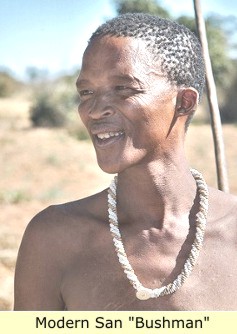


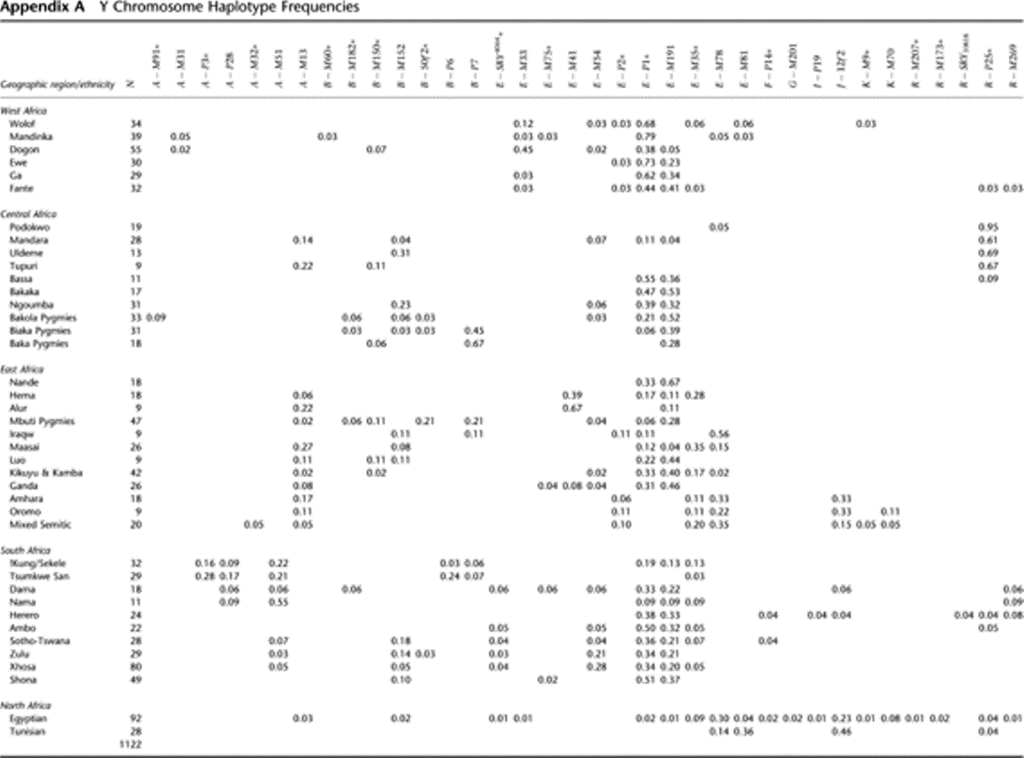

![[Razz]](tongue.gif)
![[Roll Eyes]](rolleyes.gif) There is a big difference between 15ky and 30ky.
There is a big difference between 15ky and 30ky. ![[Big Grin]](biggrin.gif)
![[Wink]](wink.gif)
