The chronicling of the political unification of the various African ethnic groups and clans of the ancient Nile valley into a unified nation is clearly delineated in the Text/Tablet of Narmer:
The Front Side:
A) The first word is at the very top, inside the ideograph of the palace, and contains the name Narmer:
Nar(catfish) mer (chisel). And NO, it does not mean that he was a chiseling catfish! You can get Jan Assman's interpretation of the name in his book...
B) The figure to the right of the conquering king-wearing the white crown of Upper Egypt-, the one where Horus is astride and doing exactly what Diop suggests, as Assman points out, represents the conquest of the Delta or Lower Egypt.
C) The king's servant is identified as "Sashat-the goddess of writing, and I presume, the one who is chronicling all of this. (No, the sandal-bearer wasn't a servant god but merely a scribe.)
The people being subdued (compelled to unite) as well as the ones shown fleeing the land have Black African hairstyles, and many Egyptologists suggest that they represent the original Black African Anu ethnic rulers of the Two Lands.
D) the two figures below the "border" of Egypt represent the determinative "Kher" which means "fall, defeat, slaughter" and is preceded by another glyph which means "Uhan" or "overthrown, throw-down" (Coptic: Ouwdjn/Ouwgan)(also Sdjen).
The Back Side:
A) The first important word on this side is the word Tht;or Tjt; or Tet which means "to assemble" and is obviously referring to the assembled group of four figures bearing Black African totems, as Diop points out.
B) Above the slain enemies- I imagine those who opposed political unification - are the images of
1) a boat with its sails down, which means a journey down river
and
2) of Horus in front of an emblem which Assman interprets as meaning 'gate' - These conquerors would later be identified as the "Shemsu Hor" or the followers of Horus, the Mesnitu ('blacksmiths') and who later claimed that they were from the land of Punt (evidence of the existence of at least two ruling African ethnic groups; Anu and later, the Mesnitu)...
C) The next word, a very large version at that, of two creatures with the twisting long necks is "Kaes" or "Kasu" which means 'to bind or fetter,' Qes/Kes - restrain, bind
which I think indicates the obvious, that the union of the two lands was carried out through armed struggle.
(It has been suggested that the 'formal' union was firmly established by another warrior king, Aha. )
D) the last image is the one that confirms Diops assessment...
1) The bull breaking down the walled city's fortified wall and stomping the Asiatic represents the king. The word inside the wall "Abominable" (IE, "city of the abominables") is a term the Kememu used to describe the Asian or White peoples, especially.
It seems obvious that the Kememu did not regard these peoples as a legitimate part of their ethnic population. It's Kememu ideology...
ref: --The Mind of Egypt: History and Meaning in the Time of the Pharaohs by Jan Assmann, Andrew Jenkins (Translator) --The African Origin of Civilization by C.A. Diop --The Mdu Ntr (Budge, Gardiner, etc...)
Posted by the lion (Member # 17353) on :
justification
Posted by Wally (Member # 2936) on :
Here is an auxiliary text to Narmer's tablet that shows the leader pouring a toast/libation to the 'nine bows/peoples' who formed the political unification of the Black Nation of Ancient Egypt.
The leader and the first three representatives wear the hair-dress of the Sudanese or southerners who were the khentu hon nefer or the founders of this perfect order, and the remaining 6 figures wear the nemes hairstyle of the indigenous tribes and clans of the Nile valley peoples who became components of the unified nation of Kemet...
The Nemes style...
The Sudanese style...
Posted by the lion (Member # 17353) on :
The Nemes style Khafra, 4th dyn ___________________________________________
Thutmose III, 18th dyn Posted by Djehuti (Member # 6698) on :
^ Okay?? And what is your point, liar, I mean lion? That all these figures were "mixed"?! LMAO Get off it now!
quote:Originally posted by Wally: [b]Here is an auxiliary text to Narmer's tablet that shows the leader pouring a toast/libation to the 'nine bows/peoples' who formed the political unification of the Black Nation of Ancient Egypt.
The leader and the first three representatives wear the hair-dress of the Sudanese or southerners who were the khentu hon nefer or the founders of this perfect order, and the remaining 6 figures wear the nemes hairstyle of the indigenous tribes and clans of the Nile valley peoples who became components of the unified nation of Kemet...
Are you sure this is what the stela depicts? I remember seeing it before but can you translate the Mdu-neter?
I thought the 9 bows were the traditional enemies of Egypt. I asked you to list their names before but you did not.
Posted by anguishofbeing (Member # 16736) on :
quote:Originally posted by the lion: spam, spam, spam
What are you trying to communicate here mute? You see Mulattoes?
Posted by Wally (Member # 2936) on :
quote:Originally posted by Djehuti: Are you sure this is what the stela depicts? I remember seeing it before but can you translate the Mdu-neter?
I thought the 9 bows were the traditional enemies of Egypt. I asked you to list their names before but you did not.
I have enlarged the text and also flipped it so that it can be read from left to right, and it still is barely legible! what I can see is:
sti hotep Osiri - "Osiris' gift of peace..." neb(?) "everyone, all of " DjtDjtu Ntr"(the great spine of Osiris, The Ancestor (a city))...
I also see waab onkh ntr "holy - living - god"
can anyone provide a clearer image of this text? However, it appears to me that, as I have inferred, it is a celebration of the unification of Kemet...
(In any event, it does not identify the "9 nations"; nine, like seven, being a symbolic number in Kememou society - which is passed on to us in the Hebrew seven days to create the world; and no one, except an innocent child would take this number 7 days to create the world literally... )
Posted by anguishofbeing (Member # 16736) on :
quote:Originally posted by Wally:
(In any event, it does not identify the "9 nations"; nine, like seven, being a symbolic number in Kememou society - which is passed on to us in the Hebrew seven days to create the world; and no one, except an innocent child would take this number 7 days to create the world literally... )
Posted by Wally (Member # 2936) on :
What is it with these moronic non responses??
These idiots from Stormfront, who have completely subverted the 'Ancient Egypt" forum, have seemingly launched an all out attack on this 'Egyptology' site, because the truth is kicking their sorry ass!
Since there is no moderation here, it devolves upon us here to self-moderate this forum...
continuing:
I have enlarged the text and also flipped it so that it can be read from left to right, and it still is barely legible! what I can see is:
sti hotep Osiri - "Osiris' gift of peace..." neb(?) "everyone, all of " DjtDjtu Ntr"(the great spine of Osiris, The Ancestor (a city))...
I also see waab onkh ntr "holy - living - god"
can anyone provide a clearer image of this text? However, it appears to me that, as I have inferred, it is a celebration of the unification of Kemet...
(In any event, it does not identify the "9 nations"; nine, like seven, being a symbolic number in Kememou society - which is passed on to us in the Hebrew seven days to create the world; and no one, except an innocent child would take this number 7 days to create the world literally... )
Posted by JMT2 (Member # 16951) on :
Educational. Great job as usual, Wally. Keep it going.
Posted by Wally (Member # 2936) on :
A Greek historical account of the beginning of Pharaonic Egyptian Civilization...
quote:They say also that the Egyptians (Colonizing Blacks) are colonists sent out by the Ethiopians (Colonizing Blacks), Osiris having been the leader of the colony... And the larger part of the customs of the Egyptians (Indigenous Blacks) are, they hold, Ethiopian (Colonizing Blacks), the colonists still preserving their ancient manners. For instance, the belief that their kings are gods, the very special attention which they pay to their burials, and many other matters of a similar nature are Ethiopian (Colonizing Blacks) practices, while the shapes of their statues and the forms of their letters are Ethiopian (Colonizing Blacks); for of the two kinds of writing which the Egyptians (Indigenous Blacks) have, that which is known as "popular" (demotic) is learned by everyone, while that which is called "sacred" is understood only by the priests of the Egyptians (Indigenous Blacks)... Furthermore, the orders of the priests, they maintain, have much the same position among both peoples; for all are clean who are engaged in the service of the gods, keeping themselves shaven, like the Ethiopian (Colonizing Blacks) priests, and having the same dress and form of staff, which is shaped like a plow and is carried by their kings, who wear high felt hats which end in a knob at the top and are circled by the serpents which they call asps... Many other things are also told by them concerning their own antiquity and the colony which they sent out that became the Egyptians (Colonizing & Indigenous Blacks), but about this there is no special need of our writing anything.
Diodorus Siculus
Posted by Djehuti (Member # 6698) on :
Perhaps it is better if one were to delve into the ethnic identities of predynastic peoples in order to get a better understanding of the unification. More on the Anu and the Mesenitu etc.
Posted by Wally (Member # 2936) on :
The Anu People
The most significant fact of the founding of Pharaonic Civilization by the Anu people is rarely, if ever, mentioned in texts on Ancient Egypt. Not to mention the Anu is actually worse than, say, writing a history of the United States of America and not mentioning the Pilgrims (aka "Founders"/"Forefathers"). One has to look at earlier texts for this vital information:
French Egyptologist Abbe Émile Amélineau is credited with the discovery of the Anu and their contribution to Egyptian civilization. It was Amélineau who designated the first black group to colonize Egypt as the Anu. He showed how they came slowly down the Nile and founded the cities of Esneh, Erment, Qouch and Heliopolis...
From Amélineau:
quote: These Anu were agricultural people, raising cattle on a large scale along the Nile, shutting themselves up in walled cities for defensive purposes. To this people we can attribute, without fear of error, the most ancient Egyptian books, The Book of the Dead and the Texts of the Pyramids, consequently, all the myths or religious teachings. I would add almost all the philosophical systems then known and still called Egyptian. They evidently knew the crafts necessary for any civilization and were familiar with the tools those trades required. They knew how to use metals, at least elementary metals. They made the earliest attempts at writing, for the whole Egyptian tradition attributes this art to Thoth, the great Hermes an Anu like Osiris, who is called Onian in Chapter XV of The Book of the Dead and in the Texts of the Pyramids. Certainly the people already knew the principal arts; it left proof of this in the architecture of the tombs at Abydos, especially the tomb of Osiris and in those sepulchers objects have been found bearing unmistakable stamp of their origin, such as carved ivory, or a little head of a Nubian girl found in a tomb near that of Osiris, or the small wooden or ivory receptacles in the form of a feline head--all documents published in the first volumn of my Fouilles d'Abydos.
From the Kememu:
Anu the city of Heliopolis (Coptic; On) Anu Meh Anu of the north (Heliopolis) Anu Shemo Anu of the south (Hermonthis/Ermant) Anu Monti Anu of Hermonthis Anu Tem the Anu of Tem (Hermonthis) Anu Re the Anu of Re Afdu Ikhu the Four Ancestors (of the Anu) Ugrit Goddess of the Duat of Anu Djandjané Anu the Anu Court of Judges: Tem; Shu; Tefnut; Osiris; Thoth Anu n Ptoh the Anu of Ptah (Denderah) Anu n Nut the Anu of Nut (Denderah)
Denderah
Judging by the sheer number of given titles, the most venerated city of Kemet was not Thebes, but Denderah. After all, this was the city where the Parents of the Kememu nation (Isis and Osiris) were born. (It is also in the same neighborhood as Naqada). Here are some of the titles of this city:
"The birthplace of Isis" "The Throne of the Queen" "The perfect throne in the Holy of Holies" "The place of joy" "The thrones of Horus" "The holy temple of Horus" "The throne of eternity" "The throne of the drink" "The birthplace of Nut" "The Golden House" "The Sanctuary of Osiris" "The Sanctuary of Re" "The city of the knowing of Isis" "The temple of life" "The temple of Hathor" "The eternal house" "The exalted temple" "The holy temple of Horus of the Two-Lands" "The house of knowledge" (per Rekhit)
The Sudanese Country of Bukem (Buqem) This country was where the worship of the gods Hathor, Shu, Tefnut, etc., originated and spread down the Nile Valley. (An Anu country?)
Kas (Kos) - Capital of the 14th *state of southern Kemet The word Kas, symbolized by a man astride two mythological creatures with their necks entwined and bound together, and the largest word on Narmer's palette of unification, means "Political Union." This particular state was situated roughly half the distance between the north-south borders of southern Kemet. It would be interesting to find the significance of its being named Kas (the south being unified first?)...
*Kemet consisted of 42 states and governors; 22 located in the south and 20 in the north.
Posted by anguishofbeing (Member # 16736) on :
Diop in African Origins also mentioned the Anu as the founding race in Sumer where the cosmology there was Nile Valley derived, like most of the "Near East".
Posted by Djehuti (Member # 6698) on :
^ Of course Diop here is mistaken. He identified the Anu (people) with the deity Anu of Mesopotamia which no doubt have different etymologies as the words are of entirely different languages. Obviously the Sagugig and other blacks of Mesopotamia were aboriginal populations of Eurasia and not Africans.
If not, explain why the Anu proto-hieroglphs of the Nile Valley were not found in Mesopotamia, better yet why weren't such proto-hieroglyphs even found in the Delta?
quote:Originally posted by Djehuti: Of course Diop here is mistaken. He identified the Anu (people) with the deity Anu of Mesopotamia which no doubt have different etymologies as the words are of entirely different languages. Obviously the Sagugig and other blacks of Mesopotamia were aboriginal populations of Eurasia and not Africans...
No ethnic group is aboriginal to any other place on earth except Africa! You can trace any ethnic group anywhere on earth back to this original local...
In the historical era, Professor Diop was not mistaken on this point:
quote:An means man [in Diola]. Thus Anu originally may have meant men.’ Cheikh A.Diop
My own sense of the word "Anu" is - 'the enduring ones'/'mighty men'...
quote:Anu was also the Sumerian [African] name for the sky or sky god. An being the first cause [man]. The sky god whose wife was Antu in the Babylonian culture and Uras in the Akkadian or Sumerian was also on occasion called Ki.
The Anu, who were mighty ("Nimrod") enough to colonize, unify, and lay the basis of Ancient Egyptian Civilization, would surely have an impact on all the cultures of the world... Posted by anguishofbeing (Member # 16736) on :
quote:Originally posted by Wally:
quote:Originally posted by Djehuti: Of course Diop here is mistaken. He identified the Anu (people) with the deity Anu of Mesopotamia which no doubt have different etymologies as the words are of entirely different languages. Obviously the Sagugig and other blacks of Mesopotamia were aboriginal populations of Eurasia and not Africans...
No ethnic group is aboriginal to any other place on earth except Africa! You can trace any ethnic group anywhere on earth back to this original local...
LOL! In his rush to sever links with Africa to maintain "Asian" purity he says the most ridiculous things imaginable and in the process unwittingly exposes his anti-African sentiments.
Posted by the lion (Member # 17353) on :
quote:Originally posted by Wally: No ethnic group is aboriginal to any other place on earth except Africa! You can trace any ethnic group anywhere on earth back to this original local...
In the historical era, Professor Diop was not mistaken on this point:
Indeed the first inhabitants of the Caucus mountains could be none other than black. As Mike111 had pointed out all the bones found in these caves were Negroid.
Posted by Brada-Anansi (Member # 16371) on :
Again, as I have tried to point out, that in the Mdu Ntr, and later imitated in Hebrew, the numbers "7" and "9" were used symbolically (i.e., in Hebrew, the number 7 means whole, complete); and obviously there were more than 9 Sudanese ethnic groups whose principal weapon was the Bow...
In later years, the "Nine Bows" would be used to indicate both the Sudanese as well as the Asiactic enemies of Kemet; a number not actually set at "9" - for over the course of thousands of years as a nation, the number of Kemet's enemies would naturally fluctuate...
-- the Hebrews referred to nine as the symbol of immutable Truth.
quote:The Ennead, or nine pointed star, is an ancient and sacred symbol. It comprises three trinities. The Egyptian, Celtic, Greek and Christian myths all have an ennead of nine gods and goddesses, representing the entire archetypal range of principles.
...thus, we also have the 9 bows in Mdu Ntr, representing the founders of Kemet and later on the enemies of the Nation...
Posted by Wally (Member # 2936) on :
Following the successful unification of Kemet by Narmer, the formal Kushite idea of kingship was established, and from the very beginning of Pharaonic Kemet, it became traditional to manifest this Kushite or Southern origin of the Pharaohs by giving the king an "Nsu" name, which essentially means "Upper Egypt"; Sudan or Southern, the source of Ancient Egyptian civilization.
Posted by Wally (Member # 2936) on :
Dynasty:
- A sequence of powerful leaders in the same family
- A dynasty is a succession of people belonging to the same family, who, through various means and forms maintain power, influence or authority over ...
- A series of rulers or dynasts from one family
- Ruling family with line of hereditary rulers
---
The likelihood that any Kememou Royal Dynasty would allow any foreign national into the family would be as unlikely as the British Royal family allowing British Royal Princess Diana the inclusion into this dynasty of her Arab-Turkish lover-fiance Dodi Fayed. In another epoch, the Princess would have simply been beheaded. It is the inherent nature of dynasties everywhere...
It is therefore laughable and sadly pathetic that the 'sick folks' keep on insisting that some non-Blacks infiltrated or even started these Black African dynasties; they proclaim they were from peasant Europe, or peasant Asia, or perhaps from outer space!
Pharaonic Egyptian Civilization was the creation of Black Africans, so great indeed was this creation that some non-Blacks will try whatever means at their disposal to make themselves associated with it or even its creators - pure science fiction...
Posted by Wally (Member # 2936) on :
Example of a Dynasty: A succession of people belonging to the same family, who, through various means and forms maintain power, influence or authority...
The last Amhara (Ethiopian) Royal Dynasty - that of Haile Selassie, nee Ras Tafari
Menelik I, First Solomonic King of Kings of Ethiopia
The Solomonic Dynasty of Ethiopia reigned with few interruptions from it's founding by Menelik I, alleged son of the Biblical King Solomon and the Queen of Sheba, until the fall of Haile Selassie I in 1974.
Menelik II Posted by the lion (Member # 17353) on :
Inamunnifnebu Niumateped Titaru Rudamon Ankhor Osorkon the Elder
Sheshonk_I
Taharqa
Posted by Wally (Member # 2936) on :
Following the successful unification of Kemet by Narmer, the formal Kushite idea of kingship was established, and from the very beginning of Pharaonic Kemet, it became traditional to manifest this Kushite or Southern origin of the Pharaohs by giving the king an "Nsu" name, which essentially means "Upper Egypt"; Sudan or Southern, the source of Ancient Egyptian civilization.
Posted by Wally (Member # 2936) on :
Narmer - the uniter of Ancient Egypt; the "George Washington" of Ancient Egypt.
Posted by the lion (Member # 17353) on :
[/QB][/QUOTE] Head of Narmer. created in the 25th dynasty
Posted by xyyman (Member # 13597) on :
=====
Egypt and Nubia in the 5th–4th millennia BC: A view from the First Cataract and its surroundings Gatto, M. C. 2009
Quote:
The Egyptians were mainly officials and soldiers and thus male; the female component appears to have been for the most part local and thus Nubian. The New Kingdom situation may seem very similar to that of the Predynastic period, but this might not actually be the case. The communities Smith analysed were clearly Egyptian or Nubian, and they adjusted their ethnic affiliation in a rather opportunistic way. In the Predynastic period, the Egyptian and Nubian identities still shared many common traits derived from a common ancestry. The Naqada culture developed from the Badarian culture which, as the Tasian, was related to the Nubian Neolithic tradition (Gatto 2002; 2006c). Thus, the definition of what was Egyptian or Nubian at that time in the First Cataract region (and the southern part of Upper Egypt) is not so obvious: are the local cooking pots (shale-tempered ware), for example, Egyptian or Nubian?
Posted by Wally (Member # 2936) on :
The first Pharoahs of Ancient Egypt (The Anu dynasties):
1) Narmer, "father of the nation" - 2) Narmer (c3800 b.c., limestone)
3) Khasekhem, 2nd Anu dynasty - 4) Userkaf
These first Anu dynasties were from Tjeny (Thinis) in Upper Egypt... Posted by xyyman (Member # 13597) on :
Don't know why you brothers waste your time with these dunce Gigantic, Lioness etc al
Posted by Wally (Member # 2936) on :
quote:Originally posted by xyyman: Don't know why you brothers waste your time with these dunce Gigantic, Lioness etc al
...all you have to do is follow the topic of this thread, "The beginning of Pharaonic Egyptian Civilization"
The first Pharoahs of Ancient Egypt (The Anu dynasties):
1) Narmer, "father of the nation" - 2) Narmer (c3800 b.c., limestone)
3) Khasekhem, 2nd Anu dynasty - 4) Userkaf
These first Anu dynasties were from Tjeny (Thinis) in Upper Egypt... Posted by xyyman (Member # 13597) on :
^ how far back.
quote:Originally posted by xyyman: =====
Egypt and Nubia in the 5th–4th millennia BC: A view from the First Cataract and its surroundings Gatto, M. C. 2009
Quote:
The Egyptians were mainly officials and soldiers and thus male; the female component appears to have been for the most part local and thus Nubian. The New Kingdom situation may seem very similar to that of the Predynastic period, but this might not actually be the case. The communities Smith analysed were clearly Egyptian or Nubian, and they adjusted their ethnic affiliation in a rather opportunistic way. In the Predynastic period, the Egyptian and Nubian identities still shared many common traits derived from a common ancestry. The Naqada culture developed from the Badarian culture which, as the Tasian, was related to the Nubian Neolithic tradition (Gatto 2002; 2006c). Thus, the definition of what was Egyptian or Nubian at that time in the First Cataract region (and the southern part of Upper Egypt) is not so obvious: are the local cooking pots (shale-tempered ware), for example, Egyptian or Nubian?
Posted by xyyman (Member # 13597) on :
more:
---- The Early Dynastic administrative-cultic centre at Tell el-Farkha Krzysztof M. Ciałowicz
Representations of naked women continued to be popular in the Protodynastic and Early Dynastic periods. A badly damaged figurine of bone showing a naked woman with her hands held along the sides of the body comes from the Early Dynastic deposit at Tell Ibrahim Awad (Belova and Sherkova 2002, photo 55). A few examples are also known from the Main Deposit at Hierakonpolis. To this group belongs, among others, a figurine in the Petrie Museum (Adams 1974, cat. no. 360, pls. 44–45). This large (20 cm high) ivory figurine depicts a standing naked woman. Despite the fact that both her hands are broken off, it is evident that the left arm was bent at the elbow and held below the breasts, while the right arm hung along the side of the body; the right hand on the right thigh is preserved with carefully modelled fingers. The face is distinctively modelled, with almond-shaped eyes, a relatively wide nose and thick lips. Also of interest is the hairdo: the long hair or wig extends to the figure’s waist, with the individual waves of hair represented by horizontal lines. This sculpture is therefore very similar to both of those found at Tell el-Farkha (Fig. 18). The majority of figurines from Hierakonpolis are in the Ashmolean Museum (Capart 1905, figs. 132–33), and amongst them are representations of naked women, in poses identical to those from Tell el-Farkha, as well as some dressed in long robes also like the examples from Tell el-Farkha.
Posted by Wally (Member # 2936) on :
quote:Originally posted by xyyman: more:
---- The Early Dynastic administrative-cultic centre at Tell el-Farkha.....
Now you're cooking!
Good points, keep it coming... Posted by NonProphet (Member # 17745) on :
quote:Originally posted by Wally: Narmer - the uniter of Ancient Egypt; the "George Washington" of Ancient Egypt.
Wally,
The ONLY image of Narmer is on the Narmer Palette. This unidentified sculpture is not wearing the double crown of a King.
Can you please reply to my last message in the Beja thread?
Posted by Wally (Member # 2936) on :
quote:Originally posted by NonProphet:
quote:Originally posted by Wally: Narmer - the uniter of Ancient Egypt; the "George Washington" of Ancient Egypt.
Wally,
The ONLY image of Narmer is on the Narmer Palette. This unidentified sculpture is not wearing the double crown of a King......
The ONLY image that YOU know of...You seem to exhibit the traits of denial, refusing to accept the evidence presented to you, yet it's your right to criticize the evidence -
1) "This unidentified sculpture" is the second phase of your confusion. This bust has been identified long before you or I were even born; the only contention is whether it is a bust of Meni, Narmer, or Aha; all Anu kings.
2) "not wearing the double crown of a king", now what do you think it is, a bust of a peasant farmer or a soldier or a foreigner? What do you suppose is atop this figure's head and why doesn't Userkaf also wear the double crown, hmmm?
---
The first Pharoahs of Ancient Egypt (The Anu dynasties):
1) Narmer, "father of the nation" - 2) Narmer (c3800 b.c., limestone)
3) Khasekhem, 2nd Anu dynasty - 4) Userkaf
These first Anu dynasties were from Tjeny (Thinis) in Upper Egypt... Posted by the lion (Member # 17353) on :
the sculpture above was created in the 25th dynasty. I'm sure Wally would agree.
_______________________________________________
Below is Userkaf founder of the 5th dynasty the same sculpture as Wally already posted,created in the same, 5th dynasty
Userkaf carried out military campaigns against Nubia. He recorded that 303 prisoners from an unnamed military campaign were used to construct his pyramid as well as 70 foreign women as tribute.
Posted by NonProphet (Member # 17745) on :
quote:Originally posted by Wally:
quote:Originally posted by NonProphet:
quote:Originally posted by Wally: Narmer - the uniter of Ancient Egypt; the "George Washington" of Ancient Egypt.
Wally,
The ONLY image of Narmer is on the Narmer Palette. This unidentified sculpture is not wearing the double crown of a King......
The ONLY image that YOU know of...You seem to exhibit the traits of denial, refusing to accept the evidence presented to you, yet it's your right to criticize the evidence -
1) "This unidentified sculpture" is the second phase of your confusion. This bust has been identified long before you or I were even born; the only contention is whether it is a bust of Meni, Narmer, or Aha; all Anu kings.
2) "not wearing the double crown of a king", now what do you think it is, a bust of a peasant farmer or a soldier or a foreigner? What do you suppose is atop this figure's head and why doesn't Userkaf also wear the double crown, hmmm?
---
The first Pharoahs of Ancient Egypt (The Anu dynasties):
1) Narmer, "father of the nation" - 2) Narmer (c3800 b.c., limestone)
3) Khasekhem, 2nd Anu dynasty - 4) Userkaf
These first Anu dynasties were from Tjeny (Thinis) in Upper Egypt...
The King was always represented with the double, white, red crowns or nemus. Can't you see the difference between the inverse conical flared highly vaulted red crown with tongue(missing in other photo) and this short flat rectangular hat????? You say it was Narmer but then you change your reply to it could be Meni, Narmer or Aha? LOL
Don't give us that 'Anu' Afrocentric corruption myth of 'Ainu' or Sumerian God. Show us a non-Afrocentric reference to the so-called 'Anu' and this identified sculpture. Until then you demonstrate what a delusion your religion is based on.
Posted by Wally (Member # 2936) on :
Names of the first Pharaoh of Ancient Egypt
.........................................................................1) Hor name Aha - "wage war"........................ 2) Nsuten name - Meni .......................................3) Nsu biti name - Meni
Mdu Ntr: Meni - Greek: Μήνης (Mee.nees)
Mdu Ntr: Hor - Greek: χορυς (Hhor.ees)
Nsuten - "Royalty, King of the South - Upper Egypt" - literally "they who come from the south."
Suten - King of the south; probable etymological origin of 'Sudan,' which later became in Arabic 'sud' or black - b_led as sud (b_led aswad): land of the Blacks; Africa.
Nsu biti - "King of Upper and Lower Egypt; of the entire nation" - Posted by the lion (Member # 17353) on :
Userkaf, founder of the 5th Dynatsy
Posted by xyyman (Member # 13597) on :
===== With donkeys, jars and water bags into the Libyan Desert: the Abu Ballas Trail in the late Old Kingdom/First Intermediate Period
Frank Förster
When an exceptionally strong sand storm revealed, in 1947, the first traces of the late Old Kingdom town at Ayn Aseel in the eastern part of the oasis, it came as quite a surprise to the scientific, Nile-oriented community (though some ancient monuments and artefacts of later date had been known before).
The recent discovery of a long-distance desert route, which extends the known limit of Egyptian influence several hundred kilometres further towards the heart of the continent, is another surprise. In 1999 and 2000, the German desert traveller Carlo Bergmann found several sites which form a chain of staging posts on an almost straight line, the end of which lies close to the Gilf Kebir Plateau in the Libyan Desert, about 400km southwest of its starting-point in Dakhla (fig. 1).
Clearly these Egyptian enterprises did not venture into barren, hostile regions hitherto totally unexplored.
Curiously, one of them has a representation of a standing king wearing the double crown of Upper and Lower Egypt on its outer, flat, bottom, incised before firing (figs. 27–8).
Posted by Wally (Member # 2936) on :
The ideograph "su"; image of the sedge plant
Ideograph: A character which can symbolize whole words or concepts rather than just a sound.
Thus, the words "Nsu, Nsuten, Suten" - all using the "su" ideograph conveys that Royalty, legitimacy, Kingship originated and resides in the south (Upper Egypt, Sudan) ; this concept was from the beginning of Pharaonic Egypt until its ultimate end by way of foreign invasions and colonialism... Posted by anguishofbeing (Member # 16736) on :
quote:Originally posted by the lion: Userkaf, founder of the 5th Dynatsy
It would help if you explain the significance of this bust which seems to hold your fascination. People are wondering...
Posted by Truthcentric (Member # 3735) on :
quote:Originally posted by anguishofbeing:
quote:Originally posted by the lion: Userkaf, founder of the 5th Dynatsy
It would help if you explain the significance of this bust which seems to hold your fascination. People are wondering...
He thinks that it disproves a tropical African origin for the ancient Egyptians.
Posted by Wally (Member # 2936) on :
quote:Originally posted by anguishofbeing:
quote:Originally posted by the lion: Userkaf, founder of the 5th Dynasty
It would help if you explain the significance of this bust which seems to hold your fascination. People are wondering...
...as you all seem to want to entertain this idiot's idiocy...
I have already explained Diop's observation of how the distortionists of African history use carefully selected angles in photographing Ancient Egyptian royalty, in order to portray a non-Black illusion; aside from also chiseling off or, when necessary, blowing off African noses on sculptures...
Here are other angles of the busts of 5th dynasty Pharaoh Usarkaf
...can we move along with the topic? Posted by the lion (Member # 17353) on :
the particular sculpture of Userkaf in a front view as Wally posted:
the same sculpture I posted:
what's the problem? It's an example of a tropically adapted African, both angles look essentially the same. what's with you people?
Posted by MindoverMatter718 (Member # 15400) on :
quote:Originally posted by anguishofbeing:
quote:Originally posted by the lion: Userkaf, founder of the 5th Dynatsy
It would help if you explain the significance of this bust which seems to hold your fascination. People are wondering...
Posted by Wally (Member # 2936) on :
The ideograph "su"; image of the sedge plant
Ideograph: A character which can symbolize whole words or concepts rather than just a sound.
Thus, the words "Nsu, Nsuten, Suten" - all using the "su" ideograph conveys that Royalty, legitimacy, Kingship originated and resides in the south (Upper Egypt, Sudan) ; this concept was from the beginning of Pharaonic Egypt until its ultimate end by way of foreign invasions and colonialism...
The Anu People - The Founding Fathers
The most significant fact of the founding of Pharaonic Civilization by the Anu people is rarely, if ever, mentioned in texts on Ancient Egypt. Not to mention the Anu is actually worse than, say, writing a history of the United States of America and not mentioning the Pilgrims (aka "Founders"/"Forefathers"). One has to look at earlier texts for this vital information:
French Egyptologist Abbe Émile Amélineau is credited with the discovery of the Anu and their contribution to Egyptian civilization. It was Amélineau who designated the first black group to colonize Egypt as the Anu. He showed how they came slowly down the Nile and founded the cities of Esneh, Erment, Qouch and Heliopolis...
From Amélineau:
quote: These Anu were agricultural people, raising cattle on a large scale along the Nile, shutting themselves up in walled cities for defensive purposes. To this people we can attribute, without fear of error, the most ancient Egyptian books, The Book of the Dead and the Texts of the Pyramids, consequently, all the myths or religious teachings. I would add almost all the philosophical systems then known and still called Egyptian. They evidently knew the crafts necessary for any civilization and were familiar with the tools those trades required. They knew how to use metals, at least elementary metals. They made the earliest attempts at writing, for the whole Egyptian tradition attributes this art to Thoth, the great Hermes an Anu like Osiris, who is called Onian in Chapter XV of The Book of the Dead and in the Texts of the Pyramids. Certainly the people already knew the principal arts; it left proof of this in the architecture of the tombs at Abydos, especially the tomb of Osiris and in those sepulchers objects have been found bearing unmistakable stamp of their origin, such as carved ivory, or a little head of a Nubian girl found in a tomb near that of Osiris, or the small wooden or ivory receptacles in the form of a feline head--all documents published in the first volumn of my Fouilles d'Abydos.
From the Kememu:
Anu the city of Heliopolis (Coptic; On) Anu Meh Anu of the north (Heliopolis) Anu Shemo Anu of the south (Hermonthis/Ermant) Anu Monti Anu of Hermonthis Anu Tem the Anu of Tem (Hermonthis) Anu Re the Anu of Re Afdu Ikhu the Four Ancestors (of the Anu) Ugrit Goddess of the Duat of Anu Djandjané Anu the Anu Court of Judges: Tem; Shu; Tefnut; Osiris; Thoth Anu n Ptoh the Anu of Ptah (Denderah) Anu n Nut the Anu of Nut (Denderah)
Denderah
Judging by the sheer number of given titles, the most venerated city of Kemet was not Thebes, but Denderah. After all, this was the city where the Parents of the Kememu nation (Isis and Osiris) were born. (It is also in the same neighborhood as Naqada). Here are some of the titles of this city:
"The birthplace of Isis" "The Throne of the Queen" "The perfect throne in the Holy of Holies" "The place of joy" "The thrones of Horus" "The holy temple of Horus" "The throne of eternity" "The throne of the drink" "The birthplace of Nut" "The Golden House" "The Sanctuary of Osiris" "The Sanctuary of Re" "The city of the knowing of Isis" "The temple of life" "The temple of Hathor" "The eternal house" "The exalted temple" "The holy temple of Horus of the Two-Lands" "The house of knowledge" (per Rekhit)
The Sudanese Country of Bukem (Buqem) This country was where the worship of the gods Hathor, Shu, Tefnut, etc., originated and spread down the Nile Valley. (An Anu country?)
Kas (Kos) - Capital of the 14th *state of southern Kemet The word Kas, symbolized by a man astride two mythological creatures with their necks entwined and bound together, and the largest word on Narmer's palette of unification, means "Political Union." This particular state was situated roughly half the distance between the north-south borders of southern Kemet. It would be interesting to find the significance of its being named Kas (the south being unified first?)...
*Kemet consisted of 42 states and governors; 22 located in the south and 20 in the north.
Posted by the lion (Member # 17353) on :
In Sumerian mythology and later for Assyrians and Babylonians, Anu (also An; (from Sumerian *An 𒀭 = sky, heaven)) was a sky-god, the god of heaven, lord of constellations, king of gods, spirits and demons, and dwelt in the highest heavenly regions. It was believed that he had the power to judge those who had committed crimes, and that he had created the stars as soldiers to destroy the wicked. His attribute was the royal tiara, most times decorated with two pairs of bull horns.
He was one of the oldest gods in the Sumerian pantheon, and part of a triad including Enlil, god of the sky and Enki, god of water. He was called Anu by the Akkadians. By virtue of being the first figure in a triad consisting of Anu, Enlil, and Ea, Anu came to be regarded as the father and at first, king of the gods. Anu is so prominently associated with the E-anna temple in the city of Uruk (biblical Erech) in southern Babylonia that there are good reasons for believing this place to have been the original seat of the Anu cult. If this is correct, then the goddess Inanna (or Ishtar) of Uruk may at one time have been his consort.
Uruk (Cuneiform: 𒌷𒀔, URUUNUG ; Sumerian: unug; Akkadian: uruk; Biblical Hebrew: Erech; Greek: Ὀρχόη Orchoē, Ὠρύγεια Ōrugeia; Latin: Orchoi; Arabic: وركاء, Warkā') was an ancient city of Sumer and later Babylonia, situated east of the present bed of the Euphrates river, on the ancient dry former channel of the Euphrates River, some 30 km east of modern As-Samawah, Al-Muthannā, Iraq
Posted by Clyde Winters (Member # 10129) on :
The Anu of Egypt Posted by Wally (Member # 2936) on :
quote:Originally posted by Clyde Winters:
The Anu of Egypt
Professor Sir William Matthew Flinders Petrie FRS (3 June 1853 – 28 July 1942); English Egyptologist, describes the Anu in the following terms:
quote:the word Annu written with three pillars, we find that these people occupied the south of Egypt and Nubia, the name is also used in the Sinai and Libya. As for the inhabitants of southern Egypt we have the key document: a portrait of the chief Tera Neter, roughly modeled in relief in green glazed faience, found in the oldest temple in Abydos. The address above the name, this primitive business card: 'Palace in the city of Anu Hemen , Tera Neter '. Hemen was the name of god Tuphium. Erment, opposite, was the palace of South Anu Annu Menti. The next town to the south and Aunt (Gefeleyn) then. Aunyt-Seni (Esna) "
Posted by Wally (Member # 2936) on :
Anuak young ladies “The Anuak of the Sobat River (Evans-Pritchard, p.253) recall the proto-historic tribe of Anu (of Osiris’s ethnicity), who originally occupied the Nile valley” (Diop, 1981, p.121).
To recall means to have knowledge. Thus the Anuak have knowledge about the first and the original inhabitants of the Nile Valley, Osiris’s tribe the Anu. Posted by Wally (Member # 2936) on :
The Great Ancestor Father of Kemet: Osiri Ani (Osiris, the Anu)... Posted by Wally (Member # 2936) on :
The face of one of the first kings of Kemet, has been disfigured by the blowing/chiseling away of the nose; a practice consistently practiced by foreigners in a vain attempt to blur the Black identity of the Ancient Egyptians (ethnic/racial jealousy?).
The nose of this colossal African monument is now buried in the basement of the British museum...
Posted by the lion (Member # 17353) on :
quote:Originally posted by Wally: The face of one of the first kings of Kemet, has been disfigured by the blowing/chiseling away of the nose; a practice consistently practiced by foreigners in a vain attempt to blur the Black identity of the Ancient Egyptians (ethnic/racial jealousy?).
The nose of this colossal African monument is now buried in the basement of the British museum...
The Great Sphinx of Giza is the oldest known monumental sculpture, and is commonly believed to have been built by ancient Egyptians of the Old Kingdom in the reign of the pharaoh Khafra. The nose of the Sphinx of Giza was probably similar to or modeled after Khafra's nose:
Perhaps the most spectacular statue in 3000 years history of Ancient Egypt. Khafra owned one of the 3 great pyramids of Gizeh. You find this statue reproduced on Egyptian banknotes and stamps. The diorite statue was found in 1850, in the Valley Temple of Khafra, concealed in a pit.
Posted by Wally (Member # 2936) on :
quote: Although the head of the Sphinx is badly battered in some places, traces of the original paint can still be seen near one ear. Originally it is believed that the Sphinx was painted and was quite colorful. Since then, the nose and beard have been broken away. The nose was the unfortunate victim of target practice by the Turks in the Turkish period. It is often erroneously assumed that the nose was shot off by Napoleon's men, but 18th century drawings reveal that the nose was missing long before Napoleon's arrival.
Whether it was Turkish or French desecration is somehow irrelevant; the purpose seems to have been to disfigure (almost always the nose) the face of this Kemwer or "Great Black", because it does not even remotely resemble either a Turk or a Frenchman and could cause either of them to be intimidated/envious...
Posted by Brada-Anansi (Member # 16371) on :
wally
quote:Whether it was Turkish or French desecration is somehow irrelevant; the purpose seems to have been to disfigure (almost always the nose) the face of this Kemwer or "Great Black", because it does not even remotely resemble either a Turk or a Frenchman and could cause either of them to be intimidated/envious.
But didn't the Kemeu themselves disfigured some of the statues in other to deny the access into the field of reeds or tomb robbings? ex.Hatshepsut..also when they under go changes like converting to Christianity or Islam.
Posted by the lion (Member # 17353) on :
the original Sphinx at Giza probably looked like this
The Egyptian Arab historian al-Maqrīzī, writing in the fifteenth century AD, attributes the destruction of the nose to iconoclasm by Muhammad Sa'im al-Dahr, a Sufi Muslim fanatic from the khanqah of Sa'id al-Su'ada. In AD 1378, upon finding the Egyptian peasants making offerings to the Sphinx in the hope of increasing their harvest, Sa'im al-Dahr was so outraged that he destroyed the nose, and was hanged for vandalism.
Posted by Wally (Member # 2936) on :
quote:Originally posted by Brada-Anansi:
But didn't the Kemeu themselves disfigured some of the statues in other to deny the access into the field of reeds or tomb robbings? ex.Hatshepsut..also when they under go changes like converting to Christianity or Islam.
Of course the Kememou engaged in such practices, but what exactly is your point?
...
Posted by xyyman (Member # 13597) on :
Ha! Ha! Ha! Guess The Lion hasn't seen the video cfing Khafra and the Sphink. He doesn't know they are two DIFFERENT people/or representation.
quote:Originally posted by the lion:
the original Sphinx at Giza probably looked like this
For the illierate.. . .any questions
Burial practices of the Final Neolithic pastoralists at Gebel Ramlah, Western Desert of Egypt
Michał Kobusiewicz, Jacek Kabaciński, Romuald Schild, Joel D. Irish and Fred Wendorf
During three seasons of research (in 2000, 2001 and 2003) carried out by the Combined Prehistoric Expedition at Gebel Ramlah in the southern part of the Egyptian Western Desert, three separate Final Neolithic cemeteries were discovered and excavated. Skeletal remains of 67 individuals, comprising both primary and secondary interments, were recovered from 32 discrete burial pits. Numerous grave goods were found, including lithics, pottery and ground stone objects, as well as items of personal adornment, pigments, shells and sheets of mica. Imports from distant areas prove far-reaching contacts. Analysis of the finds sheds important light on the burial rituals and social conditions of the Final Neolithic cattle keepers inhabiting Ramlah Playa. This community, dated to the mid-fifth millennium B.C. (calibrated), was composed of a phenotypically diverse population derived from both North and sub-Saharan Africa. *****There were no indications of social differentiation.***** The deteriorating climatic conditions probably forced these people to migrate toward the Nile Valley where they undoubtedly contributed to the birth of ancient Egyptian civilization.
========= AND =========
Egypt and Nubia in the 5th–4th millennia BC: A view from the First Cataract and its surroundings Gatto, M. C. 2009
Quote:
The Egyptians were mainly officials and soldiers and thus male; the female component appears to have been for the most part local and thus Nubian. The New Kingdom situation may seem very similar to that of the Predynastic period, but this might not actually be the case. The communities Smith analysed were clearly Egyptian or Nubian, and they adjusted their ethnic affiliation in a rather opportunistic way. In the Predynastic period, the Egyptian and Nubian identities still shared many common traits derived from a common ancestry. The Naqada culture developed from the Badarian culture which, as the Tasian, was related to the Nubian Neolithic tradition (Gatto 2002; 2006c). Thus, the definition of what was Egyptian or Nubian at that time in the First Cataract region (and the southern part of Upper Egypt) is not so obvious: are the local cooking pots (shale-tempered ware), for example, Egyptian or Nubian?
======== AND ========
The Early Dynastic administrative-cultic centre at Tell el-Farkha Krzysztof M. Ciałowicz
Representations of naked women continued to be popular in the Protodynastic and Early Dynastic periods. A badly damaged figurine of bone showing a naked woman with her hands held along the sides of the body comes from the Early Dynastic deposit at Tell Ibrahim Awad (Belova and Sherkova 2002, photo 55). A few examples are also known from the Main Deposit at Hierakonpolis. To this group belongs, among others, a figurine in the Petrie Museum (Adams 1974, cat. no. 360, pls. 44–45). This large (20 cm high) ivory figurine depicts a standing naked woman. Despite the fact that both her hands are broken off, it is evident that the left arm was bent at the elbow and held below the breasts, while the right arm hung along the side of the body; the right hand on the right thigh is preserved with carefully modelled fingers. The face is distinctively modelled, with almond-shaped eyes, a relatively wide nose and thick lips. Also of interest is the hairdo: the long hair or wig extends to the figure’s waist, with the individual waves of hair represented by horizontal lines. This sculpture is therefore very similar to both of those found at Tell el-Farkha (Fig. 18). The majority of figurines from Hierakonpolis are in the Ashmolean Museum (Capart 1905, figs. 132–33), and amongst them are representations of naked women, in poses identical to those from Tell el-Farkha, as well as some dressed in long robes also like the examples from Tell el-Farkha.
Posted by the lion (Member # 17353) on :
quote:Originally posted by the lion:
quote:Originally posted by Wally: The face of one of the first kings of Kemet, has been disfigured by the blowing/chiseling away of the nose; a practice consistently practiced by foreigners in a vain attempt to blur the Black identity of the Ancient Egyptians (ethnic/racial jealousy?).
The nose of this colossal African monument is now buried in the basement of the British museum...
The Great Sphinx of Giza is the oldest known monumental sculpture, and is commonly believed to have been built by ancient Egyptians of the Old Kingdom in the reign of the pharaoh Khafra. The nose of the Sphinx of Giza was probably similar to or modeled after Khafra's nose:
Perhaps the most spectacular statue in 3000 years history of Ancient Egypt. Khafra owned one of the 3 great pyramids of Gizeh. You find this statue reproduced on Egyptian banknotes and stamps. The diorite statue was found in 1850, in the Valley Temple of Khafra, concealed in a pit.
Posted by Brada-Anansi (Member # 16371) on :
Wally
quote:Of course the Kememou engaged in such practices, but what exactly is your point?
That much of the destruction may have came form the locals themselves for the above stated reasons the Sufi fanatic khanqah of Sa'id al-Su'ada was he a foreigner?? or a converted local?? he supposedly got upset because the people was still making prayers to it.mind you I am not letting foreigners off the hook but they are not alone in responsibility.
Posted by Asar Imhotep (Member # 14487) on :
Why are people STILL claiming the Hr-m-akht (Mukulu Mu Lukendu) is Khafra? THis is just rediculus:
according to the video you posted the forensic artist concluded that the sculpture of Khafra compared to the Sphinx
shows that "the two faces are not even from the same race”
I would argue that they probably are of the same race
Posted by Wally (Member # 2936) on :
quote:Originally posted by Asar Imhotep: Why are people STILL claiming the Hr-m-akht (Mukulu Mu Lukendu) is Khafra? THis is just rediculus:
Mystery of the Sphink ... Here a forensic artist debunks that myth.
This video actually supports the possibility that the image could be that of Khafre. It demonstrates that the head of the sphinx is a recent addition/modification attached to the original which could conceivably date back to c11,000 B.C. Any pharaoh could, if he so chooses, replace the original head with an image of his own!
The forensic expert, in this case, bases his assumptions on a single image of Khafre, the one in the Cairo museum, when there are other images of Khafre (ignoring also that the 4th dynasty was a dynasty - thus Snefru, Khufu, Kauab, Djedefre, khafre, Bakare, Menkaure, Shepseskaf, Djedefptah - were all members of the same family!!!)
Other images of Khafre
...
Posted by the lion (Member # 17353) on :
quote:Originally posted by Wally:
It demonstrates that the head of the sphinx is a recent addition/modification attached to the original
you don't believe that nonsense do you?
Posted by dana marniche (Member # 13149) on :
quote:Originally posted by Wally: Anuak young ladies “The Anuak of the Sobat River (Evans-Pritchard, p.253) recall the proto-historic tribe of Anu (of Osiris’s ethnicity), who originally occupied the Nile valley” (Diop, 1981, p.121).
To recall means to have knowledge. Thus the Anuak have knowledge about the first and the original inhabitants of the Nile Valley, Osiris’s tribe the Anu.
I had read somewhere there was also a tribe or people supposedly called Uaka or Wawak south of Egypt - which sounds more likely. On the other hand some say Wawak was Wawat.
Posted by Wally (Member # 2936) on :
quote:Originally posted by dana marniche: I had read somewhere there was also a tribe or people supposedly called Uaka or Wawak south of Egypt - which sounds more likely. On the other hand some say Wawak was Wawat.
In Budge's dictionary vol II, there are numerous names of peoples living in the interior; a land that was referred to as Ethaosh ("the interior") and Tanoute ("God's Land") and TaNtr ("Land of the Ancestors). Some of these ethnic groups were the:
Wawat ("Rebels")
Irtjet
Zatju
Kaau
Matoi (also M'djaiu)
... Posted by Mind0verMatter718 (Member # 17548) on :
Seriously Wally
You need to stop posting all this trying to educate these clown. You are not fluent like I am in WaWak or Uaka. I was a little Wawak warrior every since I came to existence. I know our language thick and thick and you will see in my translations.
See my Translations here:
WaWat= What What (Like Wzup My Nigga)
Irtjet= Urgent (like its Irtjet I get some Weed)
Zatju= That you (Like Knock, Knock Mofo That You)
Kaau= Like The sound of the vulture Kaau
Matoi= My Toy (like you keep being a nigger, and Imma go and get "Matoi".
Glad that I could be of help to those out there who really want to be learned man with sage Minds.
Famous Quote I'd rather be dead for ever nigger born and bread. I rather live long to see those old black Niggers gone.-My Niggah My Nutz
Posted by Wally (Member # 2936) on :
The first Pharaohs
Meni - of the 1st family dynasty
Khasekhem - of the 2nd family dynasty
Djoser - of the 3rd family dynasty
Shepseskaf - of the 4th family dynasty
Djedefre - of the 4th family dynasty
Khafre - of the 4th family dynasty
Sahure - of the 5th family dynasty Posted by Wally (Member # 2936) on :
Move it up.
Posted by Wally (Member # 2936) on :
The first Pharaohs - Obviously Black Africans; from the beginning to the end of Pharaonic Egyptian civilization.
Meni - of the 1st family dynasty
Khasekhem - of the 2nd family dynasty
Djoser - of the 3rd family dynasty
Shepseskaf - of the 4th family dynasty
Djedefre - of the 4th family dynasty
Khafre - of the 4th family dynasty
Sahure - of the 5th family dynasty Posted by Wally (Member # 2936) on :
Move it up...again This forum is Egyptology
Posted by MelaninKing (Member # 17444) on :
Ahhh, my favorite Egyptian period.
Diop said these people were worshipers of Set and the originators of Coming Forth By Day, which I found confusing. That is until I understood how Set had been corrupted by foreign influences and his role transformed closer to a cross between Loki, Hades, and the modern day Satan.
Posted by Wally (Member # 2936) on :
quote:Originally posted by Wally: Move it up...again
This forum is Egyptology
it is NOT about; Mozabite Berbers, or Iraq's Blacks, or...
and if anyone is confused in 2010 about what a Black person is, should immediately seek psychiatric help, making sure to also bring along with them the idiot who posted "Why do Afrocentrists pass off this head bust as Negro?" -
because it's a royal bust from a Negro civilization you dumb m...
Posted by the lioness (Member # 17353) on :
quote:Originally posted by Wally: Professor Sir William Matthew Flinders Petrie FRS (3 June 1853 – 28 July 1942); English Egyptologist, describes the Anu in the following terms:
quote:the word Annu written with three pillars, we find that these people occupied the south of Egypt and Nubia, the name is also used in the Sinai and Libya. As for the inhabitants of southern Egypt we have the key document: a portrait of the chief Tera Neter, roughly modeled in relief in green glazed faience, found in the oldest temple in Abydos. The address above the name, this primitive business card: 'Palace in the city of Anu Hemen , Tera Neter '. Hemen was the name of god Tuphium. Erment, opposite, was the palace of South Anu Annu Menti. The next town to the south and Aunt (Gefeleyn) then. Aunyt-Seni (Esna) "
I've been looking in Petrie's books and I can find no such quote.
I could be wrong. please cite book title and page number of above quote, thank you
Posted by Wally (Member # 2936) on :
quote:Originally posted by the lioness:
quote:Originally posted by Wally: Professor Sir William Matthew Flinders Petrie FRS (3 June 1853 – 28 July 1942); English Egyptologist, describes the Anu in the following terms:
quote:the word Annu written with three pillars, we find that these people occupied the south of Egypt and Nubia, the name is also used in the Sinai and Libya. As for the inhabitants of southern Egypt we have the key document: a portrait of the chief Tera Neter, roughly modeled in relief in green glazed faience, found in the oldest temple in Abydos. The address above the name, this primitive business card: 'Palace in the city of Anu Hemen , Tera Neter '. Hemen was the name of god Tuphium. Erment, opposite, was the palace of South Anu Annu Menti. The next town to the south and Aunt (Gefeleyn) then. Aunyt-Seni (Esna) "
I've been looking in Petrie's books and I can find no such quote.
I could be wrong. please cite book title and page number of above quote, thank you
You are wrong. You can find irrelevant images but you seem to display an inability to read...
Petrie, The Making of Egypt, 1939 Page 68 Posted by Wally (Member # 2936) on :
The French Egyptologist Abbe Émile Amélineau, who is claimed to have discovered the reference to the Anu, essentially says the same thing :
quote:These Anu were agricultural people, raising cattle on a large scale along the Nile, shutting themselves up in walled cities for defensive purposes. To this people we can attribute, without fear of error, the most ancient Egyptian books, The Book of the Dead and the Texts of the Pyramids, consequently, all the myths or religious teachings. I would add almost all the philosophical systems then known and still called Egyptian. They evidently knew the crafts necessary for any civilization and were familiar with the tools those trades required. They knew how to use metals, at least elementary metals. They made the earliest attempts at writing, for the whole Egyptian tradition attributes this art to Thoth, the great Hermes an Anu like Osiris, who is called Onian in Chapter XV of The Book of the Dead and in the Texts of the Pyramids. Certainly the people already knew the principal arts; it left proof of this in the architecture of the tombs at Abydos, especially the tomb of Osiris and in those sepulchers objects have been found bearing unmistakable stamp of their origin, such as carved ivory, or a little head of a Nubian (Negro) girl found in a tomb near that of Osiris, or the small wooden or ivory receptacles in the form of a feline head--all documents published in the first volume of my Fouilles d'Abydos.
Posted by Wally (Member # 2936) on :
These are images of the Anu (Negroes, Blacks, Nubians, Ancient Egyptians, Black Africans; whatever you want to call them...)
Osiris
The Great Sphinx... Posted by KING (Member # 9422) on :
Wally
Thanks for the teaching.
From what I gather about the Anu, They were Blacks who created most of what made Egypt Famous. We really need to see more of these people and there history in Egypt.
The pic of osirus I know very well. I use it alot. Becareful because some people try to claim that it was created in the 25th Dynasty.
Keep doing you and bringing respect back to this forum.
Peace
Posted by the lioness (Member # 17353) on :
quote:Originally posted by KING: Wally
Thanks for the teaching.
From what I gather about the Anu, They were Blacks who created most of what made Egypt Famous. We really need to see more of these people and there history in Egypt.
The pic of osirus I know very well. I use it alot. Becareful because some people try to claim that it was created in the 25th Dynasty.
Keep doing you and bringing respect back to this forum.
Peace
Mike says this statue is from the Greek period, after the last 31st dynasty, after the dynastic period. He's right
Eventually, in Egypt, the Hellenic pharaohs decided to produce a deity that would be acceptable to both the local Egyptian population, and the influx of Hellenic visitors, to bring the two groups together, rather than allow a source of rebellion to grow. Thus Osiris was identified explicitly with Apis, really an aspect of Ptah, who had already been identified as Osiris by this point, and a combination of the two was created, known as Serapis, and depicted as a standard Greek god.
The cult of Osiris continued up until the 6th century AD on the island of Philae in Upper Nile.
______________________________________________
Earlier statue of Osiris:
STATUE OF OSIRIS painted gesso on wood Egypt, Third Intermediate Period, 1069-664 BC
Posted by the lioness (Member # 17353) on :
Émile Amélineau work as an Egyptologist was not as systematic nor as scientific as the work of later excavators. As an example, 18 of the 20 ivory and ebony labels describing key events in the reign of the pharaoh Den known to come from that king's tomb were found by Flinders Petrie in the spoil heaps left by Amélineau's earlier excavation of that tomb. __________________________________
(excerpts)
The Tomb of Djer and Later, The Tomb of Osiris at Abydos by Peter Rome
The termination of the Festival of Osiris at Abydos, doubtless a major celebration from at least the late Middle Kingdom onward, was what we today recognize as Tomb O belonging to the 1st Dynasty king, Djer. However, it was mistaken for the tomb of Osiris in antiquity, as well as by its initial discoverer, Emile Amelineau. Emile Amelineau would experience a very brief carrier as an excavator of archaeological sites in Egypt. Born in 1850, he initially worked for the French Catholic Church before studying Egyptology. Afterwards, he went to work for the French Archaeological Mission in Cairo as a specialist in the Coptic language and the history of the Egyptian Christian church. How he ended up at Abydos in 1895 with a five year exclusive contract for excavation is questionable, but apparently he had made a friend of Victor Loret, who was then the director of the Egyptian Antiquity Service. This was certainly a mistake. Amelineau was a poor archaeologist who, after initially examining sites near the modern villages next to Abydos, moved to Umm el Ga'ab (the Mother of Pots, ancient Peqer) in 1896, and there, on New Years Day in 1898, discovered the "Tomb of Osiris". This area was simply loaded with artifacts, and hence its name. It had long been known to locals as a source of antiquities, and there was evidently a custom in the nearby villages to go there on Good Friday to obtain playthings for the children!
Amelienau completely cleared the tomb between January 1st and 12th, discarding whole piles of artifacts and retaining only largely complete objects. Many other items were simply overlooked or ignored.
However, on January 2nd, 1898, Amelineau made his most impressive discovery within this tomb. Near the southwest corner of the tomb, his workmen unearthed a large black basalt sculpture lying on its left side upon a brier. Similar to the couch from the tomb of Tutankhamen, the two sides of the brier were formed by the bodies of two lions, with hawks, representing the god Horus, guarding each corner. The statue upon the brier depicted the god Osiris, with a kite, representing Isis, straddling the god's loins in order to impregnate herself with the seed that would become Horus. Amelineau also found a skull in chamber "D" on the east side of the site, and based on a votive ostraca found on the desert floor above the tomb, the brier sculpture of Osiris and his belief that the entrance stairway to the sepulcher was "the staircase of the Great God" mentioned in texts referring to the Osiris cult, he soon declared the tomb to be that of Osiris, and the skull to belong to the god himself. Hence, Amelineau believed that Osiris was an actual historical figure. He even believed that a huge tomb cleared between 1896 and 1897 was the final resting place of both Horus and Set, Osiris' son and brother, respectively. In all fairness, Egyptologists have, with no specific evidence, questioned the possibility that the legends surrounding these gods might reference real legendary individuals of Egypt's predynastic period. The ancient Egyptian's certainly thought that Osiris had once been a worldly figure, for in one tale we find Osiris being dismembered by his brother Set, with his body parts spread about Egypt in various tombs. In fact, they believed that this specific tomb might have held his head! Yet the Frenchmen Amelineu's conclusions were met with academic skepticism to say the least. Even during this period, the skull was professionally examined and shown to be probably that of a woman, though this does not seem to have altered Amelineau's original conclusions. In 1899, Gaston Maspero became, for the second time, director of the Egyptian Antiquities Service, which administrated archaeological digs in Egypt at that time, replacing Victor Loret. For some time, William Flinders Petrie had been attempting to gain permission to excavate at Abydos, but was frustrated by Amelineau's five year permit. Loret had refused to overturn his decision even though the Egypt Exploration Fund made an application on behalf of Petrie. However, once Maspero, who even though French himself, was a vice president of the British Egypt Exploration Fund, took back control of the Egyptian Antiquities Service, the way was cleared for Petrie. Yet even with this change of administrations, Petrie began his work in secrecy so as not to stir up too much trouble. At the time, Amelineau had returned to France and when he learned of this reversal in March 1900, it was already too late for him to fight decision.
Maspero's decision to allow Petrie a permit to excavate at Abydos was fortuitous, for he was one of Egyptology's best during those early years. During the 1899-1900 and 1900-1901 seasons, Petri completely re-excavated the tombs that Amelineau has previously cleared.
Petrie also recognized that the "Tomb of Osiris" was actually the burial site of Horus Djer, the third king of the 1st Dynasty. To give Amelineau some credit, a second excavation of the Djer tomb revealed that it had been modified in antiquity to serve as a Tomb of Osiris. The Osiris Bed, which was studied by the English Egyptologist Anthony Leahy, was dedicated by King Khendjer of the 13th Dynasty, and an entrance staircase had been added for the convenience of pilgrims to the site. It is sometimes difficult for us to completely comprehend the great antiquity of Egypt. Consider the fact that by Egypt's 12th Dynasty, some of the tombs of the 1st Dynasty (and earlier) kings of Egypt at Abydos were already over one thousand years old. Yet the Egyptians of that later period in the Middle Kingdom knew that Umm el Ga'ab held the gravesites of Egypt's first kings and thus, they believed, of Osiris himself. These Egyptians investigated this necropolis around the 11th Dynasty, and though we do not know what sort of evidence they used to make their selection, chose the Tomb of Djer as that of Osiris.
Posted by Wally (Member # 2936) on :
Osiri Ani - Osiris the Anu Posted by Wally (Member # 2936) on :
Osiri Ani - Osiris the Anu
Posted by the lioness (Member # 17353) on :
.
Anu was one of the oldest gods in the Sumerian pantheon, and part of a triad including Enlil, god of the sky and Enki, god of water. He was called Anu by the Akkadians.
bronze head of Akkadian ruler
Ancient Sumerian seal depicting Annunaki
The Anunnaki (also transcribed as: Anunna, Anunnaku, Ananaki and other variations) are a group of Sumerian, Akkadian and Babylonian deities. The name is variously written "da-nuna", "da-nuna-ke4-ne", or "da-nun-na", meaning something to the effect of 'those of royal blood'
According to later Babylonian myth, the Anunnaki were the children of Anu and Ki, brother and sister gods, themselves the children of Anshar and Kishar (Skypivot and Earthpivot, the Celestial poles), who in turn were the children of Lahamu and Lahmu ("the muddy ones"), names given to the gatekeepers of the Abzu temple at Eridu, the site at which the creation was thought to have occurred. Finally, Lahamu and Lahmu were the children of Tiamat and Abzu
In Akkadian mythology, Anshar (also spelled Anshur), which means "sky pivot" or "sky axle", is a sky god. He is the husband of his sister Kishar
Anshar standing on a bull. Excavated from one of the ancient capitals of Assyria, Assur.
Posted by Clyde Winters (Member # 10129) on :
What are the inscrriptions on this artifact which claim that it is depicting Annunaki?
I donot see this name here. You can read my decipherment of some of the Sumerian seals here:
The Anu People The most significant fact of the founding of Pharaonic Civilization by the Anu people is rarely, if ever, mentioned in texts on Ancient Egypt. Not to mention the Anu is actually worse than, say, writing a history of the United States of America and not mentioning the Pilgrims (aka "Founders"/"Forefathers"). One has to look at earlier texts for this vital information: The French Egyptologist Abbe Émile Amélineau is credited with the discovery of the Anu and their contribution to Egyptian civilization. It was Amélineau who designated the first black race to occupy Egypt as the Anu. He showed how they came slowly down the Nile and founded the cities of Esneh, Erment, Qouch and Heliopolis...
From Amélineau:
quote: These Anu were agricultural people, raising cattle on a large scale along the Nile, shutting themselves up in walled cities for defensive purposes. To this people we can attribute, without fear of error, the most ancient Egyptian books, The Book of the Dead and the Texts of the Pyramids, consequently, all the myths or religious teachings. I would add almost all the philosophical systems then known and still called Egyptian. They evidently knew the crafts necessary for any civilization and were familiar with the tools those trades required. They knew how to use metals, at least elementary metals. They made the earliest attempts at writing, for the whole Egyptian tradition attributes this art to Thoth, the great Hermes an Anu like Osiris, who is called Onian in Chapter XV of The Book of the Dead and in the Texts of the Pyramids. Certainly the people already knew the principal arts; it left proof of this in the architecture of the tombs at Abydos, especially the tomb of Osiris and in those sepulchers objects have been found bearing unmistakable stamp of their origin, such as carved ivory, or a little head of a Nubian girl found in a tomb near that of Osiris, or the small wooden or ivory receptacles in the form of a feline head--all documents published in the first volumn of my Fouilles d'Abydos.
From the Kememu: Anu the city of Heliopolis (Coptic; On) Anu Meh Anu of the north (Heliopolis) Anu Shemo Anu of the south (Hermonthis/Ermant) Anu Monti Anu of Hermonthis Anu Tem the Anu of Tem (Hermonthis) Anu Re the Anu of Re Afdu Ikhu the Four Ancestors (of the Anu) Ugrit Goddess of the Duat of Anu Djandjané Anu the Anu Court of Judges: Tem; Shu; Tefnut; Osiris; Thoth Anu n Ptoh the Anu of Ptah (Denderah) Anu n Nut the Anu of Nut (Denderah)
Denderah: Judging by the sheer number of given titles, the most venerated city of Kemet was not Thebes, but Denderah. After all, this was the city where the Parents of the Kememou nation (Isis and Osiris) were born. (It is also in the same neighborhood as Naqada). Here are some of the titles of this city: "The birthplace of Isis" "The Throne of the Queen" "The perfect throne in the Holy of Holies" "The place of joy" "The thrones of Horus" "The holy temple of Horus" "The throne of eternity" "The throne of the drink" "The birthplace of Nut" "The Golden House" "The Sanctuary of Osiris" "The Sanctuary of Re" "The city of the knowing of Isis" "The temple of life" "The temple of Hathor" "The eternal house" "The exalted temple" "The holy temple of Horus of the Two-Lands" "The house of knowledge" (per Rekhit)
The Sudanese Country of Bukem (Buqem): This country was where the worship of the gods Hathor, Shu, Tefnut, etc., originated and spread down the Nile Valley. (An Anu country?)
Kas (Kos) - Capital of the 14th *state of southern Kemet: The word Kas, symbolized by a man astride two mythological creatures with their necks entwined and bound together, and the largest word on Narmer's palette of unification, means "Political Union." This particular state was situated roughly half the distance between the north-south borders of southern Kemet. It would be interesting to find the significance of its being named Kas (the south being unified first?)...
*Kemet consisted of 42 states and governors; 22 located in the south and 20 in the north.
Posted by the lioness (Member # 17353) on :
Émile Amélineau didn't know his ass from his elbow
Posted by KING (Member # 9422) on :
the lioness
Why would you say something like that about Émile Amélineau. Do you have some kind of info that shows he was wrong in what he said.
No problems just asking.
Peace
Posted by the lioness (Member # 17353) on :
quote:Originally posted by KING: the lioness
Why would you say something like that about Émile Amélineau. Do you have some kind of info that shows he was wrong in what he said.
No problems just asking.
Peace
Read my earlier post about Émile Amélineau's incompetence in both managing excavations and interpreting Osiris. Émile Amélineau's remarks about an anu people are not supported by archaeologically evidence. He was a freestyler tripping off his own shyt.
Anu was one of the oldest gods in the Sumerian mythology, The children of Anu and Ki were called the Anunnaki. Anu and Ki were brother and sister gods. They were the children of Anshar and Kishar , who were the children of Lahamu and Lahmu, Sumerian Gods. This mythology is verified in Sumerian texts.
What Émile Amélineau made up about an anu people was due to getting high off some herb he sampled in Cairo.
Some scholars of Amélineau's time spoke of the Anu people as people in predynatic times who were defeated by the Egyptians. To resurrect these various unsupported vague speculations by certain 19th century Egyptologists is not good scholarship.
There is a proper terminology for pre dyanstic culture in Egypt such as:
Khormusan -40,000 and 30,000 BC ! Qadan and Sebilian Mushabian Harifian Faiyum A Merimde El Omari Maadi
Tasian Badarian Amratian (Naqada I) Gerzean (Naqada II) Naqada III (Protodynastic, Semainean)
Posted by the lioness (Member # 17353) on :
quote:Originally posted by Clyde Winters:
What are the inscrriptions on this artifact which claim that it is depicting Annunaki?
I donot see this name here. You can read my decipherment of some of the Sumerian seals here:
as below the sun form in this seal describes Shamash the common Akkadian name of the sun god and god of justice in Babylonia and Assyria, corresponding to Sumerian Utu.
Together with Nannar-Sin and Ishtar, Shamash completes another triad by the side of Anu, Enlil and Ea all Anunnaki: Sumerian, Akkadian and Babylonian deities.
Or do you have some other identification of these seals? I can't get the video you linked, only if it's a youtube The explanation of the symbols in these seals is regardless of the fact that the Sumerians had a deity called Anu who was a part of a group of deities called Anunnaki.
Posted by Clyde Winters (Member # 10129) on :
quote:Originally posted by the lioness:
quote:Originally posted by Clyde Winters:
What are the inscrriptions on this artifact which claim that it is depicting Annunaki?
I donot see this name here. You can read my decipherment of some of the Sumerian seals here:
as below the sun form in this seal describes Shamash the common Akkadian name of the sun god and god of justice in Babylonia and Assyria, corresponding to Sumerian Utu.
Together with Nannar-Sin and Ishtar, Shamash completes another triad by the side of Anu, Enlil and Ea all Anunnaki: Sumerian, Akkadian and Babylonian deities.
Or do you have some other identification of these seals? I can't get the video you linked, only if it's a youtube The explanation of the symbols in these seals is regardless of the fact that the Sumerians had a deity called Anu who was a part of a group of deities called Anunnaki.
Shamesh has nothing to do with Annunaki.
I did not link a video.
.
Posted by anguishofbeing (Member # 16736) on :
quote:Originally posted by the lion:
the original Sphinx at Giza probably looked like this
I wish upon a star... Posted by the lioness (Member # 17353) on :
quote:Originally posted by anguishofbeing:
the original topic looked like this but let's bring up a different one
I wish upon a star... rolleyes:(white body language)[/QUOTE]
Posted by NonProphet (Member # 17745) on :
quote:Originally posted by the lioness:
quote:Originally posted by Clyde Winters:
What are the inscrriptions on this artifact which claim that it is depicting Annunaki?
I donot see this name here. You can read my decipherment of some of the Sumerian seals here:
as below the sun form in this seal describes Shamash the common Akkadian name of the sun god and god of justice in Babylonia and Assyria, corresponding to Sumerian Utu.
Together with Nannar-Sin and Ishtar, Shamash completes another triad by the side of Anu, Enlil and Ea all Anunnaki: Sumerian, Akkadian and Babylonian deities.
Or do you have some other identification of these seals? I can't get the video you linked, only if it's a youtube The explanation of the symbols in these seals is regardless of the fact that the Sumerians had a deity called Anu who was a part of a group of deities called Anunnaki.
According to Petrie the followers of Horus (Kings Scorpion I , II and Narmer) have origins in Elam/Punt which is SW Iran and Uruk (Iraq) to him. This was his Dynastic Race theory. The 'Aunu'('Set' worshippers) were the aboriginal people that were conquered by Horus worshippers.
Here is a Uruk Cylinder seal with a striking similarity to the image on the back of the Narmer Palette.
There is no link to the 'Anuak' and the only image of Narmer is on his Palette. Don't believe the lies of Billy 'Shoe Salesman' Gambela AKA 'Wally'
Posted by anguishofbeing (Member # 16736) on :
quote:Originally posted by the lioness: I wish upon a star
Yes, continue to wish, yet prove no evidence, for your rainbow society theory. Posted by Wally (Member # 2936) on :
Ani; a man of On or Denderah - the plural (men) would be Anu
various expressions for an Ani or the Anu...
Narmer's tablet shows two individuals binding together two giraffes, in order to elaborate literally the binding together of the two lands; the valley and the delta (two lions with giraffe necks)...but here's its essential glyph... hence...
Anu the city of Heliopolis (Coptic; On) Anu Meh Anu of the north (Heliopolis) Anu Shemo Anu of the south (Hermonthis/Ermant) Anu Monti Anu of Hermonthis Anu Tem the Anu of Tem (Hermonthis) Anu Re the Anu of Re Afdu Ikhu the Four Ancestors (of the Anu) Ugrit Goddess of the Duat of Anu Djandjané Anu the Anu Court of Judges: Tem; Shu; Tefnut; Osiris; Thoth Anu n Ptoh the Anu of Ptah (Denderah) Anu n Nut the Anu of Nut (Denderah)
Denderah: Judging by the sheer number of given titles, the most venerated city of Kemet was not Thebes, but Denderah. After all, this was the city where the Parents of the Kememou nation (Isis and Osiris) were born. (It is also in the same neighborhood as Naqada). Here are some of the titles of this city: "The birthplace of Isis" "The Throne of the Queen" "The perfect throne in the Holy of Holies" "The place of joy" "The thrones of Horus" "The holy temple of Horus" "The throne of eternity" "The throne of the drink" "The birthplace of Nut" "The Golden House" "The Sanctuary of Osiris" "The Sanctuary of Re" "The city of the knowing of Isis" "The temple of life" "The temple of Hathor" "The eternal house" "The exalted temple" "The holy temple of Horus of the Two-Lands" "The house of knowledge" (per Rekhit)
The Sudanese Country of Bukem (Buqem): This country was where the worship of the gods Hathor, Shu, Tefnut, etc., originated and spread down the Nile Valley. (An Anu country?)
Kas (Kos) - Capital of the 14th *state of southern Kemet: The word Kas, symbolized by a man astride two mythological creatures with their necks entwined and bound together, and the largest word on Narmer's palette of unification, means "Political Union." This particular state was situated roughly half the distance between the north-south borders of southern Kemet. It would be interesting to find the significance of its being named Kas (the south being unified first?)...
*Kemet consisted of 42 states and governors; 22 located in the south and 20 in the north.
Posted by the lioness (Member # 17353) on :
quote:Originally posted by NonProphet:
According to Petrie the followers of Horus (Kings Scorpion I , II and Narmer) have origins in Elam/Punt which is SW Iran and Uruk (Iraq) to him. This was his Dynastic Race theory. The 'Aunu'('Set' worshippers) were the aboriginal people that were conquered by Horus worshippers.
Here is a Uruk Cylinder seal with a striking similarity to the image on the back of the Narmer Palette.
There is no link to the 'Anuak' and the only image of Narmer is on his Palette. Don't believe the lies of Billy 'Shoe Salesman' Gambela AKA 'Wally'
this is Wally? Billy seems more into DNA than Wally. Wally more of a dictionary based bro
Posted by NonProphet (Member # 17745) on :
quote:Originally posted by the lioness:
quote:Originally posted by NonProphet:
According to Petrie the followers of Horus (Kings Scorpion I , II and Narmer) have origins in Elam/Punt which is SW Iran and Uruk (Iraq) to him. This was his Dynastic Race theory. The 'Aunu'('Set' worshippers) were the aboriginal people that were conquered by Horus worshippers.
Here is a Uruk Cylinder seal with a striking similarity to the image on the back of the Narmer Palette.
There is no link to the 'Anuak' and the only image of Narmer is on his Palette. Don't believe the lies of Billy 'Shoe Salesman' Gambela AKA 'Wally'
this is Wally? Billy seems more into DNA than Wally. Wally more of a dictionary based bro
Billy Bantu the alleged 'Egyptian Nubian', LOL talk about delusional.
The Aboriginal Egyptians were Cushitic/Eurasian peoples. Eurasians were in Africa 25K yrs before Narmer.
Posted by anguishofbeing (Member # 16736) on :
quote:Originally posted by NonProphet: The Aboriginal Egyptians were Cushitic/Eurasian peoples. Eurasians were in Africa 25K yrs before Narmer.
Yes, Eurasians are **aboriginal** to Africa. Makes perfect sense. lol
Posted by NonProphet (Member # 17745) on :
quote:Originally posted by anguishofbeing:
quote:Originally posted by NonProphet: The Aboriginal Egyptians were Cushitic/Eurasian peoples. Eurasians were in Africa 25K yrs before Narmer.
Yes, Eurasians are **aboriginal** to Africa. Makes perfect sense. lol
Yes Fool, Aboriginal is considered prehistoric populations. Before Civilization - Idiot
Posted by anguishofbeing (Member # 16736) on :
fock off troll.
Posted by Djehuti (Member # 6698) on :
quote:Originally posted by NonProphet: Billy Bantu the alleged 'Egyptian Nubian', LOL talk about delusional.
The Aboriginal Egyptians were Cushitic/Eurasian peoples. Eurasians were in Africa 25K yrs before Narmer.
LMAO Indeed you are the LAST to talk about who is delusional! Any evidence for your claims above of Eurasians being aboriginal to any part of Africa??!
It is obvious you are nothing more than an anti-African troll so desperate to disavow Egypt from Africa that you now say non-African Eurasians were aboriginal to an area in Africa instead of Africans!
Posted by Brada-Anansi (Member # 16371) on :
And after all these yrs I thought the term Eurasians simply meant the people of Europe and Asia.. But now I know better thanx to NonProphet Eurasians are aboriginal to Africa. Eurasians^.. Posted by KING (Member # 9422) on :
Bahahahahaah All you can do is laugh at comments like Eurasians are indeginous to Africa.
Of course you can also think that the eurocentrics are on their last leg so now they try to make claims that Egypt was a country with Africans and Eurasians hence Mixed like how lioness wants Egypt to be.
TRUTH is winning this war, hence the reason why they try to turn Ethiopians into Mixed Africans also because they know that Ethiopia, Somalia are always linked with Egypt. We just have to continue to push the mainstream to speak the truth about African and Egypt.
Peace
Posted by Djehuti (Member # 6698) on :
^ You guys know that because of the presence Y-chromosomal R clade in West and Central Africa, some scholars are postulating an early Eurasian presence there as well (30,000 years ago), even though most of the R haplotypes in these areas are much older than any found in Eurasia. So don't be surprised to hear talk of Eurasians being aboriginal to West and Central Africa. Posted by NonProphet (Member # 17745) on :
"Y-DNA haplogroup R (M207) is believed to have arisen approximately 27,000 years ago in Asia.
R1b (M343) is believed to have arisen in southwest Asia and today its sublcades are found in various distributions across Eurasia and Africa.
Paragroup R1b1* and haplogroup R1b1a (V88) are found most frequently in SW Asia and Africa. The African examples are almost entirely within R1b1a and are associated with the spread of Chadic languages."
"Y-DNA haplogroup J evolved in the ancient Near East and was carried into North Africa, Europe, Central Asia, Pakistan and India."
Don't confuse your political movement with real Science. Ashra Kwesi, the tour guide and Sara-Slut-un-Seti have bamboozled fools like you people.
You butt-fck troll Boys are getting dumb and dumber.
Posted by the lioness (Member # 17353) on :
quote:Originally posted by the lion: [QB]
the sculpture above was created in the 25th dynasty. I'm sure Wally would agree.
I said it was made in 25th dynasty. I take back that statement I was 100% wrong to say that it is listed by the Petrie museum as 1st dynasty "unknown provenance"
Posted by Wally (Member # 2936) on :
Following the successful unification of Kemet by Narmer, the formal Kushite idea of kingship was established, and from the very beginning of Pharaonic Kemet, it became traditional to manifest this Kushite or Southern origin of the Pharaohs by giving the king an "Nsu" name, which essentially means "Upper Egypt"; Sudan or Southern, the source of Ancient Egyptian civilization.
Posted by dana marniche (Member # 13149) on :
quote:Originally posted by NonProphet: "Y-DNA haplogroup R (M207) is believed to have arisen approximately 27,000 years ago in Asia.
R1b (M343) is believed to have arisen in southwest Asia and today its sublcades are found in various distributions across Eurasia and Africa.
Paragroup R1b1* and haplogroup R1b1a (V88) are found most frequently in SW Asia and Africa. The African examples are almost entirely within R1b1a and are associated with the spread of Chadic languages."
"Y-DNA haplogroup J evolved in the ancient Near East and was carried into North Africa, Europe, Central Asia, Pakistan and India."
Don't confuse your political movement with real Science. Ashra Kwesi, the tour guide and Sara-Slut-un-Seti have bamboozled fools like you people.
You butt-fck troll Boys are getting dumb and dumber.
Since black people unrelated to modern Europeans occupied Eurasia 25,000 years ago you need to always clarify which ones your talking about. Modern Eurasiatics and those of 25,000BC are not the same people.
Stay Eurwhacko if you want to, but your not going to get anywhere from it.


![[Big Grin]](biggrin.gif)


![[Roll Eyes]](rolleyes.gif)
![[Smile]](smile.gif)


 Inamunnifnebu


![[Cool]](cool.gif)


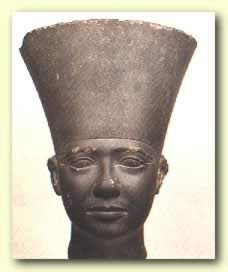
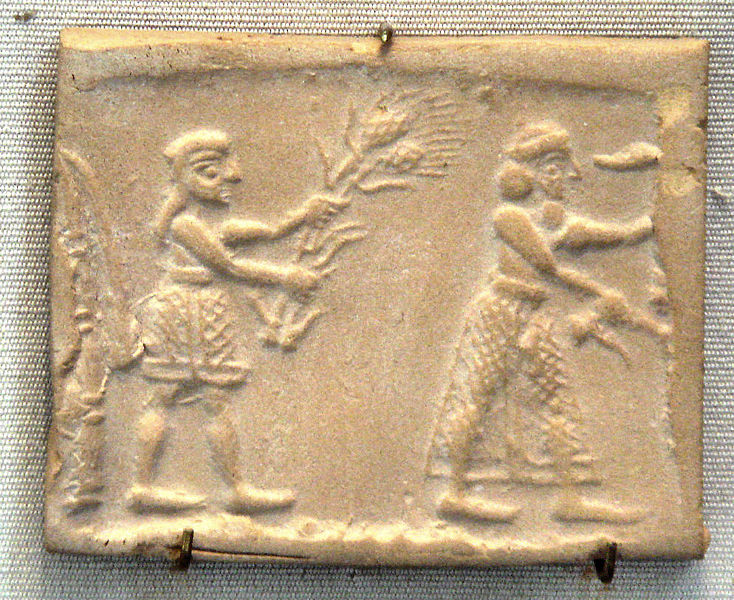


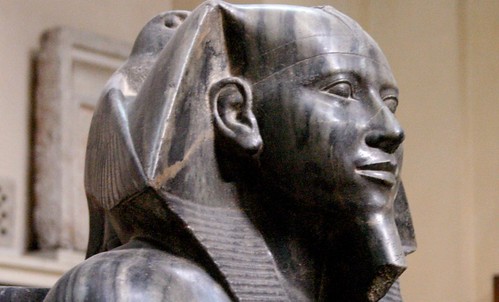


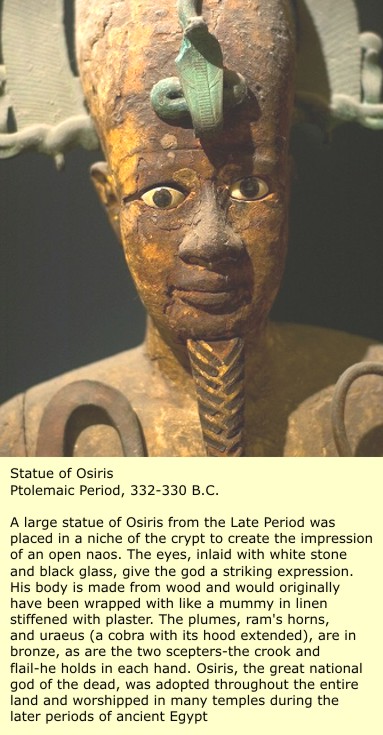


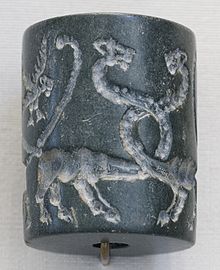
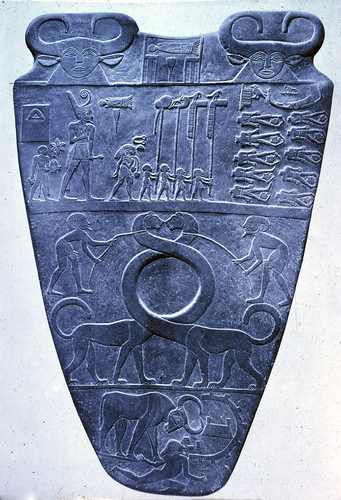

![[Eek!]](eek.gif)


![[Frown]](frown.gif)