About 800 BC, in central Italy, a mysterious culture flourished.
These people, called the Etruscans, are today regarded as the real founders of Rome.
The Romans were first a subject people of the Etruscans and later their conquerors.
Some Greeks held that the Etruscans were a branch of the Pelasgians, aboriginal inhabitants of the Aegean region.
The Pelasgians may have been the Sea People who around 1200 B.C. invaded the Egyptian Empire.
It was discovered that most of the languages of Europe belonged to one big language family called Indo-European but Etruscan was not one of them. The technology of DNA analysis has been applied to the question of origins.
A study published in the April 2007 issue of The American Journal of Human Genetics reports finding eleven lineages of mitochondrial DNA in Tuscany that have not been found elsewhere in Europe but do occur in the Near East.
In the Etruscan ruins there are craft objects from Greece, North Africa, southern France and Iberia.
Posted by Mike111 (Member # 9361) on :
xyyman - They didn't start off multi-ethnic; Because of invasion by Whites they BECAME multi-ethnic.
Posted by Mazigh (Member # 8621) on :
Some believe there is any relationship between Berbers and etruscans:
"On Etruscan and Libyan Names; A Comprative Study. By Daniel G. Brinton, M.D. (Read before the American Philosophical Society, Febrauray 7, 1890)
I- Introductory: Libyan Epigraphy In October last (1889) I laid before this Society a series of considerations drawn from the physical traits of the Etruscans, their customs, arts and language, going to show that they were an offshoot or colony of the Libyans or Numidians of North Africa -that stock now represented by the Kabyles of Algeria, the Rifians of Morocco, the Touaregs of the Great Desert and the other so-called Berber tribes. So far as I was aware, this opinion had never been advanced before, although it wo uld seem a natural and obvious one. Nor have I yet found that any writer ahd clearly stated it previously; though I have discovered that occasional earlier observers have been struck with some of the resemblances which so impressed me, and I am glad to add the weight of their testimony to my own. Thus, M. Louis Rinn, Vice-President of the Historical Society of Algiers, after alluding to what he considers a point of resemblance between the Berber and the Etruscan language, adds, "A comparative study of these two peoples would certainly bring into prominence other similarities, yet more remarkable, in their tongues."* M. Rinn quotes the old travelers, Dr. T. Shaw, as suggesting one or more similarities in Kabyle and Etruscan place names, but he gives no exact reference, and a search through Shaw's Travels has not enabled me to find the passages...
Posted by Hammer (Member # 17003) on :
there is no evidence that the Etruscans were multi ethnic and none has been presented here. This is simply an effort to morph a race of slaves into a factor in world history.
Posted by anguishofbeing (Member # 16736) on :
quote:Originally posted by Mike111: xyyman - They didn't start off multi-ethnic; Because of invasion by Whites they BECAME multi-ethnic.
LOL!
Posted by KnowledgeOfSelf (Member # 17562) on :
Seem like a subject worth entertaining. My question is where did these people actually originate from?
I myself am not a scholar, but just looking to learn something new
Posted by xyyman (Member # 13597) on :
Quote: . All mitochondrial lineages observed among the Etruscans appear typically European or West Asian, but only a few haplotypes were found to have an exact match in a modern mitochondrial database, raising new questions about the Etruscans’ fate after their assimilation into the Roman state
Translation: They are not phenotypically European but the mtDNA is European. In other words they did not LOOK like modern Europeans.
Seems like the ***Haplotype**** vs haploGroup is really where the rubber hits the road in genetics.
=== The Etruscans: A Population-Genetic Study Cristiano Vernesi,1 David Caramelli,2 Isabelle Dupanloup,1,* Giorgio Bertorelle,1 Martina Lari,2 Enrico Cappellini,2 Jacopo Moggi-Cecchi,2 Brunetto Chiarelli,2 Loredana Castrı`,3 Antonella Casoli,4 Francesco Mallegni,5 Carles Lalueza-Fox,6 and Guido Barbujani1
The origins of the Etruscans, a non-Indo-European population of preclassical Italy, are unclear. There is broad agreement that their culture developed locally, but the Etruscans’ evolutionary and migrational relationships are largely unknown. In this study, we determined mitochondrial DNA sequences in multiple clones derived from bone samples of 80 Etruscans who lived between the 7th and the 3rd centuries B.C. In the first phase of the study, we eliminated all specimens for which any of nine tests for validation of ancient DNA data raised the suspicion that either degradation or contamination by modern DNA might have occurred. On the basis of data from the remaining 30 individuals, the Etruscans appeared as genetically variable as modern populations. No significant heterogeneity emerged among archaeological sites or time periods, suggesting that different Etruscan communities shared not only a culture but also a mitochondrial gene pool. Genetic distances and sequence comparisons show closer evolutionary relationships with the eastern Mediterranean shores for the Etruscans than for modern Italian populations. All mitochondrial lineages observed among the Etruscans appear typically European or West Asian, but only a few haplotypes were found to have an exact match in a modern mitochondrial database, raising new questions about the Etruscans’ fate after their assimilation into the Roman state.
Paleoanthropological studies have only proved broad similarities between the Etruscans and their neighbors of the Iron Age (Barker and Rasmussen 1998). Archaeological evidence suggests that the Etruscan culture developed locally, with some features pointing to an Eastern influence (Pallottino 1975; Barker and Rasmussen 1998). However, it is not clear if such influence reflects only trading and cultural exchange or rather some sort of shared biological ancestry.
more to come.. . . .
Posted by Mike111 (Member # 9361) on :
quote:Originally posted by Hammer: there is no evidence that the Etruscans were multi ethnic and none has been presented here. This is simply an effort to morph a race of slaves into a factor in world history.
Hammerhead - Where on Earth did you get the idea that Etruscans were slaves? This is a bizarre new low in intelligence, even for you.
Posted by Mike111 (Member # 9361) on :
xyyman - You might want to reconsider your interpretations of their interpretations - remember, they ARE White people. Falsehoods and false interpretations are their stockntrade - it's best to remember that.
Posted by Mike111 (Member # 9361) on :
quote:Originally posted by anguishofbeing:
quote:Originally posted by Mike111: xyyman - They didn't start off multi-ethnic; Because of invasion by Whites they BECAME multi-ethnic.
LOL!
.
Check-out the little needle-dick piece of suburban White trash. His response to everything is LOL. You would think that they would at least teach them how to string sentences together - Oh, ya, right, that wouldn't teach them how to think of something intelligent to say.
Posted by Hammer (Member # 17003) on :
I wasn't talking about Etruscans being slaves Mike but rather blacks being a race of slaves. You missed my point.
Posted by Mike111 (Member # 9361) on :
quote:Originally posted by Hammer: I wasn't talking about Etruscans being slaves Mike but rather blacks being a race of slaves. You missed my point.
. Sorry, I misunderstood. Please continue with your point.
Posted by xyyman (Member # 13597) on :
Mike.
I am well aware that many of these papers are written by white people.
My mantra is always "we as black people got to use common sense when intepreting the data". This is one of many things we have an edge on compared to non-colored people. We are not prejudicial so we inteprete the data logically.
Any info you have on the Etruscans will be appreciated.
quote:Originally posted by Mike111: xyyman - You might want to reconsider your interpretations of their interpretations - remember, they ARE White people. Falsehoods and false interpretations are their stockntrade - it's best to remember that.
Now the question is . . .how is this possible? How can an ancient people be phenotypically different from the current inhabitants but carry the same, or similar, lineage(mtDNA).
Any suggestions . . . anyone?
====== . All mitochondrial lineages observed among the Etruscans appear typically European or West Asian, but only a few haplotypes were found to have an exact match in a modern mitochondrial database, raising new questions about the Etruscans’ fate after their assimilation into the Roman state
Translation: They are not phenotypically European but the mtDNA is European. In other words they did not LOOK like modern Europeans.
Seems like the ***Haplotype**** vs haploGroup is really where the rubber hits the road in genetics. Posted by xyyman (Member # 13597) on :
A calculated guess is. . . assimilation and/or extermination or MANY/NOT ALL of the native inhabitants.
Is 600yrs enough for a people to . . .morph? NO!!!
Based upon data from this study and what we know about genetics. For a given population HG CAN NOT but haplotype can.
So obviously the newcomers took the women as wives. Their phenotype eventually becoming dominant.
Are these the women . . . Posted by Hammer (Member # 17003) on :
oh please xyy, you guys are the most bigoted people walking around on two legs. If you truly hjad "common sense" as you say you guys would not have spend thousands of years as a race of slaves.
Posted by Recovering-Afro-holjc (Member # 17517) on :
oh please xyy, you guys are the most bigoted people walking around on two legs. If you truly hjad "common sense" as you say you guys would not have spend thousands of years as a race of slaves. --------------------------------------------------------------------------------
Recovering-Afro-holic Member Member # 17311
Rate Member posted 24 March, 2010 02:26 PM -------------------------------------------------------------------------------- I just came off stormfront and I got whitey mad as hell.LMBAO......................... Oh the games we play so well, but in mind im stupid as hell.
Where were you. And you didnt run me off ES, you know why I left.
They Figured my Black AZZ out!LMBAO
They keep deleting my post, but im going back Rat Now........................ Im persistent.
Hammer Eat My Black Nuts...Dumb EuroMonster
Posted by xyyman (Member # 13597) on :
Database of Modern Mitochondrial Sequences
Obviously the Ancient Etruscans are NOT contemporary Europeans.
Notice the Etruscan, Egyptians do not group with other Europeans. See chart above..
By themselves, DNA sequences cannot tell us who the Etruscans were and where they came from, but they can provide crucial information on two related questions: • 1. Were the Etruscans a single population, or were they simply a set of individuals who shared a language and a culture but not a common ancestry? • 2. What are the genetic relationships between the Etruscans and modern populations, and do these relationships suggest any genealogical or migrational links between the Etruscans and other Eurasians
Posted by Recovering-Afro-holjc (Member # 17517) on :
Dirk8 Member Member # 16568
Rate Member posted 24 March, 2010 02:21 PM -------------------------------------------------------------------------------- Me and Recovering-Afroholic have left ES due to us finally recognizing that Egypt was a Master Black Race. We have now moved on to Stormfront to change the mind of our Ex-Euroloonies.
Wish US Luck!!!!!!!!!!!!!!
Thank All Of You For helping Us realize the truth, it has set us free.
Special Thanks to: Mike111 Al-tulari MindoverMatter xxyman IronLion DrClydeWinters Djheuti Narmer MarcWashington EdmongCodfried And all other who have influenced my new way of thinking. -------------------------------------------------------------------------------- Fvck You to: Hammer Fawal PrideandJust Mazigh Simplegirl Matildas Blog Stormfront Europe Caucasian Albinos Nazis And to all those EuroSlaves I left out fvck yall too. Posts: 48 | Registered: Mar 2010 | IP: Logged |
Recovering-Afro-holic Member Member # 17311
Rate Member posted 24 March, 2010 02:26 PM -------------------------------------------------------------------------------- I just came off stormfront and I got whitey mad as hell.LMBAO......................... Oh the games we play so well, but in mind im stupid as hell.
Where were you at? And for the record you didnt run me off ES, you know why I left.
They Figured my Black AZZ out!LMBAO
They keep deleting my post, but im going back Rat Now........................ Im persistent. *Hammer Eat My Black Nuts....Dumb piece of EuroShyt. --------------------------------------------------------------------------------
Posted by Mike111 (Member # 9361) on :
xyyman - You missed the conclusion from this rather Whitenized study.
The Etruscans: A Population-Genetic Study Cristiano Vernesi,1 David Caramelli,2 Isabelle Dupanloup,1,* Giorgio Bertorelle,1 Martina Lari,2 Enrico Cappellini,2 Jacopo Moggi-Cecchi,2 Brunetto Chiarelli,2 Loredana Castrı`,3 Antonella Casoli,4 Francesco Mallegni,5 Carles Lalueza-Fox,6 and Guido Barbujani1
Etruscans show closer relationships both to North Africans and to Turks than any contemporary population. In particular, the Turkish component in their gene pool appears three times as large as in the other populations.
This is a very good example of how Whites falsify even the truth.
They do not say that they are looking and the admixture genes in modern Turks; because as we know, the type of people who make up the modern population of Turkey, did not exist at the time of the Etruscans.
Ancient Etruscans Unlikely Ancestors Of Modern Tuscans, Testing Reveals.
News story from the Science Daily — For the first time, Stanford university researchers have used statistical computer modeling to simulate demographic processes affecting the population of the Tuscany region of Italy over a 2,500-year time span. Rigorous tests used by the researchers have ruled out a genetic link between Ancient Etruscans, the original inhabitants of central Italy, and the region's modern day residents.
The findings indicate (as is obvious from the pictured artifacts), that the Ancient Etruscans had little in common with the people who later came to Italy, said Joanna Mountain, assistant professor of anthropological sciences. The findings as documented in ''Serial Coalescent Simulations” indicate a Weak Genealogical Relationship Between Etruscans and Modern Tuscans. The study was published May 15, 2006 in the online version of the National Academy of Sciences. Uma Ramakrishnan, a former Stanford postdoctoral fellow, and Elise M. S. Belle along with Guido Barbujani of the University of Ferrara in Italy, co-authored the paper with Mountain.
To date; the Etruscans are the only pre-classical European population that has been genetically analyzed, Mountain said. Two years ago, Italian geneticists extracted maternally inherited mitochondrial DNA from the bones of 27 people called Etruscans found in six different necropolises (burial sites) in Tuscany. The female lineage was investigated because, unlike the male Y chromosome, many copies of mitochondrial DNA are found in each cell and thus are easier to extract, Mountain explained. The finding is important because it questions the common assumption that residents of a particular place are descendants of its earlier inhabitants, Mountain said. Note: This story has been adapted from a news release issued by Stanford University.
Posted by Apocalypse (Member # 8587) on :
The following site is a good reference for Etruscan art. The tombs section shows the murals found in various tombs depicting both light and dark skinned people.
Apocalypse - That is a good site for art, however as is typical with all Whites, they try to spin it to seem like Whites were Etruscans too. Of course in real life that is NOT possible.
But try telling that to the Turks who call themselves Berbers or Arabs. As a matter of fact, many noble Roman families claimed descent from Etruscans, even when there was no relationship.
Posted by anguishofbeing (Member # 16736) on :
^ in real life you are a lunatic who has too much access to the hospital's computer.
Posted by Apocalypse (Member # 8587) on :
Mike111 wrote:
quote:That is a good site for art, however as is typical with all Whites, they try to spin it to seem like Whites were Etruscans too.
Well many, if not most, of the people depicted in the tombs were somewhat dark. At least superficially, they remind me of the depictions of Minoans. The larger question is do they represent a remnant of the original European population before the gene for white skin swept through (I know you don't buy this theory Mike) or do they represent the early farming population that originated in the Levant (not forgetting the contributions of E3b from Africa)? There may be some other possibilites of course.
Posted by Mike111 (Member # 9361) on :
quote:Originally posted by Apocalypse: Mike111 wrote:
quote:That is a good site for art, however as is typical with all Whites, they try to spin it to seem like Whites were Etruscans too.
Well many, if not most, of the people depicted in the tombs were somewhat dark. At least superficially, they remind me of the depictions of Minoans. The larger question is do they represent a remnant of the original European population before the gene for white skin swept through (I know you don't buy this theory Mike) or do they represent the early farming population that originated in the Levant (not forgetting the contributions of E3b from Africa)? There may be some other possibilites of course.
As you know, I consider the nonsense of the Blacks of Europe suddenly turning White 6,000 to 12,000 years ago - PURE LUNACY!!!!
However, in deference to you, I will treat it seriously this one time.
So then; if the Blacks in Europe suddenly turned White 6,000 to 12,000 years ago; how come so many of them are STILL Black by 2,600 years ago?
Posted by anguishofbeing (Member # 16736) on :
Those picture spams really drive home your point Mike. Posted by Apocalypse (Member # 8587) on :
Mike111 wrote:
quote:As you know, I consider the nonsense of the Blacks of Europe suddenly turning White 6,000 to 12,000 years ago - PURE LUNACY!!!!
However, in deference to you, I will treat it seriously this one time.
So then; if the Blacks in Europe suddenly turned White 6,000 to 12,000 years ago; how come so many of them are STILL Black by 2,600 years ago?
Mike, a demic wave of non-Europeans from the levant brought farming to Europe. Also, the Southern European variant of Sickle cell originated in West Africa. Additionally, there was undoubtedly trade between Africa and Europe. Egyptians and Phoenicians established colonies in Europe. There is no mystery to the presence of non white people in Europe during prehistoric, proto historic, or historic times.
Posted by xyyman (Member # 13597) on :
Italians, Etruscans and Greeks: Genetics and Ethnicity Dr. Orville Boyd Jenkins
Arab Gene? The term "Arab gene flows" troubles me also, since this reads back into pre-history a comparatively recent identification. At the depth of 10,000 years and more, I don't see how we can identify anything as what we now know by the term "Arab."
What we do see is that a stream of human movement that seems to have moved through the middle of what we call the Arabian Peninsula thruogh what is now Syria then on westward moved into the peninsula we now know as Italy. This, you will note on the excellent and amazing genetic mapping of National Geographic, is only one of two major streams they indicate.
The other genetic stream comes from northern Asia, through northern Europe and down western Europe into the northern Italian Peninsula.
The sequential "tracer genes" in human male DNA give us a rough time frame and sequence of human migration, but don't tell us about the physical characteristics or types as such. The people known as "Arabs" now are also a descendant people, and mixed, even in the Arabian Peninsula. There is a wide range of shades, physical types, and characteristics among the "Arab" peoples.
It would seem that the farther back in time we go, the less differentiated the gene pool of any particular population group would be. This is because all indications are that all human populations developed from the same origin. All differentiation came from an original population group.
Dark Greeks Lots of dark people speak Greek today. Western Europeans usually think of Greeks as dark-haired, dark-eyed and darker skinned. But this tends to be a characteristic of all the Mediterranean peoples. It seems likely that the Greek-speaking peoples moved in on a darker race, pre-inhabiting the region. Posted by Mike111 (Member # 9361) on :
^^xyyman - Yes, the name for those people were Pelasgians.
Posted by Mike111 (Member # 9361) on :
Apocalypse - The advent or introduction of Farming in Europe, is often cited by some, as THE defining point in European history - I fail to see how.
The first Humans in Europe, the Grimaldi, were not farmers - they were hunter gathers.
The White invaders, and current masters of Europe were not farmers - they were nomadic pasturalists.
In my mind, those are the defining points in European history. What's farming go to do with that?
Posted by Mike111 (Member # 9361) on :
^^Apocalypse - This White thing with farming in Europe is perplexing to me. White anthropologists keep citing its introduction to Europe from the Levant as a defining moment in Europe. I am sure that in their minds it must in some way support their spin on history - I don't see how, but they must.
But even their spin on farming is NOT necessarily accurate. Note the finds at Kostenki.
The Kostenki - Borshevo sites (34,000 B.C.) are a group of more than twenty settlements from the same culture, on the right bank of the Don River, south of Voronezh Russia, about 470 km south from Moscow. The basic excavations were conducted in the 1920s - 1930s by P. Yefimenko, and in the 1940s - 1960s by A. N. Rogachev. Kostenki is known for high concentration of cultural remains of modern humans from beginning of Upper Paleolithic era.
The villages of Kostenki and Borshevo contained five cultural layers. In the upper layer were preserved the remains of dwellings with hearths located along the central longitudinal axis of the dwellings, together with storage pits. Flint tools and hoes made from mammoth tusks, bone digging implements, a baton from deer horn, and about forty female statuettes made from both ivory and marl/limestone, figurines of a bear, cavelion and anthropomorphous marl heads. Triangular flint tools are found in the lowermost layer with a concave base, retouched with a pressure process.
Hoes and digging implements?????? Don't these people sound like FARMERS????
Posted by Hammer (Member # 17003) on :
Looks like the idiot board is back in business. There is no evidence that the people in greece when the indo europeans arrived were black....none. There is no evidence that these people introduced farming to anyone. the question of the arrival of farming in Europe is highly debated and in question. You guys make these assumptions based on what you would like to see, not on any viable evidence of any kind.
Posted by Mike111 (Member # 9361) on :
^^For those who find the above strange, please remember that as English speaking people, the history that we are taught is from a WESTERN EUROPEAN prospective. As such, it centers the world around Western Europe - just as Whites in general tend to center all history around them.
But a look at a map of the last ice age brings it all into focus. As you can see, during this period when Western Europe was locked in glacial ice, Eastern Europe was not effected in the least. This allowed those people to progress unencumbered by the ice age.
Posted by Hammer (Member # 17003) on :
Mike, That was 15,000 years ago. It has no application to the historical era.
Posted by Mike111 (Member # 9361) on :
quote:Originally posted by Hammer: Looks like the idiot board is back in business. There is no evidence that the people in greece when the indo europeans arrived were black....none. There is no evidence that these people introduced farming to anyone. the question of the arrival of farming in Europe is highly debated and in question. You guys make these assumptions based on what you would like to see, not on any viable evidence of any kind.
That's what I like about you hammerhead, whenever I need an example of White intellect, I can ALWAYS count on you.
So then, lets do a little exercise in deductive reasoning. If the acknowledged first Humans in Southern Europe were the Black Grimaldi, and the first Humans in Eastern Europe were the Black Carpathians. Meanwhile Whites were in Central Asia, and Mongols were even further away in Eastern Asia - I don't know - a wild guess maybe, but I say that the first humans in Greece were likely the same type people as the rest of Europe - You know, like Blacks, Negros, Niggers, Spooks, whatever your creative mind wants to call them - er, Dad?
Okay - YOUR TURN.
Posted by xyyman (Member # 13597) on :
Mike. That's the point I am making. Greece and all of Southern Europe was a multi-ethnic community.
==== It seems likely that the Greek-speaking peoples moved in on a darker race, pre-inhabiting the region. ====
Etruscans show closer relationships both to North Africans and to Turks than any contemporary population. ======
Dark Greeks Lots of dark people speak Greek today. Western Europeans usually think of Greeks as dark-haired, dark-eyed and darker skinned. But this tends to be a characteristic of all the Mediterranean peoples. It seems likely that the Greek-speaking peoples moved in on a darker race, pre-inhabiting the region.
quote:Originally posted by Mike111: xyyman - You missed the conclusion from this rather Whitenized study.
The Etruscans: A Population-Genetic Study Cristiano Vernesi,1 David Caramelli,2 Isabelle Dupanloup,1,* Giorgio Bertorelle,1 Martina Lari,2 Enrico Cappellini,2 Jacopo Moggi-Cecchi,2 Brunetto Chiarelli,2 Loredana Castrı`,3 Antonella Casoli,4 Francesco Mallegni,5 Carles Lalueza-Fox,6 and Guido Barbujani1
Etruscans show closer relationships both to North Africans and to Turks than any contemporary population. In particular, the Turkish component in their gene pool appears three times as large as in the other populations.
This is a very good example of how Whites falsify even the truth.
They do not say that they are looking and the admixture genes in modern Turks; because as we know, the type of people who make up the modern population of Turkey, did not exist at the time of the Etruscans.
Ancient Etruscans Unlikely Ancestors Of Modern Tuscans, Testing Reveals.
News story from the Science Daily — For the first time, Stanford university researchers have used statistical computer modeling to simulate demographic processes affecting the population of the Tuscany region of Italy over a 2,500-year time span. Rigorous tests used by the researchers have ruled out a genetic link between Ancient Etruscans, the original inhabitants of central Italy, and the region's modern day residents.
The findings indicate (as is obvious from the pictured artifacts), that the Ancient Etruscans had little in common with the people who later came to Italy, said Joanna Mountain, assistant professor of anthropological sciences. The findings as documented in ''Serial Coalescent Simulations” indicate a Weak Genealogical Relationship Between Etruscans and Modern Tuscans. The study was published May 15, 2006 in the online version of the National Academy of Sciences. Uma Ramakrishnan, a former Stanford postdoctoral fellow, and Elise M. S. Belle along with Guido Barbujani of the University of Ferrara in Italy, co-authored the paper with Mountain.
To date; the Etruscans are the only pre-classical European population that has been genetically analyzed, Mountain said. Two years ago, Italian geneticists extracted maternally inherited mitochondrial DNA from the bones of 27 people called Etruscans found in six different necropolises (burial sites) in Tuscany. The female lineage was investigated because, unlike the male Y chromosome, many copies of mitochondrial DNA are found in each cell and thus are easier to extract, Mountain explained. The finding is important because it questions the common assumption that residents of a particular place are descendants of its earlier inhabitants, Mountain said. Note: This story has been adapted from a news release issued by Stanford University.
Posted by Mike111 (Member # 9361) on :
quote:Originally posted by Hammer: Mike, That was 15,000 years ago. It has no application to the historical era.
.
The issue was the advent of Farming.
Posted by Hammer (Member # 17003) on :
First of all none of the groups you mentioned built any sort of advanced sivilization in Europe or anywhere else. Secondly, the arriveal of farming in europe is a hotly debated question. It is interesting that you have all the answers while experts in the field do not.
Posted by xyyman (Member # 13597) on :
@ Mike.
We have similar views on some things but you know I don't agree with the view that modern Europeans are an "ostracized Albino African race".
I also agree that the BS line that agriculture was the stimulus that generated the white skin is nonsense.
What you and MK is premising is only part of the story. Maybe nature found a way to control the OCA2(?) gene thus regulating the melanin production but I always go back to all the triggers.
1. latitude, above 41st parallel 2. long winters, lot's of clothing 3. The epicenter northern Europe 4. etc
ALL southern European communities had enough vit D foods(fish), game etc .. . .AND sunlight to NOT need the white skin to survive.
The White skin, light eyes came from elsewhere and invaded southern Europe. The evidence points to about 2000-1500BC. "Selective sweep" occuring about at 500bc.
PS @ Sage- Mike is one of the best posters on this site. . .among the others you mentioned.
There are some great black minds here eg Akoben(anguish), MelaninKing(meninarmer), Dana Mich. etc even Yonis has his moments.
Of course the same does NOT go for pest such Recovered, Hammer. etc
But back to the topic.. . . .
Posted by Mike111 (Member # 9361) on :
quote:Originally posted by Hammer: First of all none of the groups you mentioned built any sort of advanced sivilization in Europe or anywhere else. Secondly, the arriveal of farming in europe is a hotly debated question. It is interesting that you have all the answers while experts in the field do not.
First of all - Thank you.
But in all fairness, the reason Whites have a problem figuring it out, is because like you, they are trying to do it while at the same time, trying to incorporate Whites into it. That will never work, Whites simply had no part.
As to your first point - that is actually a very good question. Where did the Black builders of Europe's first civilization come from? Were they of the original Black settlers of Europe, or were they a NEW people from Crete or Anatolia, or even somewhere else?
At this point, there is not enough evidence to say.
Posted by Hammer (Member # 17003) on :
what we need to avoid is drawing conclusions about thanks in which we have limited information. Historians argue over things that happened 100 years ago, much less 15,000 years ago. In reality, who was wandering around Europe, black, white or green in 10,000 bc might be interesting but it has almost no impact or import on the historical period.
Posted by Mike111 (Member # 9361) on :
^^Everything in the past impacts the present and future.
Posted by Apocalypse (Member # 8587) on :
Mike, I brought up farming in response to your question about the presence of non-white people in Europe 2600 years ago.
quote:So then; if the Blacks in Europe suddenly turned White 6,000 to 12,000 years ago; how come so many of them are STILL Black by 2,600 years ago?
I was simply trying to show that there are mainstream scenarios that account for this presence.
Posted by Mike111 (Member # 9361) on :
^^Ya, I know. That's why I brought the Eastern Europeans into it. Point being, if they were farming from who knows how long ago, how could farmers from the Levant have significant impact in Europe? There must have been more to it than just farming.
Posted by Hammer (Member # 17003) on :
Not all the specialists think they learned farming from the Levant. The problem is the wide span of time that has to be dealt with and only fragmentary bits of information. It often difficult to arrive at a conclusion because of context peoblems.
Posted by Mike111 (Member # 9361) on :
quote:Originally posted by Hammer: Not all the specialists think they learned farming from the Levant. The problem is the wide span of time that has to be dealt with and only fragmentary bits of information. It often difficult to arrive at a conclusion because of context peoblems.
True.
Posted by Sundjata (Member # 13096) on :
^^Everyone knows that farming was diffused into Europe from the near east, this is main stream consensus and in virtually every archaeological text book you'll read. Hammered is talking circles around you Mike, there's nothing "true" about the above post. The debate is centered around "how" it was diffused, not if.
quote:"Settlers from the Middle East were Europe’s first farmers. Middle Eastern agriculturalists initially brought farming into southeastern Europe.
As for the Etruscans, they were clearly Middle Eastern and likely derive from the initial Neolithic farmers that populated the area.
The DNA of the people not only attest to this, but of the animals they brought with them to Europe.
quote:In the region corresponding to ancient Etruria (Tuscany, Central Italy), several Bos taurus breeds have been reared since historical times. These breeds have a strikingly high level of mtDNA variation, which is found neither in the rest of Italy nor in Europe. The Tuscan bovines are genetically closer to Near Eastern than to European gene pools and this Eastern genetic signature is paralleled in modern human populations from Tuscany, which are genetically close to Anatolian and Middle Eastern ones.
The evidence collected corroborates the hypothesis of a common past migration: both humans and cattle reached Etruria from the Eastern Mediterranean area by sea. Hence, the Eastern origin of Etruscans, first claimed by the classic historians Herodotus and Thucydides, receives strong independent support. As the Latin philosopher Seneca wrote: Asia Etruscos sibi vindicat (Asia claims the Etruscans back).
^Herodotus and other greek and latin historians even said that they were from the middle east and their recollections are merely confirmed. People in such denial truly sicken my stomach. Ignoring this much data is just so ugly. Delusional people need not apply to such discussions, it only turns such discussions into a back and fourth schizo rant.
Posted by Asar Imhotep (Member # 14487) on :
I also encourage people to purchase his book Who Were the Minoans: An African Answer and The African Origins of Classical Civilizations. Oh and for the record he's "White."
Posted by anguishofbeing (Member # 16736) on :
^ does it say anything different from what we get in the book African Presence in Early Europe?
Posted by Hammer (Member # 17003) on :
Just another afroloon.
Posted by Asar Imhotep (Member # 14487) on :
quote:Originally posted by anguishofbeing: ^ does it say anything different from what we get in the book African Presence in Early Europe?
admittedly I haven't read Dr. Sertima's book on Early Europe, so I don't know. I know Dr campbell-dunn's analysis is highly technical in terms of linguistic analysis. I know Van Sertima is usually not on the linguistic tip but relies heavily on archeology. But I actually have the book, just never got around to reading it. I will check it out.
Posted by Mike111 (Member # 9361) on :
quote:Originally posted by Hammer: Not all the specialists think they learned farming from the Levant. The problem is the wide span of time that has to be dealt with and only fragmentary bits of information. It often difficult to arrive at a conclusion because of context peoblems.
Sundjata - Hammers comment was actually a very thoughtful one. Unlike you, he did not just quote what others told him or what he read in a book. But rather, he looked at available evidence - like the Kostenki site, and made a reasoned comment. Understanding that this was a one-time thing, I quickly agreed with it before he had a chance to retracted it.
Knowing what I do about American politics, his people are likely "Tea-Baggers" (is he from Texas?) so we cannot expect thoughtful, reasoned, comment from him ever again. Consequently, I will print and frame this comment.
Posted by Whatbox (Member # 10819) on :
quote:Originally posted by Mazigh: Some believe there is any relationship between Berbers and etruscans:
"On Etruscan and Libyan Names; A Comprative Study. By Daniel G. Brinton, M.D. (Read before the American Philosophical Society, Febrauray 7, 1890)
I- Introductory: Libyan Epigraphy In October last (1889) I laid before this Society a series of considerations drawn from the physical traits of the Etruscans, their customs, arts and language, going to show that they were an offshoot or colony of the Libyans or Numidians of North Africa -that stock now represented by the Kabyles of Algeria, the Rifians of Morocco, the Touaregs of the Great Desert and the other so-called Berber tribes. So far as I was aware, this opinion had never been advanced before, although it wo uld seem a natural and obvious one. Nor have I yet found that any writer ahd clearly stated it previously; though I have discovered that occasional earlier observers have been struck with some of the resemblances which so impressed me, and I am glad to add the weight of their testimony to my own. Thus, M. Louis Rinn, Vice-President of the Historical Society of Algiers, after alluding to what he considers a point of resemblance between the Berber and the Etruscan language, adds, "A comparative study of these two peoples would certainly bring into prominence other similarities, yet more remarkable, in their tongues."* M. Rinn quotes the old travelers, Dr. T. Shaw, as suggesting one or more similarities in Kabyle and Etruscan place names, but he gives no exact reference, and a search through Shaw's Travels has not enabled me to find the passages...
Might there've been any shared external component responsible for their relatedness to eachother such as Kemetian colony or general Nile Valley influence?
Posted by Mike111 (Member # 9361) on :
Whatbox - You are incorrectly assuming that Nile Valley culture originally "Spread Out" from the Nile valley.
Whereas historical data suggests that it "Spread In". What I mean by that; is that as the surrounding areas became deserts, many of the people who lived in those areas, moved to the Nile Valley, which was the only reliable source of fresh water and arable land.
But ALL did NOT move. North Africa is a vast expanse of land area; and it has been said that the southern coast of the Mediterranean Sea (North Africa) was originally the same as the northern coast of the Mediterranean Sea (Europe); the difference being Desertification caused by the Romans cutting down all of the trees in north Africa for their building projects in Europe.
There was many other areas that people could live in, therefore there is no reason to believe that all North Africans were related to those in the Nile valley.
Additionally, it is often forgotten that the Khoisan Grimaldi was a Western North African. Isn't the simple conclusion that it is they who created the Berber, Gaul, and Etruscan cultures?
Posted by Apocalypse (Member # 8587) on :
Mike111 wrote:
quote:The villages of Kostenki and Borshevo contained five cultural layers. In the upper layer were preserved the remains of dwellings with hearths located along the central longitudinal axis of the dwellings, together with storage pits. Flint tools and hoes made from mammoth tusks, bone digging implements, a baton from deer horn, and about forty female statuettes made from both ivory and marl/limestone, figurines of a bear, cavelion and anthropomorphous marl heads. Triangular flint tools are found in the lowermost layer with a concave base, retouched with a pressure process.
Hoes and digging implements?????? Don't these people sound like FARMERS????
Mike, to conclude that these people were farming 35,000years ago is quite a leap. Is this conclusion based entirely on the use of the word hoe?
Posted by Apocalypse (Member # 8587) on :
^As a matter of fact the very article that you're quoting above says that these people were hunters who supplemented their diet by gathering and fishing.
Apocalypse Quote - Mike, to conclude that these people were farming 35,000years ago is quite a leap. Is this conclusion based entirely on the use of the word hoe?
Apocalypse - You are putting words in my mouth; my exact words are below.
quote:Originally posted by Mike111: ^^Ya, I know. That's why I brought the Eastern Europeans into it. Point being, if they were farming from who knows how long ago, how could farmers from the Levant have significant impact in Europe? There must have been more to it than just farming.
My response was framed that way because at any site of continued occupation, there are many levels in depth representing great differences in time. It is unclear exactly what timeframe the farming tools represent, but they are very old.
I know that there are some who will now say that this means that Black Eastern Europeans invented farming. That is not the case, this is just another variable that must be considered when trying to put these things into context.
Posted by Hammer (Member # 17003) on :
There were no black eastern europeans. Anyone who lived in the area 10,000 years ago was not a European. The term European applies to the historical era and represents a period of cultural evolution that began with the arrival of Indo Europeans around 2000 BC.
Posted by Mike111 (Member # 9361) on :
quote:Originally posted by Hammer: There were no black eastern europeans. Anyone who lived in the area 10,000 years ago was not a European. The term European applies to the historical era and represents a period of cultural evolution that began with the arrival of Indo Europeans around 2000 BC.
.
Geez Hammerhead, aren't we touchy today. So Whites own the term Europe now??
Two things - The people were ASIAN! The LANGUAGE, which is mainly of Indo (Black) origin, is what is called Indo-European.
WORD HISTORY It is one of the ironies of history that Aryan, a word nowadays referring to the blond-haired, blue-eyed physical ideal of Nazi Germany, originally referred to a people who looked vastly different. Its history starts with the ancient Indo-Iranians, Indo-European peoples who inhabited parts of what are now Iran, Afghanistan, and India.
Secondly - The arrival of Whites did NOT represent a "cultural evolution". Rather, it was simply a CONTINUATION of the ORIGINAL culture started by Blacks. The culture, the writing, the religion, everything! Was not new, just simply usurped and continued by Whites.
The perfect modern-day examples are the White and mixed-race people who call themselves Berbers and Arabs.
Posted by Hammer (Member # 17003) on :
Mike, Lets look at your points one at a time. Indo Europeans did come from central asia at some point but the language was not black.
Indo Europeans started a new culture in Erope and it was Not a continuation of any other culture, black or whatever. Europew is a classical Greek term derived from the word Europa. Europe as we know it began with the arrival of the Indo Europeans and European culture was home grown within that group.
Posted by Mike111 (Member # 9361) on :
quote:Originally posted by Hammer: Mike, Lets look at your points one at a time. Indo Europeans did come from central asia at some point but the language was not black.
Indo Europeans started a new culture in Erope and it was Not a continuation of any other culture, black or whatever. Europew is a classical Greek term derived from the word Europa. Europe as we know it began with the arrival of the Indo Europeans and European culture was home grown within that group.
.
Hammerhead - you know me, if you can prove it, I will agree with it.
So then, please give me a few examples of ORIGINAL Greek ANYTHING!
Posted by Hammer (Member # 17003) on :
look up the tern Europe in the dictionary Mike. That would be a good start.
Posted by Mike111 (Member # 9361) on :
Come-on Hammerhead;
I don't mean to pressure you,
BUT THE ENTIRE WHITE WORLD IS DEPENDING ON YOU!!!
You MUST find SOMETHING, ANYTHING, that is ORIGINAL to the WHITE GREEKS!
Otherwise you know what everyone will say, i.e. Mike111 was right, Whites are liars and usurpers, they stole everything from Blacks.
DO YOU WANT THAT ON YOUR CONSCIENCE?
Posted by Hammer (Member # 17003) on :
Mike..Just about everything you know and think you owe to the Greeks. It was the most dynamic civiliZation in the history of the human race.
Our Debt to Greece
Virtually every component of modern society, especially scholarship, owes its beginning to Ancient Greece. During the pre-Hellenistic period of the 4th and 5th centuries BC, Greece produced philosophers like Socrates, Plato, and Aristotle whose ideas have been studied, discussed, and implemented the world over. In everything from government to art, our debt to Greece is enormous. The 4th and 5th centuries in Greece is explained in depth in a paper called Early Greek Philosophy: An Introduction. Another good overall view is given at Introduction to Greek Philosophy
The modern day use of democracy was first conceived in Ancient Greece and expanded upon later by the Romans. Ancient Greece Influence on America explains how America’s government was based on these early ideas of democracy. The Greeks were able to take their ideas and knowledge to other parts of the world due to their sophisticated warfare techniques and strong armies. Ancient Greek Warfare offers information on the equipment and training used by their armies.
The study of mathematics in ancient Greece, as well as early studies in physics, formed the foundation of all mathematics and sciences today. Every mathematicians and scientists of Ancient Greece is listed at Ancient Greek Scientists.
Pythagorean theorems were used not only for mathematics, but also in music. This early search for knowledge and information resulted in men who were well-versed in many disciplines, and is a great part of the Renaissance revival of classical Greek ideas. The Greek influence on the Renaissance is discussed in The History Channel’s Renaissance.
The interest of the early Greeks in the world outside their own resulted in Ptolemy’s principles of astronomy and the vocabulary of geography. A good source of information on Ptolemy’s contribution to the world is at Claudius Ptolemy.
Hippocrates, considered the father of medicine, was the first to study the human body and symptoms of disease. An extensive explanation of his beliefs and accomplishments can be found at Ancient Greek Civilizations and at Hippocrates. Further information can be found at The Greek Contribution to Medicine.
An interesting article on the development of literature and drama in Ancient Greece can be found at Theatre and Drama in Ancient Greece. An overview of Greek literature and poetry can be found at Greek Literature - MSN Encarta and at History of Theatre. An excellent review of a book called Ancient Greek Literature by Tom Whitmarsh can be found at Bryn Mawr Classical Review 2009.01.33.
The advent of college fraternities and sororities in the United States used the first letter of Greek phrases to name their originally secret societies. The Greek culture has spread on college campuses world wide resulting in college students wearing Greek lettered clothing all around campus. Information on the first American fraternity is given at Phi Beta Kappa: The First Fraternity.
Classical Greece is perhaps best known for sculptures and architecture based on perfection and beauty. Discourses on sculpture and architecture can be found at Art and at Greek Architecture, as well as at Architecture in Ancient Greece.
The Greeks also were responsible for the first Olympics, discussed in detail in Olympics. The first use of gymnasiums as places for the education and physical development of young men took place in Ancient Greece.
So much of our world today was influenced by the works and ideas of this ancient society and our debt to Greece is unsurpassed by any other world culture. History of Greece offers more information on Greece’s influence on the world.
Article Research and Published by GreekForMe - Makers of Greek Gear
Posted by Mike111 (Member # 9361) on :
quote:Originally posted by Hammer: Mike..Just about everything you know and think you owe to the Greeks. It was the most dynamic civiliZation in the history of the human race.
Our Debt to Greece
Virtually every component of modern society, especially scholarship, owes its beginning to Ancient Greece. During the pre-Hellenistic period of the 4th and 5th centuries BC, Greece produced philosophers like Socrates, Plato, and Aristotle whose ideas have been studied, discussed, and implemented the world over. In everything from government to art, our debt to Greece is enormous. The 4th and 5th centuries in Greece is explained in depth in a paper called Early Greek Philosophy: An Introduction. Another good overall view is given at Introduction to Greek Philosophy
The modern day use of democracy was first conceived in Ancient Greece and expanded upon later by the Romans. Ancient Greece Influence on America explains how America’s government was based on these early ideas of democracy. The Greeks were able to take their ideas and knowledge to other parts of the world due to their sophisticated warfare techniques and strong armies. Ancient Greek Warfare offers information on the equipment and training used by their armies.
Sumer Kingship
Ancient Sumers civic structure, was comprised largely of freemen, who met in concert to govern themselves. The citizens initially held power, and decisions were made in an assembly. In times of need, such as war, a lugal (big man) was elected only for the duration of that threat. Over time however, this position became permanent and hereditary, a kingship: father to son.
The study of mathematics in ancient Greece, as well as early studies in physics, formed the foundation of all mathematics and sciences today. Every mathematicians and scientists of Ancient Greece is listed at Ancient Greek Scientists.
Pythagorean theorems were used not only for mathematics, but also in music. This early search for knowledge and information resulted in men who were well-versed in many disciplines, and is a great part of the Renaissance revival of classical Greek ideas. The Greek influence on the Renaissance is discussed in The History Channel’s Renaissance.
Egyptian Mathematics
Ahmes solved 87 problems, several complex ones, in the Rhind Mathematical Papyrus (RMP) by using an Egyptian fraction notation that early scholars understood on the additive level, but not on the deeper scribal level until the 21st century. The RMP included selections of least common multiples that scaled 2/n table answers, algebra answers, geometry answers, arithmetic progression answers, hekat, hin, dja, ro, and pesu inventory controls of grain, bread, and beer calculated in the notation.
The interest of the early Greeks in the world outside their own resulted in Ptolemy’s principles of astronomy and the vocabulary of geography. A good source of information on Ptolemy’s contribution to the world is at Claudius Ptolemy.
Egyptian astronomy
Egyptian astronomy begins in prehistoric times, in the Predynastic Period. In the 5th millennium BCE, the stone circles at Nabta Playa made use of astronomical alignments. By the time the historical Dynastic Period began in the 3rd millennium BCE, the 365 day period of the Egyptian calendar was already in use, and the observation of stars was important in determining the annual flooding of the Nile. The Egyptian pyramids were carefully aligned towards the pole star, and the temple of Amun-Re at Karnak was aligned on the rising of the midwinter sun. Astronomy played a considerable part in fixing the dates of religious festivals and determining the hours of the night, and temple astrologers were especially adept at watching the stars and observing the conjunctions, phases, and risings of the Sun, Moon and planet.
Hippocrates, considered the father of medicine, was the first to study the human body and symptoms of disease. An extensive explanation of his beliefs and accomplishments can be found at Ancient Greek Civilizations and at Hippocrates. Further information can be found at The Greek Contribution to Medicine.
Egyptian Medicine
Ancient Egyptian Medicine refers to the practices of healing common in Ancient Egypt from c. 33rd century BC until the Persian invasion of 525 BC. This medicine was highly advanced for the time, and included simple, non-invasive surgery, setting of bones and an extensive set of pharmacopoeia. While ancient Egyptian remedies are often characterized in modern culture by magical incantations and dubious ingredients, research in biomedical Egyptology shows they were often effective and sixty-seven percent of the known for kaylas complied with the 1973 British Pharmaceutical Codex. Medical texts specified specific steps of examination, diagnosis, prognosis and treatments that were often rational and appropriate.
Homer c. 800 BC remarked in the Odyssey: "In Egypt, the men are more skilled in medicine than any of human kind" and "the Egyptians were skilled in medicine more than any other art". The Greek historian Herodotus visited Egypt around 440 BC and wrote extensively of his observations of their medicinal practices. Pliny the Elder also wrote favorably of them in historical review. Hippocrates (the "father of medicine"), Herophilos, Erasistratus and later Galen studied at the temple of Amenhotep, and acknowledged the contribution of ancient Egyptian medicine to Greek medicine.
An interesting article on the development of literature and drama in Ancient Greece can be found at Theatre and Drama in Ancient Greece. An overview of Greek literature and poetry can be found at Greek Literature - MSN Encarta and at History of Theatre. An excellent review of a book called Ancient Greek Literature by Tom Whitmarsh can be found at Bryn Mawr Classical Review 2009.01.33.
The advent of college fraternities and sororities in the United States used the first letter of Greek phrases to name their originally secret societies. The Greek culture has spread on college campuses world wide resulting in college students wearing Greek lettered clothing all around campus. Information on the first American fraternity is given at Phi Beta Kappa: The First Fraternity.
The above is just White people masturbating and not worth the time to answer
Classical Greece is perhaps best known for sculptures and architecture based on perfection and beauty. Discourses on sculpture and architecture can be found at Art and at Greek Architecture, as well as at Architecture in Ancient Greece.
The Greeks also were responsible for the first Olympics, discussed in detail in Olympics. The first use of gymnasiums as places for the education and physical development of young men took place in Ancient Greece.
Egyptian Games
So much of our world today was influenced by the works and ideas of this ancient society and our debt to Greece is unsurpassed by any other world culture. History of Greece offers more information on Greece’s influence on the world.
More White people masturbating and not worth the time to answer
Article Research and Published by GreekForMe - Makers of Greek Gear
Hammerhead, come-on!!! If you don't do better than that, you know what everyone will say, i.e.
Mike111 was right, Whites are liars and usurpers, they stole everything from Blacks.
Come-on now - DO BETTER! Posted by Hammer (Member # 17003) on :
Mike, Nobody agrees with you on this but a small clique of afroloons. You are Greek and western to the core and none of it came from Egypt. Egypt may well have been the most conservative society in the history of man, there was nothing dynamic about them. They were good craftsmen but they were hardly deep thinkers. You have just bought into a ideology that wants to make history into myth for racial reasons.
Posted by Mike111 (Member # 9361) on :
quote:Originally posted by Hammer: Mike, Nobody agrees with you on this but a small clique of afroloons. You are Greek and western to the core and none of it came from Egypt. Egypt may well have been the most conservative society in the history of man, there was nothing dynamic about them. They were good craftsmen but they were hardly deep thinkers. You have just bought into a ideology that wants to make history into myth for racial reasons.
.
Oh, so now that I have shot you down about the Greeks INVENTING anything, you are trying to say that the Greeks were the Japanese of the ancient World; they didn't invent anything, they just PERFECTED it!
Damn hammerhead - That's WEAK!
Okay - once again, the Black man will have to lead the way.
Hammerhead, in order to save the White world from certain embarrassment, I will scour the world for something UNIQUELY GREEK!
Be back as soon as I find it.
Posted by Mike111 (Member # 9361) on :
Eureka, Eureka, I have done it! I have found something UNIQUELY WHITE GREEK.
The White World has been saved by a Black man - I wonder if I will get a statue or something?
.
Posted by Hammer (Member # 17003) on :
You are brain washed Mike and it is only because you are black. Look some people believe in UFO's, this is the same thing. Black people have played almost no role in the development of civilization. They have been the last car on the train sine the beginning of time. Greece is thought of by 99.9% od ALL scholars as the origin of everything we have. If you want to stad out there all alone like a man in the wilderness and promote these silly theories then go ahead but it is just a complete waste of time.
Posted by Mike111 (Member # 9361) on :
quote:Originally posted by Mike111: Eureka, Eureka, I have done it! I have found something UNIQUELY WHITE GREEK.
The White World has been saved by a Black man - I wonder if I will get a statue or something?
.
.
Hammerhead - Don't you appreciate the great work that I did on behalf of White people?
Posted by Hammer (Member # 17003) on :
the question I have Mike is why are you so bitter? This is 2010. You have more opportunities than any black man in history.
Posted by Mike111 (Member # 9361) on :
quote:Originally posted by Hammer: the question I have Mike is why are you so bitter? This is 2010. You have more opportunities than any black man in history.
.
As much as I have schooled you, you still don't get it.
EVERYTHING THAT "YOU" HAVE, IS THE RESULT OF WHAT BLACK PEOPLE HAVE DONE!!!!
But yet, YOU presume to GIVE ME opportunity???
Posted by Hammer (Member # 17003) on :
you are not even schooled yourself. With the views you have you would fail even a basic western civ class in any university or college. I think you want to be a black victim. You see the evil white man with a jack boot on your neck. Thus, since blacks have no real history you feel you have to invent one to be validated as a man.
Posted by Mike111 (Member # 9361) on :
quote:Originally posted by Hammer: you are not even schooled yourself. With the views you have you would fail even a basic western civ class in any university or college. I think you want to be a black victim. You see the evil white man with a jack boot on your neck. Thus, since blacks have no real history you feel you have to invent one to be validated as a man.
.
Hammerhead - That sort of talk indicates a lack of substance. I have proven White lies on all substantive accounts; so now you find yourself in the bankrupt position of verbal degradation.
Knock yourself out.
My satisfaction is such that I will even give you some suggestions.
Nigger Spook Spade
But in the end, you must still call me Daddy.
Posted by Hammer (Member # 17003) on :
No, nobody is going to call you daddy Mike. They will think you are a kid because of your immature views. You can obviously do better.
Posted by anguishofbeing (Member # 16736) on :
^ two jackasses going toe to toe. lol
Posted by xyyman (Member # 13597) on :
This is one thing that I find puzzling. Why did the Etruscans "settle" on the western shores of the peninsula.. . .if we are to believe they came from Turkey.
The other question is who were the Turks at that time. Did the genetic study compare Turks from the same period as the Etruscans, or modern day Turks? Did the haplotype matching they did compare peoples from the same period.
Quote:
At any rate, the Etruscans migrated to Italy, in the face of the invasion of primitive Greeks around 1000 B.C. (Note the Greek "Classical Era" would not arrive for 600 years.) The area where the Etruscans settled, immediately to the north of Rome, came to be known as Etruria, sometimes called Tuscany, both derivatives of the word "Etruscan."
Note that Etruria is on the western, or far, side of the Italian peninsula, when approaching from the east. It is also Italy’s most fertile quarter. This indicates that the Etruscans doubtless probed the peninsula before picking out the most desirable area.***REALLY!???**** Etruscan technology was far in advance of the natives they encountered. They easily conquered them, conscripted them and then used them to further their conquests. (Howe, 301)
Posted by xyyman (Member # 13597) on :
This why we have to use ALL desciplines (including geography) to understand whta really happened in pre-historic times.
That's why European R1b being in the "West" is puzzling. The timing of the mutation and the geographic location does NOT support the Refugium Theory.
The only reasonable explanation is movement through Iberia.
Posted by xyyman (Member # 13597) on :
Similarly Etruria being in the West points to some sort of indigenous civilization, with borrowings from their neighbors.
It will be interesting to see if the haplotyping was done with current Turks.. . . or indigenous Turks 2000BC.
Posted by Hammer (Member # 17003) on :
yes, xyy but remember we call it prehistoric for a reason. To draw a conclusion you need a broad array of information, not just genetics, and for most of those societies we simply do not have it.
Posted by xyyman (Member # 13597) on :
The more I read the more it is clearly apparent there were no Atlanteans. These people should be called Saharans. It is pretty obvious now what happened. The pre-cursors of all the civilizations around the Med Sea was NOT Atlanteans but people from the Sahara.
Garamantes, Iberians culture, Crete, Punt, Yam, and of course Ancient Egypt.
At one time the Sahara was a lush rich plain. Where maybe thousands or millions of people gathered.
At the end of the LGM the Sahara began to dry up. Some stayed, many more left some went North (Etruscan/Crete/Pelegacians later the Indo-Europeans conquered them). Some went West formed the Iberian cultures, Some went East to form Ancient Egypt. Some stayed to stick out – Garamantes. They developed technologies to “harvest” water. Tunnels and irrigation systems. Of course they eventually lost to the desert.
Those who went North(R1a) and West(Iberia-R1b) probably met virgin territory. Those who escaped East (Ancient Egyptians) met other African people already living there. Those who went South and SW(E3a) also met other older Africans(A, B, C-group) living there.
POINT IS. . . . .it all started from Sahara peoples. Dana is correct at one time all peoples around the Medit Sea were black people. Some(rRcialist) incorrectly call them black caucasoids
When the pieces come together ie genetics, geography, archaeology, linguistics this is the ONLY scenario that fits.
It all started in the green Sahara. Civilization did not start with AE but with Saharans
====
The origin of Cretan populations as determined by characterization of HLA alleles
Abstract: The Cretan HLA gene profile has been compared with those of other Mediterranean populations in order to provide additional information regarding the history of their origins. The allele frequencies, genetic distances between populations, relatedness dendrograms and correspondence analyses were calculated. Our results indicate that the Indoeuropean Greeks may be considered as a Mediterranean population of a more recent origin (after 2000 B.C.), while all other studied Mediterraneans (including Cretans) belong to an older substratum which was present in the area since pre- Neolithic times. A significant Turkish gene flow has not been detected in the Greek or Cretan populations, although Greeks and Turks have two high frequency HLA-DRB-DQB haplotypes in common. It is proposed that Imazighen (Caucasoid Berbers living at present in the North African coast and Saharan areas) are the remains of pre-Neolithic Saharan populations which could emigrate northwards between about 8000–6000 B.C., when desert desiccation began. They also could be part of the stock that gave rise to Sumerians, Cretans and Iberians; this is supported by both linguistic and HLA genetic data.
[quote author=anansi board=bag thread=11 post=15 time=1270102865]Recently topics hotly debated about who the ancient Saharans were..did they came from out-side the geographical area known as Africa,were they whites,were they blacks,can an incoming group make them into something else? Is the peninsular known as Arabia part of greater Africa? or is Africa part of greater Arabia..were the peoples of Africa a bunch of name-less nobodies until contacts with people out-side what is now known as Africa made them into somebody..what of the migration explosion out of the Sahara after the dry phase kicked in how far east,west north and south did they spread?...did some leave Africa altogether. [/quote]
[quote author=djoser board=bag thread=22 post=62 time=1270215565]A calculated guess is. . . assimilation and/or extermination or MANY/NOT ALL of the native inhabitants.
Is 600yrs enough for a people to . . .morph? NO!!!
Based upon data from this study and what we know about genetics. For a given population HG CAN NOT but haplotype can.
So obviously the newcomers took the women as wives. Their phenotype eventually becoming dominant.
Are these the women . . . [/quote]
Posted by xyyman (Member # 13597) on :
posted on ESR
Posted by xyyman (Member # 13597) on :
this is posted at ESR. Want to reach another audience. . .
= = = =
KNOSSOS: FAKES, FACTS, AND MYSTERY By Mary Beard --Mary Beard is Professor of Classics at the University of Cambridge. Her latest book is Fires of Vesuvius: Pompeii Lost and Found, which won the Wolfson History Prize for 2008.
New York Review of Books August 13, 2009 (posted circa Aug. 4) Pages 58 & 60-61
Yet even with these biographical details and with such clearly documented links between the characters, the pattern of influence remains hard to pin down. Whatever the young de Chirico learned from his childhood teacher, those drawing lessons took place before Gilliéron had undertaken any major work at Knossos. And indeed the apparent reminiscences of the modernist architecture of Knossos in de Chirico's paintings predated the large-scale architectural reconstruction of the palace site by more than a decade. Perhaps we should be thinking of the influence flowing from de Chirico to the restorers of the palace. More likely, as Gere implies, the reinvention of primitive Knossos was a much more communal cultural project than that. We should not see it simply as the construction of Evans and his staff, but as a shared obsession of the early-twentieth-century intellectual élite. This obsession drew not only on a powerful combination of archaeology and modernism, but also on new views of the nature of ancient Greek culture (largely inspired by Nietzsche -- who was certainly de Chirico's bedside reading) and on a radical sense that the distant past could provide a way of rethinking the present. Not that Gere entirely neglects the investment of Evans himself in the whole Minoan project. Apart from the occasional flight of fancy (we find more speculation here on how the loss of Evans's mother caused his fixation with the Cretan Mother Goddess), she is much more levelheaded, and evenhanded, than many recent writers -- particularly on questions of race.[b] There is no doubt that[b] Evans shared the casual disdain for other cultures and ethnicities that was typical of his age and class. Gere admits that it is not hard to assemble from his writing A DOSSIER OF QUOTATIONS ABOUT "NIGGERS" AND "NEGROID INFLUENCE" THAT WOULD MAKE A STRONG CASE AGAINST HIM "AS AN UNRECONSTRUCTED CONRADIAN VILLAIN." YET, SHE ARGUES, THAT WOULD BE TO MISS THE PUZZLING CONTRADICTIONS THAT MUST COMPLICATE ANY SUCH SIMPLE PICTURE. VIRULENTLY PREJUDICED HE NO DOUBT WAS; BUT AT THE SAME TIME HE BELIEVED THAT THE ORIGINS OF THE DISTINCTIVE CHARACTER OF MINOAN CIVILIZATION LAY PARTLY IN EGYPT AND LIBYA, PARTLY IN SUB-SAHARAN AFRICA. For Evans, the Minoans were emphatically not pure Greek, and he would have been irritated to learn that the "Linear B" tablets, which he excavated at Knossos (and which remained undeciphered in his lifetime), were actually written in an early form of the Greek language. IN HIS VIEW, AS GERE SUMMARIZES IT, "CRETE ROSE ABOVE THE INERTIA OF HER NORTHERN NEIGHBORS AS A RESULT OF SUCCESSIVE WAVES OF IMMIGRATION FROM THE SOUTH, INCLUDING THAT OF 'NEGROIZED ELEMENTS' HAILING FROM LIBYA AND THE NILE VALLEY." And Evans lays particular stress on the trade and caravan routes leading from the African interior (for example, from Sudan and Darfur) to the coast -- and so to within easy sailing reach of Crete. This is not so very far from the arguments of Martin Bernal's Black Athena (1987). It is ironic, given his modern reputation as an out-and-out racist, that one of the most tendentious restorations of a Minoan fresco, carried out under his direction and partly to his bidding, actually introduced a pair of black African soldiers as major figures. Known by Evans as the "Captain of the Blacks" fresco, it was restored to show a Minoan warrior running ahead of two black comrades or subordinates. In fact the only evidence for the black soldiers is a handful of fragments of black paint, which need not have been from human figures at all. But Evans was keen to find visual confirmation of his view that the Minoans used black "regiments" in their conquest of mainland Greece (these peace-loving people at home did not always hold back from military expansion overseas). He did not envisage an equal collaboration between black and white, of course. Even here, ideas of white racial superiority still hover awkwardly at the margins: not only in the very British military title given to the fresco but also in part of Evans's imaginative description of the restored scene. "There is no reason to suppose," he wrote condescendingly, "that negro mercenaries drilled by Minoan officers . . . were otherwise than well-disciplined."
Posted by xyyman (Member # 13597) on :
KNOSSOS: FAKES, FACTS, AND MYSTERY By Mary Beard --Mary Beard is Professor of Classics at the University of Cambridge. Her latest book is Fires of Vesuvius: Pompeii Lost and Found, which won the Wolfson History Prize for 2008.
New York Review of Books August 13, 2009 (posted circa Aug. 4) Pages 58 & 60-61 http://www.nybooks.com/articles/22970 [Review of Cathy Gere, Knossos and the Prophets of Modernism (University of Chicago Press, 2009). 277 pp. $27.50.] The masterpieces of Minoan art are not what they seem. The vivid frescoes that once decorated the walls of the prehistoric palace at Knossos in Crete are now the main attraction of the Archaeological Museum in the modern city of Heraklion, a few miles from the site of Knossos. Dating from the early or mid-second millennium BC, they are some of the most famous icons of ancient European culture, reproduced on countless postcards and posters, T-shirts and refrigerator magnets: the magnificent young "prince" with his floral crown, walking through a field of lilies; the five blue dolphins patrolling their underwater world between minnows and sea urchins; the three "ladies in blue" (a favorite Minoan color) with their curling black hair, low-cut dresses, and gesticulating hands, as if they have been caught in mid-conversation. The prehistoric world they evoke seems in some ways distant and strange -- yet, at the same time, reassuringly recognizable and almost modern. The truth is that these famous icons are largely modern. As any sharp-eyed visitor to the Heraklion museum can spot, what survives of the original paintings amounts in most cases to no more than a few square inches. The rest is more or less imaginative reconstruction, commissioned in the first half of the twentieth century by Sir Arthur Evans [1851-1941], the British excavator of the palace of Knossos (and the man who coined the term "Minoan" for this prehistoric Cretan civilization, after the mythical King Minos who is said to have held the throne there). As a general rule of thumb, the more famous the image now is, the less of it is actually ancient. Most of the dolphin fresco was painted by the Dutch artist, architect, and restorer Piet de Jong, who was employed by Evans in the 1920s (and whose watercolors and drawings of archaeological finds in Athens, Knossos, and elsewhere were featured in a 2006 ****exhibition at the Benaki Museum in Athens****, curated by John Papadopoulos). The "Prince of the Lilies" is an earlier restoration, from 1905, by the Swiss artist Émile Gilliéron (see illustration). In this case it is far from certain that the original fragments -- a small piece of the head and crown (but not the face), part of the torso, and a piece of thigh -- ever belonged to the same painting. The records of the original excavation suggest that they were found in the same general area of the ancient palace, but not particularly close together. And despite Gilliéron's best efforts, the resulting "prince" (there is, of course, no evidence beyond the so-called "crown" for his royal status) is anatomically very awkward; his torso and head apparently face in different directions. The history of the "ladies in blue" is even more complicated. This painting was first recreated by Gilliéron after the discovery of a few fragments in the early years of the twentieth century, but that restoration was itself badly damaged in an earthquake in 1926 and re-restored by Gilliéron's son (also Émile). So in this case, several of the small parts of the painting that now appear to be authentic are in fact mock-ups of the original surviving fragments that were themselves lost in the earthquake. It is perhaps no wonder that when Evelyn Waugh visited Heraklion in the 1920s he found a disconcertingly modern collection of paintings in the museum. "It is impossible to disregard the suspicion," he wrote in Labels (an account of his Mediterranean travels, published in 1930), "that their painters have tempered their zeal for accurate reconstruction with a somewhat inappropriate predilection for covers of Vogue." The story of the ancient palace of Knossos itself is much the same. Instantly recognizable with its squat red columns, ceremonial staircases, and "throne rooms," it is the second most visited of all archaeological sites in Greece, attracting almost a million visitors each year ***AT IT IS A FAKE****. Yet none of those columns are ancient; they are all restorations (or, in his words, "reconstitutions") by Evans. As Cathy Gere crisply puts it in her brilliant study of the role of Knossos in twentieth-century culture, *Knossos and the Prophets of Modernism*, the palace "enjoys the dubious distinction of being one of the first reinforced concrete buildings ever erected on the island." Evans's own house nearby, the Villa Ariadne, named for the mythical daughter of Minos and the bride of Dionysus, is another. There is still debate about just how misleading Evans's reconstitution of the prehistoric palace is. Certainly, there is little justification for any of the elaborate upper stories that are now visible on the site, or even for the exact location of the frescoes that he reproduced on the rebuilt walls. In some cases what we now see must be wrong. A copy of the dolphin fresco, for example, is displayed on one of the walls of the "Queen's Megaron" (or Hall). In fact the places where the fragments were found make it much more likely that it was a floor decoration on an upper story, which fell through into the "Queen's Megaron" when the building collapsed. It is also clear enough, as the title "Queen's Megaron" itself hints, that Evans's preconceptions about Minoan society -- a peace-loving monarchy, with a powerful role for women and a mother goddess at the center of the religious system -- strongly influenced his reconstructions, not only of the architecture and decoration, but of the other finds too. A classic case of this is two famous faience figurines of "snake goddesses" (a key figure in Evans's Minoan pantheon) unearthed on the site. "Snake goddesses," or "snake priestesses," they may have been, but once again considerably less of the original objects survives than what you now see in the museum display. Everything below the waist of one is a restoration; most of the snakes as well as the head and face of the other are the work of Halvor Bagge, one of the other artists in Evans's team. In some recent accounts of the history of Minoan archaeology, Evans himself has taken a lot of criticism. At best, he has seemed a dupe of his own obsessions with a particular vision of prehistory and of his fixation with the idea of a primitive mother goddess (a fixation unconvincingly explained in J.A. MacGillivary's hostile 2000 biography, Minotaur, by the loss of Evans's own mother when he was only six years old). At worst, he has been presented as a rich, upper-class racist, working out his sexual hang-ups and his British imperialist prejudices on the archaeology of Minoan Crete. Evans is vulnerable to some of these charges. On any estimate, he was an archaeologist of "the old school." He was only able to excavate Knossos because he bought the site wholesale, and he lived almost a parody of an English expatriate life there. According to the account in Dilys Powell's memoir The Villa Ariadne (1973), Evans refused ever to drink Cretan wine and had French wine, gin, and whisky, as well as English jam and tinned meat, specially imported to Crete at huge cost. (Though she is better known as a movie critic, Powell had been married to the British archaeologist Humfry Payne and knew the set-up at Knossos well.) Evans was also capable of writing with contempt of the "inferior races," and at the age of seventy-four he was convicted in London of "an act in violation of public decency" with a young man (he had been married briefly -- but whether this offense was part of a habitual pattern of conduct or a one-off incident we do not know). There is also the question of quite how far he was aware of the brisk trade in Minoan forgeries during the early decades of the twentieth century, many of which he authenticated, some of which he bought for himself. Apart perhaps from prehistoric "Cycladic figurines," no category of objects has ever been more systematically faked than Minoan antiquities. In a brilliant real-life detective story, Mysteries of the Snake Goddess,[Note 1: Mysteries of the Snake Goddess: Art, Desire, and the Forging of History (Houghton Mifflin, 2002)] Kenneth Lapatin has tried to track down the provenance of all the known snake goddess figurines, apart from those definitely excavated at Knossos or other major sites. These have often been the prized objects of major museums (one is owned by the Museum of Fine Arts in Boston, another by the Fitzwilliam Museum in Cambridge; another -- bought by Evans himself -- is in the Ashmolean at Oxford). Lapatin shows that almost all of these, as well as a substantial number of other "Minoan" objects, are certain forgeries. But more than that, he makes a strong case for the involvement in this business of the Swiss restorers Émile Gilliéron, père and fils ("restoring" by day, as it were, and "faking" by night). Evans may well have been entirely ignorant of the clandestine activities of his trusted staff. But his desperation to identify more artifacts that would confirm his own vision of Minoan culture certainly encouraged their activities and he was, no doubt, easy to persuade to add his authority to their productions (after all, the bona fide "restorations" and the "fakes" really must have looked identical -- they were made by the same people) ****LOL!!!!!!!. **** Yet some of the accusations now commonly leveled against Evans look very glib. It is easy to claim that archaeology is a branch of imperialism, but much harder to make that accusation stick in any particular instance. It is often said, for example, that Evans was interpreting Minoan civilization and the basis of its power in the early second millennium B.C. according to the model of the British Empire: the Minoan control of the sea ("thalassocracy") was a reflection of the power of the British navy. As one archaeologist has recently -- and crassly -- put it, Evans's Minoans were "travelling and trading all over the Mediterranean, thanks to their British (sorry, Minoan) ‘thalassocracy.'"[Note 2: Yannis Hamilakis, "What Future for the Minoan Past? Rethinking Minoan Archaeology," in Labyrinth Revisited: Rethinking "Minoan" Archaeology (Oxbow, 2002), p. 3.] Maybe. But it was no British imperialist who first identified the importance of Cretan sea power; it was the Greek historian Thucydides, writing in the fifth century BC, who claimed in his History that "Minos was the first person to organize a navy . . . he ruled over the islands of the Cyclades in most of which he founded colonies." In all likelihood, this well-known passage was the direct inspiration of the classically educated Evans, not any desire to find his own imperial experience prefigured in prehistoric Crete. One enormous virtue of Cathy Gere's Knossos and the Prophets of Modernism is that she leaves to one side the barren debate over whether Evans himself was a good or a bad character, either archaeologically or politically. Her subject is not so much the excavation of Knossos but the role that Minoan archaeology played within twentieth-century culture (and, conversely, how twentieth-century culture, from Evans on, projected its own concerns onto Minoan archaeology). It was at Knossos, she argues, that prehistory gave shape to a prophetic modernist vision, which repeatedly reinvented the Minoans as Dionysiac, peaceable protofeminists in touch with their inner souls. Admittedly, they were presented in subtly different shades as time and politics moved on (more or less free love, for example), but they almost always appeared in stark contrast to the militaristic Aryan culture of their roughly contemporary prehistoric rivals, the Mycenaeans. From de Chirico to the Summer of Love, from Jane Ellen Harrison to Freud and H.D., theorists, artists, and dreamers found their future in the remote Minoan past. Gere writes with clarity and wit, but she never sacrifices the fascinating complexity of her tale to a simple story line. She is excellent, for example, on the "blurry boundary between restorations, reconstructions, replicas, and fakes," insisting that there is no clear and undisputed line that separates the processes of archaeology from those of invention or forgery. One of her most telling examples is the so-called "Ring of Nestor." According to Evans's own account (which is suspiciously vague on some of the details), this gold signet ring had been dug up by peasants on the Greek mainland near the site of Pylos, the legendary home of King Nestor, one of Homer's heroes -- hence the ring's nickname. On the death of the finder, it passed to a neighbor, at which point Evans got to hear about it and "thanks to the kindness of a friend" (as he put it) he was shown an impression of its design. He immediately went to Pylos to acquire it. For, although it was not strictly Cretan, he believed that the intricate image on its bezel represented the Minoan Mother Goddess among scenes from the afterlife; and he was particularly excited by the vague traces of what he interpreted as butterflies and chrysalises (of the common white), "symbols of the life beyond." There are strong reasons to suspect that this ring was a forgery by the younger Gilliéron, who is actually supposed to have confessed to its fabrication. If that is the case, then there was -- as Gere nicely observes -- a bizarre sequel. For Evans employed Gilliéron to make a whole series of images of his new "find" in support of his own interpretation of the iconography, "beginning with a photo enlargement, moving to a drawing of the figures enlarged twenty times, and finally transforming the scene into a full-color fresco, in which all the little scratches and blobs in the original engraving were turned into faithful depictions of Evans's interpretations. This is where the boundary between restoration and forgery is at its most blurry. The idea of Gilliéron, as artist and restorer, dutifully producing beautiful, and increasingly magnified, images of his own handiwork as forger is close to absurd. Like Gere, we cannot help wondering whether he would have been "delighted or disconcerted" when Evans gave him that particular job. Gere is also good at tracking the two-way influences between the restorations of the material at Knossos and contemporary art movements. Waugh was quite right to spot the similarity between what he saw in the Heraklion museum and the covers of Vogue, but the relationship between the two was surely more complicated than he thought. Art historians have been happy to concede that the influence on Art Nouveau of the frescoes from Knossos (albeit as restored by Gilliéron) was almost as strong as the influence of Art Deco on Gilliéron's restorations. Early-twentieth-century painters and sculptors were closely observing the newly discovered primitive masterpieces of Crete and incorporating them in their work. On the dust jacket of *Knossos and the Prophets of Modernism* is a splendid photograph of Evans's huge concrete replica of what he called "the Horns of Consecration," one of the most characteristic Minoan religious symbols, supposedly derived from the horns of the "sacred bull." This replica now stands prominently just next to the ancient palace at Knossos, and (as Gere points out) looks more like the work of Barbara Hepworth [1903-1975] than anything else. Modernist sculpture may, in this case, have inspired the work of Evans's restorers. But Hepworth herself visited Knossos in the 1950s. How "the Horns of Consecration" appeared to her then, and what artistic inspiration she may have drawn from it, we can only guess. A particularly intriguing artistic link with Knossos is found in the work of the painter Giorgio de Chirico [1888-1978]. An Italian by origin, but born in Greece in 1888 and schooled there, de Chirico produced a series of Cretan paintings, focusing on the figure of Ariadne set within a bleak and troubling modernist landscape. His Ariadne is based on a famous Greco-Roman statue from the Vatican Museum, showing the Cretan princess sleeping after she has been abandoned by Theseus (whom she had helped to kill the Cretan Minotaur), though before the god Dionysus has arrived to "rescue" her. But as Gere notes, the setting in which she lies, with its industrial columns and open piazzas, is strikingly reminiscent of the concrete reconstruction of the palace at Knossos (see illustration). It turns out (and seems almost too good to be true) that as a child, de Chirico had been taught drawing by Emile Gilliéron, and when the de Chirico family moved to Munich in 1905, Giorgio attended the very art school where Gilliéron himself had been trained. Yet even with these biographical details and with such clearly documented links between the characters, the pattern of influence remains hard to pin down. Whatever the young de Chirico learned from his childhood teacher, those drawing lessons took place before Gilliéron had undertaken any major work at Knossos. And indeed the apparent reminiscences of the modernist architecture of Knossos in de Chirico's paintings predated the large-scale architectural reconstruction of the palace site by more than a decade. Perhaps we should be thinking of the influence flowing from de Chirico to the restorers of the palace. More likely, as Gere implies, the reinvention of primitive Knossos was a much more communal cultural project than that. We should not see it simply as the construction of Evans and his staff, but as a shared obsession of the early-twentieth-century intellectual élite. This obsession drew not only on a powerful combination of archaeology and modernism, but also on new views of the nature of ancient Greek culture (largely inspired by Nietzsche -- who was certainly de Chirico's bedside reading) and on a radical sense that the distant past could provide a way of rethinking the present. Not that Gere entirely neglects the investment of Evans himself in the whole Minoan project. Apart from the occasional flight of fancy (we find more speculation here on how the loss of Evans's mother caused his fixation with the Cretan Mother Goddess), she is much more levelheaded, and evenhanded, than many recent writers -- particularly on questions of race.[b] There is no doubt that[b] Evans shared the casual disdain for other cultures and ethnicities that was typical of his age and class. Gere admits that it is not hard to assemble from his writing A DOSSIER OF QUOTATIONS ABOUT "NIGGERS" AND "NEGROID INFLUENCE" THAT WOULD MAKE A STRONG CASE AGAINST HIM "AS AN UNRECONSTRUCTED CONRADIAN VILLAIN." YET, SHE ARGUES, THAT WOULD BE TO MISS THE PUZZLING CONTRADICTIONS THAT MUST COMPLICATE ANY SUCH SIMPLE PICTURE. VIRULENTLY PREJUDICED HE NO DOUBT WAS; BUT AT THE SAME TIME HE BELIEVED THAT THE ORIGINS OF THE DISTINCTIVE CHARACTER OF MINOAN CIVILIZATION LAY PARTLY IN EGYPT AND LIBYA, PARTLY IN SUB-SAHARAN AFRICA. For Evans, the Minoans were emphatically not pure Greek, and he would have been irritated to learn that the "Linear B" tablets, which he excavated at Knossos (and which remained undeciphered in his lifetime), were actually written in an early form of the Greek language. IN HIS VIEW, AS GERE SUMMARIZES IT, "CRETE ROSE ABOVE THE INERTIA OF HER NORTHERN NEIGHBORS AS A RESULT OF SUCCESSIVE WAVES OF IMMIGRATION FROM THE SOUTH, INCLUDING THAT OF 'NEGROIZED ELEMENTS' HAILING FROM LIBYA AND THE NILE VALLEY." And Evans lays particular stress on the trade and caravan routes leading from the African interior (for example, from Sudan and Darfur) to the coast -- and so to within easy sailing reach of Crete. This is not so very far from the arguments of Martin Bernal's Black Athena (1987). It is ironic, given his modern reputation as an out-and-out racist, that one of the most tendentious restorations of a Minoan fresco, carried out under his direction and partly to his bidding, actually introduced a pair of black African soldiers as major figures. Known by Evans as the "Captain of the Blacks" fresco, it was restored to show a Minoan warrior running ahead of two black comrades or subordinates. In fact the only evidence for the black soldiers is a handful of fragments of black paint, which need not have been from human figures at all. But Evans was keen to find visual confirmation of his view that the Minoans used black "regiments" in their conquest of mainland Greece (these peace-loving people at home did not always hold back from military expansion overseas). He did not envisage an equal collaboration between black and white, of course. Even here, ideas of white racial superiority still hover awkwardly at the margins: not only in the very British military title given to the fresco but also in part of Evans's imaginative description of the restored scene. "There is no reason to suppose," he wrote condescendingly, "that negro mercenaries drilled by Minoan officers . . . were otherwise than well-disciplined." Knossos and the Prophets of Modernism traces the story of the modern engagement with Knossos from Evans's first visit to Crete in the late nineteenth century almost up to the present day. It leads from the avant-garde art of de Chirico, through the famous archaeological obsessions of Freud and H.D. ("a psycho-archaeological folie à deux" that brought a version of Minoan primitivism to the analyst's couch), to the frankly dotty ideas of matriarchal goddesses floated by Robert Graves and Marija Gimbutas. The final act in this drama, however, has seen a strange reversal. Soon after the 1960s, when the Minoans had been conscripted into the popular imagination as a prehistoric version of hippie culture (lilies pointing to the ancient equivalent of flower power), the archaeological mood changed. Some controversial discoveries close to Knossos of children's bones (carrying suspicious marks of butchery) raised the nasty possibility that the peace-loving Minoans had actually been human sacrificers. New research projects in the 1970s and 1980s focused on the networks of roads and fortifications with which the prehistoric élite of the palace of Knossos had strictly controlled their home territory -- while scholarly attention also turned to the high- quality state-of-the-art weaponry that had generally been ignored in favor of Evans's "lustral areas," "bull dancers," "saffron gatherers," and lilies. So much for the pax Minoica. But for Gere, this change of emphasis was essentially a return to the state of play before the excavation of Knossos began in 1900. As she points out, Evans's first visits to Crete had been mainly concerned with the study of Bronze Age defenses and the road network. It was only after he had started excavating the palace that he coined the term "Minoan" and that early-twentieth-century archaeologists, artists, and thinkers combined their efforts to create an image of a peaceable, prepatriarchal prehistory to match. The surprise is, however, that some discoveries of this latest period of archaeology have actually come to Evans's support. As Gere reports, one of the most striking of these is a gold ring found in an excavation of a tomb at the site of Archanes, not far from Knossos. It carries a design that bears a clear resemblance to the "Ring of Nestor," even featuring those otherwise unattested chrysalises. Is this proof then that, despite Evans's suspicious story of the acquisition and despite the rumors of Gilliéron's confession, the "Ring" was actually genuine? Perhaps. And indeed some recent studies of the technique of its manufacture have tentatively pointed to a similar conclusion. But a rather more troubling explanation is also possible. Perhaps these early excavators and restorers of the site had so internalized the prehistoric culture they were partly uncovering and partly reinventing that their forgeries occasionally turned out to be accurate predictions of what would one day be discovered. That would be a yet more radical blurring of the boundary between authentic Minoan artifact and Minoan fake than even Gere has in mind.
Posted by Clyde Winters (Member # 10129) on :
This is why the Minoans changed from this:
.
To this FAKE:
.
quote:Originally posted by xyyman: KNOSSOS: FAKES, FACTS, AND MYSTERY By Mary Beard --Mary Beard is Professor of Classics at the University of Cambridge. Her latest book is Fires of Vesuvius: Pompeii Lost and Found, which won the Wolfson History Prize for 2008.
New York Review of Books August 13, 2009 (posted circa Aug. 4) Pages 58 & 60-61 http://www.nybooks.com/articles/22970 [Review of Cathy Gere, Knossos and the Prophets of Modernism (University of Chicago Press, 2009). 277 pp. $27.50.] The masterpieces of Minoan art are not what they seem. The vivid frescoes that once decorated the walls of the prehistoric palace at Knossos in Crete are now the main attraction of the Archaeological Museum in the modern city of Heraklion, a few miles from the site of Knossos. Dating from the early or mid-second millennium BC, they are some of the most famous icons of ancient European culture, reproduced on countless postcards and posters, T-shirts and refrigerator magnets: the magnificent young "prince" with his floral crown, walking through a field of lilies; the five blue dolphins patrolling their underwater world between minnows and sea urchins; the three "ladies in blue" (a favorite Minoan color) with their curling black hair, low-cut dresses, and gesticulating hands, as if they have been caught in mid-conversation. The prehistoric world they evoke seems in some ways distant and strange -- yet, at the same time, reassuringly recognizable and almost modern. The truth is that these famous icons are largely modern. As any sharp-eyed visitor to the Heraklion museum can spot, what survives of the original paintings amounts in most cases to no more than a few square inches. The rest is more or less imaginative reconstruction, commissioned in the first half of the twentieth century by Sir Arthur Evans [1851-1941], the British excavator of the palace of Knossos (and the man who coined the term "Minoan" for this prehistoric Cretan civilization, after the mythical King Minos who is said to have held the throne there). As a general rule of thumb, the more famous the image now is, the less of it is actually ancient. Most of the dolphin fresco was painted by the Dutch artist, architect, and restorer Piet de Jong, who was employed by Evans in the 1920s (and whose watercolors and drawings of archaeological finds in Athens, Knossos, and elsewhere were featured in a 2006 ****exhibition at the Benaki Museum in Athens****, curated by John Papadopoulos). The "Prince of the Lilies" is an earlier restoration, from 1905, by the Swiss artist Émile Gilliéron (see illustration). In this case it is far from certain that the original fragments -- a small piece of the head and crown (but not the face), part of the torso, and a piece of thigh -- ever belonged to the same painting. The records of the original excavation suggest that they were found in the same general area of the ancient palace, but not particularly close together. And despite Gilliéron's best efforts, the resulting "prince" (there is, of course, no evidence beyond the so-called "crown" for his royal status) is anatomically very awkward; his torso and head apparently face in different directions. The history of the "ladies in blue" is even more complicated. This painting was first recreated by Gilliéron after the discovery of a few fragments in the early years of the twentieth century, but that restoration was itself badly damaged in an earthquake in 1926 and re-restored by Gilliéron's son (also Émile). So in this case, several of the small parts of the painting that now appear to be authentic are in fact mock-ups of the original surviving fragments that were themselves lost in the earthquake. It is perhaps no wonder that when Evelyn Waugh visited Heraklion in the 1920s he found a disconcertingly modern collection of paintings in the museum. "It is impossible to disregard the suspicion," he wrote in Labels (an account of his Mediterranean travels, published in 1930), "that their painters have tempered their zeal for accurate reconstruction with a somewhat inappropriate predilection for covers of Vogue." The story of the ancient palace of Knossos itself is much the same. Instantly recognizable with its squat red columns, ceremonial staircases, and "throne rooms," it is the second most visited of all archaeological sites in Greece, attracting almost a million visitors each year ***AT IT IS A FAKE****. Yet none of those columns are ancient; they are all restorations (or, in his words, "reconstitutions") by Evans. As Cathy Gere crisply puts it in her brilliant study of the role of Knossos in twentieth-century culture, *Knossos and the Prophets of Modernism*, the palace "enjoys the dubious distinction of being one of the first reinforced concrete buildings ever erected on the island." Evans's own house nearby, the Villa Ariadne, named for the mythical daughter of Minos and the bride of Dionysus, is another. There is still debate about just how misleading Evans's reconstitution of the prehistoric palace is. Certainly, there is little justification for any of the elaborate upper stories that are now visible on the site, or even for the exact location of the frescoes that he reproduced on the rebuilt walls. In some cases what we now see must be wrong. A copy of the dolphin fresco, for example, is displayed on one of the walls of the "Queen's Megaron" (or Hall). In fact the places where the fragments were found make it much more likely that it was a floor decoration on an upper story, which fell through into the "Queen's Megaron" when the building collapsed. It is also clear enough, as the title "Queen's Megaron" itself hints, that Evans's preconceptions about Minoan society -- a peace-loving monarchy, with a powerful role for women and a mother goddess at the center of the religious system -- strongly influenced his reconstructions, not only of the architecture and decoration, but of the other finds too. A classic case of this is two famous faience figurines of "snake goddesses" (a key figure in Evans's Minoan pantheon) unearthed on the site. "Snake goddesses," or "snake priestesses," they may have been, but once again considerably less of the original objects survives than what you now see in the museum display. Everything below the waist of one is a restoration; most of the snakes as well as the head and face of the other are the work of Halvor Bagge, one of the other artists in Evans's team. In some recent accounts of the history of Minoan archaeology, Evans himself has taken a lot of criticism. At best, he has seemed a dupe of his own obsessions with a particular vision of prehistory and of his fixation with the idea of a primitive mother goddess (a fixation unconvincingly explained in J.A. MacGillivary's hostile 2000 biography, Minotaur, by the loss of Evans's own mother when he was only six years old). At worst, he has been presented as a rich, upper-class racist, working out his sexual hang-ups and his British imperialist prejudices on the archaeology of Minoan Crete. Evans is vulnerable to some of these charges. On any estimate, he was an archaeologist of "the old school." He was only able to excavate Knossos because he bought the site wholesale, and he lived almost a parody of an English expatriate life there. According to the account in Dilys Powell's memoir The Villa Ariadne (1973), Evans refused ever to drink Cretan wine and had French wine, gin, and whisky, as well as English jam and tinned meat, specially imported to Crete at huge cost. (Though she is better known as a movie critic, Powell had been married to the British archaeologist Humfry Payne and knew the set-up at Knossos well.) Evans was also capable of writing with contempt of the "inferior races," and at the age of seventy-four he was convicted in London of "an act in violation of public decency" with a young man (he had been married briefly -- but whether this offense was part of a habitual pattern of conduct or a one-off incident we do not know). There is also the question of quite how far he was aware of the brisk trade in Minoan forgeries during the early decades of the twentieth century, many of which he authenticated, some of which he bought for himself. Apart perhaps from prehistoric "Cycladic figurines," no category of objects has ever been more systematically faked than Minoan antiquities. In a brilliant real-life detective story, Mysteries of the Snake Goddess,[Note 1: Mysteries of the Snake Goddess: Art, Desire, and the Forging of History (Houghton Mifflin, 2002)] Kenneth Lapatin has tried to track down the provenance of all the known snake goddess figurines, apart from those definitely excavated at Knossos or other major sites. These have often been the prized objects of major museums (one is owned by the Museum of Fine Arts in Boston, another by the Fitzwilliam Museum in Cambridge; another -- bought by Evans himself -- is in the Ashmolean at Oxford). Lapatin shows that almost all of these, as well as a substantial number of other "Minoan" objects, are certain forgeries. But more than that, he makes a strong case for the involvement in this business of the Swiss restorers Émile Gilliéron, père and fils ("restoring" by day, as it were, and "faking" by night). Evans may well have been entirely ignorant of the clandestine activities of his trusted staff. But his desperation to identify more artifacts that would confirm his own vision of Minoan culture certainly encouraged their activities and he was, no doubt, easy to persuade to add his authority to their productions (after all, the bona fide "restorations" and the "fakes" really must have looked identical -- they were made by the same people) ****LOL!!!!!!!. **** Yet some of the accusations now commonly leveled against Evans look very glib. It is easy to claim that archaeology is a branch of imperialism, but much harder to make that accusation stick in any particular instance. It is often said, for example, that Evans was interpreting Minoan civilization and the basis of its power in the early second millennium B.C. according to the model of the British Empire: the Minoan control of the sea ("thalassocracy") was a reflection of the power of the British navy. As one archaeologist has recently -- and crassly -- put it, Evans's Minoans were "travelling and trading all over the Mediterranean, thanks to their British (sorry, Minoan) ‘thalassocracy.'"[Note 2: Yannis Hamilakis, "What Future for the Minoan Past? Rethinking Minoan Archaeology," in Labyrinth Revisited: Rethinking "Minoan" Archaeology (Oxbow, 2002), p. 3.] Maybe. But it was no British imperialist who first identified the importance of Cretan sea power; it was the Greek historian Thucydides, writing in the fifth century BC, who claimed in his History that "Minos was the first person to organize a navy . . . he ruled over the islands of the Cyclades in most of which he founded colonies." In all likelihood, this well-known passage was the direct inspiration of the classically educated Evans, not any desire to find his own imperial experience prefigured in prehistoric Crete. One enormous virtue of Cathy Gere's Knossos and the Prophets of Modernism is that she leaves to one side the barren debate over whether Evans himself was a good or a bad character, either archaeologically or politically. Her subject is not so much the excavation of Knossos but the role that Minoan archaeology played within twentieth-century culture (and, conversely, how twentieth-century culture, from Evans on, projected its own concerns onto Minoan archaeology). It was at Knossos, she argues, that prehistory gave shape to a prophetic modernist vision, which repeatedly reinvented the Minoans as Dionysiac, peaceable protofeminists in touch with their inner souls. Admittedly, they were presented in subtly different shades as time and politics moved on (more or less free love, for example), but they almost always appeared in stark contrast to the militaristic Aryan culture of their roughly contemporary prehistoric rivals, the Mycenaeans. From de Chirico to the Summer of Love, from Jane Ellen Harrison to Freud and H.D., theorists, artists, and dreamers found their future in the remote Minoan past. Gere writes with clarity and wit, but she never sacrifices the fascinating complexity of her tale to a simple story line. She is excellent, for example, on the "blurry boundary between restorations, reconstructions, replicas, and fakes," insisting that there is no clear and undisputed line that separates the processes of archaeology from those of invention or forgery. One of her most telling examples is the so-called "Ring of Nestor." According to Evans's own account (which is suspiciously vague on some of the details), this gold signet ring had been dug up by peasants on the Greek mainland near the site of Pylos, the legendary home of King Nestor, one of Homer's heroes -- hence the ring's nickname. On the death of the finder, it passed to a neighbor, at which point Evans got to hear about it and "thanks to the kindness of a friend" (as he put it) he was shown an impression of its design. He immediately went to Pylos to acquire it. For, although it was not strictly Cretan, he believed that the intricate image on its bezel represented the Minoan Mother Goddess among scenes from the afterlife; and he was particularly excited by the vague traces of what he interpreted as butterflies and chrysalises (of the common white), "symbols of the life beyond." There are strong reasons to suspect that this ring was a forgery by the younger Gilliéron, who is actually supposed to have confessed to its fabrication. If that is the case, then there was -- as Gere nicely observes -- a bizarre sequel. For Evans employed Gilliéron to make a whole series of images of his new "find" in support of his own interpretation of the iconography, "beginning with a photo enlargement, moving to a drawing of the figures enlarged twenty times, and finally transforming the scene into a full-color fresco, in which all the little scratches and blobs in the original engraving were turned into faithful depictions of Evans's interpretations. This is where the boundary between restoration and forgery is at its most blurry. The idea of Gilliéron, as artist and restorer, dutifully producing beautiful, and increasingly magnified, images of his own handiwork as forger is close to absurd. Like Gere, we cannot help wondering whether he would have been "delighted or disconcerted" when Evans gave him that particular job. Gere is also good at tracking the two-way influences between the restorations of the material at Knossos and contemporary art movements. Waugh was quite right to spot the similarity between what he saw in the Heraklion museum and the covers of Vogue, but the relationship between the two was surely more complicated than he thought. Art historians have been happy to concede that the influence on Art Nouveau of the frescoes from Knossos (albeit as restored by Gilliéron) was almost as strong as the influence of Art Deco on Gilliéron's restorations. Early-twentieth-century painters and sculptors were closely observing the newly discovered primitive masterpieces of Crete and incorporating them in their work. On the dust jacket of *Knossos and the Prophets of Modernism* is a splendid photograph of Evans's huge concrete replica of what he called "the Horns of Consecration," one of the most characteristic Minoan religious symbols, supposedly derived from the horns of the "sacred bull." This replica now stands prominently just next to the ancient palace at Knossos, and (as Gere points out) looks more like the work of Barbara Hepworth [1903-1975] than anything else. Modernist sculpture may, in this case, have inspired the work of Evans's restorers. But Hepworth herself visited Knossos in the 1950s. How "the Horns of Consecration" appeared to her then, and what artistic inspiration she may have drawn from it, we can only guess. A particularly intriguing artistic link with Knossos is found in the work of the painter Giorgio de Chirico [1888-1978]. An Italian by origin, but born in Greece in 1888 and schooled there, de Chirico produced a series of Cretan paintings, focusing on the figure of Ariadne set within a bleak and troubling modernist landscape. His Ariadne is based on a famous Greco-Roman statue from the Vatican Museum, showing the Cretan princess sleeping after she has been abandoned by Theseus (whom she had helped to kill the Cretan Minotaur), though before the god Dionysus has arrived to "rescue" her. But as Gere notes, the setting in which she lies, with its industrial columns and open piazzas, is strikingly reminiscent of the concrete reconstruction of the palace at Knossos (see illustration). It turns out (and seems almost too good to be true) that as a child, de Chirico had been taught drawing by Emile Gilliéron, and when the de Chirico family moved to Munich in 1905, Giorgio attended the very art school where Gilliéron himself had been trained. Yet even with these biographical details and with such clearly documented links between the characters, the pattern of influence remains hard to pin down. Whatever the young de Chirico learned from his childhood teacher, those drawing lessons took place before Gilliéron had undertaken any major work at Knossos. And indeed the apparent reminiscences of the modernist architecture of Knossos in de Chirico's paintings predated the large-scale architectural reconstruction of the palace site by more than a decade. Perhaps we should be thinking of the influence flowing from de Chirico to the restorers of the palace. More likely, as Gere implies, the reinvention of primitive Knossos was a much more communal cultural project than that. We should not see it simply as the construction of Evans and his staff, but as a shared obsession of the early-twentieth-century intellectual élite. This obsession drew not only on a powerful combination of archaeology and modernism, but also on new views of the nature of ancient Greek culture (largely inspired by Nietzsche -- who was certainly de Chirico's bedside reading) and on a radical sense that the distant past could provide a way of rethinking the present. Not that Gere entirely neglects the investment of Evans himself in the whole Minoan project. Apart from the occasional flight of fancy (we find more speculation here on how the loss of Evans's mother caused his fixation with the Cretan Mother Goddess), she is much more levelheaded, and evenhanded, than many recent writers -- particularly on questions of race.[b] There is no doubt that[b] Evans shared the casual disdain for other cultures and ethnicities that was typical of his age and class. Gere admits that it is not hard to assemble from his writing A DOSSIER OF QUOTATIONS ABOUT "NIGGERS" AND "NEGROID INFLUENCE" THAT WOULD MAKE A STRONG CASE AGAINST HIM "AS AN UNRECONSTRUCTED CONRADIAN VILLAIN." YET, SHE ARGUES, THAT WOULD BE TO MISS THE PUZZLING CONTRADICTIONS THAT MUST COMPLICATE ANY SUCH SIMPLE PICTURE. VIRULENTLY PREJUDICED HE NO DOUBT WAS; BUT AT THE SAME TIME HE BELIEVED THAT THE ORIGINS OF THE DISTINCTIVE CHARACTER OF MINOAN CIVILIZATION LAY PARTLY IN EGYPT AND LIBYA, PARTLY IN SUB-SAHARAN AFRICA. For Evans, the Minoans were emphatically not pure Greek, and he would have been irritated to learn that the "Linear B" tablets, which he excavated at Knossos (and which remained undeciphered in his lifetime), were actually written in an early form of the Greek language. IN HIS VIEW, AS GERE SUMMARIZES IT, "CRETE ROSE ABOVE THE INERTIA OF HER NORTHERN NEIGHBORS AS A RESULT OF SUCCESSIVE WAVES OF IMMIGRATION FROM THE SOUTH, INCLUDING THAT OF 'NEGROIZED ELEMENTS' HAILING FROM LIBYA AND THE NILE VALLEY." And Evans lays particular stress on the trade and caravan routes leading from the African interior (for example, from Sudan and Darfur) to the coast -- and so to within easy sailing reach of Crete. This is not so very far from the arguments of Martin Bernal's Black Athena (1987). It is ironic, given his modern reputation as an out-and-out racist, that one of the most tendentious restorations of a Minoan fresco, carried out under his direction and partly to his bidding, actually introduced a pair of black African soldiers as major figures. Known by Evans as the "Captain of the Blacks" fresco, it was restored to show a Minoan warrior running ahead of two black comrades or subordinates. In fact the only evidence for the black soldiers is a handful of fragments of black paint, which need not have been from human figures at all. But Evans was keen to find visual confirmation of his view that the Minoans used black "regiments" in their conquest of mainland Greece (these peace-loving people at home did not always hold back from military expansion overseas). He did not envisage an equal collaboration between black and white, of course. Even here, ideas of white racial superiority still hover awkwardly at the margins: not only in the very British military title given to the fresco but also in part of Evans's imaginative description of the restored scene. "There is no reason to suppose," he wrote condescendingly, "that negro mercenaries drilled by Minoan officers . . . were otherwise than well-disciplined." Knossos and the Prophets of Modernism traces the story of the modern engagement with Knossos from Evans's first visit to Crete in the late nineteenth century almost up to the present day. It leads from the avant-garde art of de Chirico, through the famous archaeological obsessions of Freud and H.D. ("a psycho-archaeological folie à deux" that brought a version of Minoan primitivism to the analyst's couch), to the frankly dotty ideas of matriarchal goddesses floated by Robert Graves and Marija Gimbutas. The final act in this drama, however, has seen a strange reversal. Soon after the 1960s, when the Minoans had been conscripted into the popular imagination as a prehistoric version of hippie culture (lilies pointing to the ancient equivalent of flower power), the archaeological mood changed. Some controversial discoveries close to Knossos of children's bones (carrying suspicious marks of butchery) raised the nasty possibility that the peace-loving Minoans had actually been human sacrificers. New research projects in the 1970s and 1980s focused on the networks of roads and fortifications with which the prehistoric élite of the palace of Knossos had strictly controlled their home territory -- while scholarly attention also turned to the high- quality state-of-the-art weaponry that had generally been ignored in favor of Evans's "lustral areas," "bull dancers," "saffron gatherers," and lilies. So much for the pax Minoica. But for Gere, this change of emphasis was essentially a return to the state of play before the excavation of Knossos began in 1900. As she points out, Evans's first visits to Crete had been mainly concerned with the study of Bronze Age defenses and the road network. It was only after he had started excavating the palace that he coined the term "Minoan" and that early-twentieth-century archaeologists, artists, and thinkers combined their efforts to create an image of a peaceable, prepatriarchal prehistory to match. The surprise is, however, that some discoveries of this latest period of archaeology have actually come to Evans's support. As Gere reports, one of the most striking of these is a gold ring found in an excavation of a tomb at the site of Archanes, not far from Knossos. It carries a design that bears a clear resemblance to the "Ring of Nestor," even featuring those otherwise unattested chrysalises. Is this proof then that, despite Evans's suspicious story of the acquisition and despite the rumors of Gilliéron's confession, the "Ring" was actually genuine? Perhaps. And indeed some recent studies of the technique of its manufacture have tentatively pointed to a similar conclusion. But a rather more troubling explanation is also possible. Perhaps these early excavators and restorers of the site had so internalized the prehistoric culture they were partly uncovering and partly reinventing that their forgeries occasionally turned out to be accurate predictions of what would one day be discovered. That would be a yet more radical blurring of the boundary between authentic Minoan artifact and Minoan fake than even Gere has in mind.
Posted by xyyman (Member # 13597) on :
I enjoyed history in high school. But deliberately chose math/science as a career . . . history is really addictive.
" that we read the human past to understand the present, and then interpret it in the light of the future that we fear or desire"
The more I research the more I realize that European "civiization" is a big FAT lie.
And what is infuriating is that many Euros know that it is a big FAT lie.
Evans concluded there was definite African influence in Crete civilzation. Modern Genetics confirm "sub-saharan" genetics in Greece. But yet, he, Evans went ahead and faked all these discovered pieces to make up a history that wasn't his/theirs. Forging all these artifacts to be white European.
As I said before the drying up of the Sahara was the imputes for these civilization around the Medit Region.
These low IQ racist clowns come on the board and talk about us stealing "their" civilization.
Posted by xyyman (Member # 13597) on :
trying to get my hands on
George Wells Parker in his 1917 article "On the African Origin of Grecian Civilisation").
It seems Bernal wasn't the first Euro who spoke up. tsk tsk
Posted by dana marniche (Member # 13149) on :
quote:Originally posted by Hammer: Mike, Lets look at your points one at a time. Indo Europeans did come from central asia at some point but the language was not black.
Indo Europeans started a new culture in Erope and it was Not a continuation of any other culture, black or whatever. Europew is a classical Greek term derived from the word Europa. Europe as we know it began with the arrival of the Indo Europeans and European culture was home grown within that group.
Indo-European is a language group that probably evolved from semitic i.e. African dialects merging with Ural Altaic ones. And like all language groups today they are neither black NOR white.
Posted by dana marniche (Member # 13149) on :
quote:Originally posted by xyyman: trying to get my hands on
George Wells Parker in his 1917 article "On the African Origin of Grecian Civilisation").
It seems Bernal wasn't the first Euro who spoke up. tsk tsk
I'm afraid there was little that was "Euro" about black American political activist, George Wells Parker. Not sure what would have made you think he was European. Posted by xyyman (Member # 13597) on :
My bad. As I said, trying to get info on him.
What led me to think he was Euro? . . . . . 1917.
Currently(modern times) The name can go either way.
Posted by Clyde Winters (Member # 10129) on :
quote:Originally posted by xyyman: My bad. As I said, trying to get info on him.
What led me to think he was Euro? . . . . . 1917.
Currently(modern times) The name can go either way.
You may want to read the following article on the Afrocentric sciences. Here you can see the paradigms that guide Afrocentric research and why people like Parker played an important role in the Afrocentric social science.
Fake and reconstituted! See, the original parts are dark colored.
The masterpieces of Minoan art are not what they seem. The vivid frescoes that once decorated the walls of the prehistoric palace at Knossos in Crete are now the main attraction of the Archaeological Museum in the modern city of Heraklion, a few miles from the site of Knossos. Dating from the early or mid-second millennium BC, they are some of the most famous icons of ancient European culture, reproduced on countless postcards and posters, T-shirts and refrigerator magnets: the magnificent young "prince" with his floral crown, walking through a field of lilies; the five blue dolphins patrolling their underwater world between minnows and sea urchins; the three "ladies in blue" (a favorite Minoan color) with their curling black hair, low-cut dresses, and gesticulating hands, as if they have been caught in mid-conversation. The prehistoric world they evoke seems in some ways distant and strange -- yet, at the same time, reassuringly recognizable and almost modern.
Fake!!! Notice the original skin is dark. The recreation is light.
Minoan Crete: A review. Sir Arthur Evans 1928
Posted by Hammer (Member # 17003) on :
This is all poppycock. There is no evidence the Etruscans were multiethnic.
Posted by xyyman (Member # 13597) on :
^^
I agree. After researching and coming up with these "restored" . . .below. The original peoples of Southern Europe(historical times) were most likely black/brown Saharans.
ALL ALL ALL parts from the "restored" photos are black/brown. The restored portion is light/white.
Any objective person will come to one conclusion.. . .
quote:Originally posted by xyyman: ^^ will check out.
Fake and reconstituted! See, the original parts are dark colored.
The masterpieces of Minoan art are not what they seem. The vivid frescoes that once decorated the walls of the prehistoric palace at Knossos in Crete are now the main attraction of the Archaeological Museum in the modern city of Heraklion, a few miles from the site of Knossos. Dating from the early or mid-second millennium BC, they are some of the most famous icons of ancient European culture, reproduced on countless postcards and posters, T-shirts and refrigerator magnets: the magnificent young "prince" with his floral crown, walking through a field of lilies; the five blue dolphins patrolling their underwater world between minnows and sea urchins; the three "ladies in blue" (a favorite Minoan color) with their curling black hair, low-cut dresses, and gesticulating hands, as if they have been caught in mid-conversation. The prehistoric world they evoke seems in some ways distant and strange -- yet, at the same time, reassuringly recognizable and almost modern.
Fake!!! Notice the original skin is dark. The recreation is light.
Minoan Crete: A review. Sir Arthur Evans 1928
Posted by xyyman (Member # 13597) on :
My guess the original faces were deliberately damaged or destroyed by Evans when he "found" them.
After all, Euros have a history of destroying black/brown ancient art and "restoring" it to look European..
Posted by Hammer (Member # 17003) on :
xyy, Don't give us that conspiracy crap, it is worn out nonsense and people are weary of hearing it. Nobody is or has altered any art work for racial reasons. I have news for you Bud...white people do not think about you. You never cross their minds. In fact if you bring up race to a group of white people they either change the subject or leave, they simply do not care about the subject.
Posted by xyyman (Member # 13597) on :
^^ translation. I know it is true but we whites don't care. Sh1t! We are in control now .. . tough sh1t.
Posted by xyyman (Member # 13597) on :


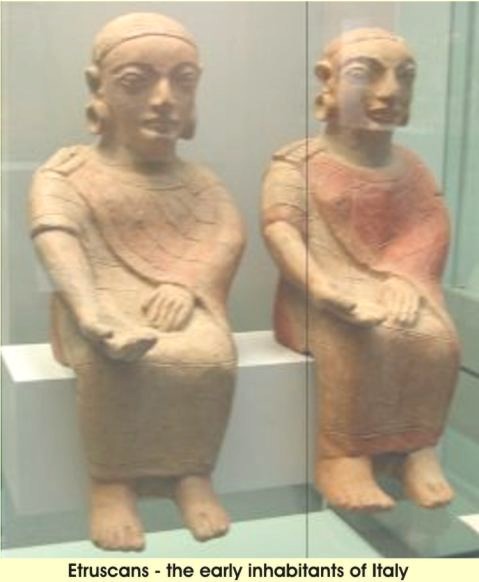

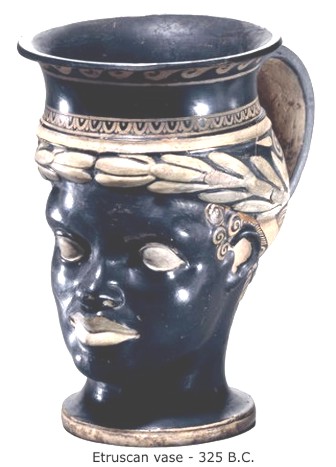

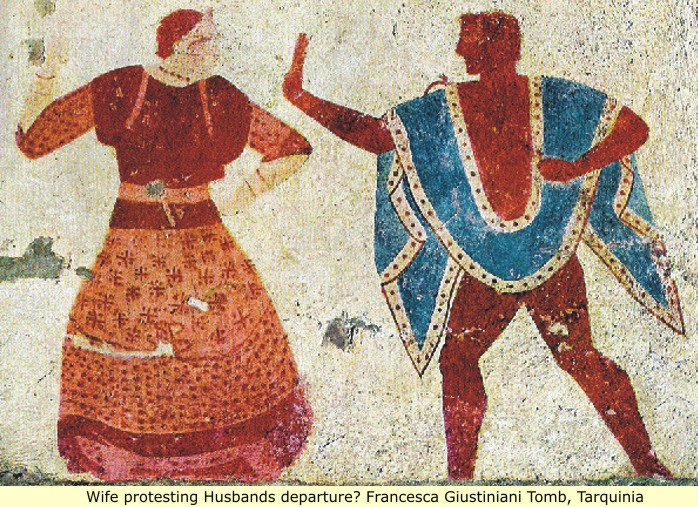
![[Roll Eyes]](rolleyes.gif)
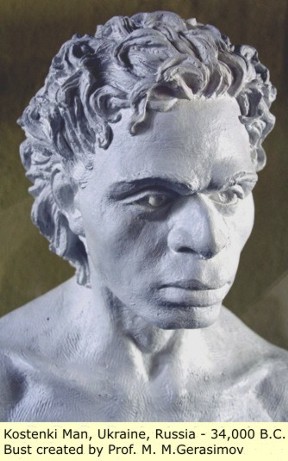



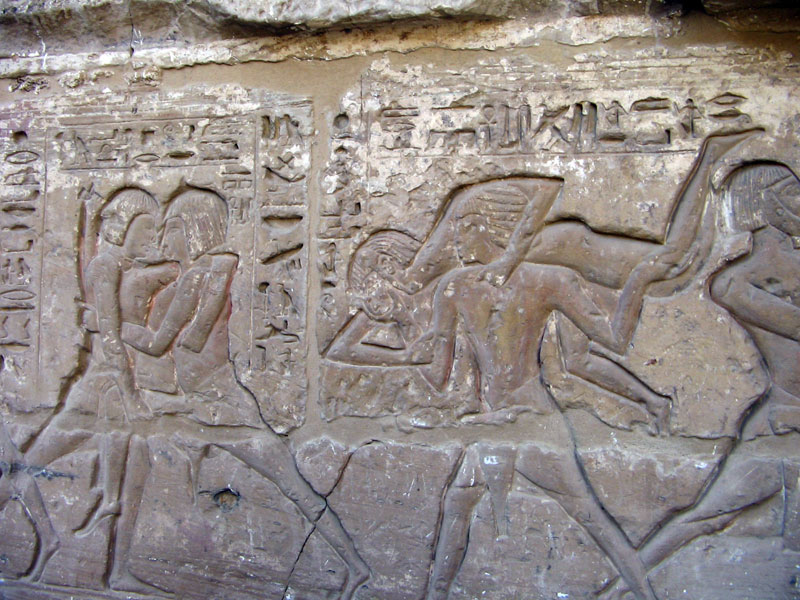


![[Confused]](confused.gif)


